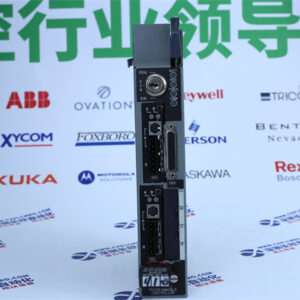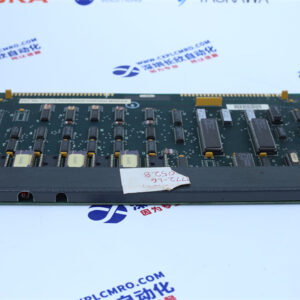
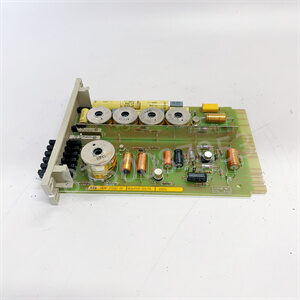
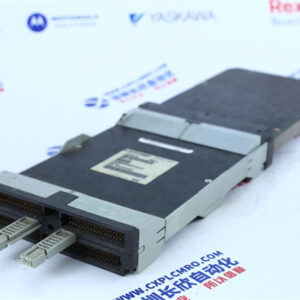




5X00226G02 WESTINGHOUSE
The content and parameters of product information materials for the Westinghouse 5X00226G02 can vary depending on the specific product and its intended use. However, typically, product information materials for electrical products like the Westinghouse 5X00226G02 may include the following information:
- Product Description: A detailed description of the product, including its model number and any applicable specifications.
- Features and Benefits: A list of the key features and benefits of the product, highlighting its unique selling points and advantages.
- Technical Specifications: Detailed technical specifications about the product, including its power requirements, dimensions, weight, operating voltage, frequency, and any other relevant parameters.
- Installation Instructions: Step-by-step instructions on how to install and set up the product correctly.
- Operation and Maintenance Guidelines: Information on how to operate the product safely and effectively, along with maintenance recommendations to ensure its longevity and performance.
- Safety Considerations: Important safety guidelines and precautions to be followed while using the product, including any warnings or potential hazards.
- Troubleshooting and FAQs: Troubleshooting tips and frequently asked questions to address common issues or concerns related to the product.
- Warranty and Service Information: Details about the product’s warranty coverage, service and support options, and contacts for customer assistance.

Kollmorgen Servostar XT Servo motor MTC308C1 W/Driver
Kollmorgen Servostar XT Servo motor MTC304B1 W/Driver
Celerity UNIT 125 MFC,N2,15000 SCCM,with test paper
MKS DELTA™II mass flow ratio controller,N2,1000 SCCM
applicom®PCI2000PFB Profibus Network Interface Card
YASKAWA AC Servo Drive SGDM-04ADA W/SGMPH-04AAA2C Motor

Power machinery can be divided into three categories: wind machinery, hydraulic machinery, and thermal engines based on the way different energy in nature is converted into mechanical energy.
Wind machinery
There are sails, windmills (wind turbines), wind mills, etc. In the 20th century, direct wind power generation devices emerged, but they were limited by the distribution of natural wind zones, as it is generally believed that wind speeds greater than 4 meters per second are of value for utilization. It is estimated that there is about 10 gigawatts of wind energy stored on Earth, with less than 1% already utilized. Therefore, wind energy has great potential for development.
Water conservancy machinery
There are waterwheels, water mills, water turbines, etc. Since the 20th century, there has been an increasing number of hydropower stations that use hydraulic turbines for power generation, as they have the advantages of low operating costs, pollution-free, and inexhaustible utilization. However, the construction of reservoirs and dams requires a large initial investment and a long construction time, and also has an impact on ecological balance and geological balance. China’s hydropower reserves are approximately 680 megawatts, ranking first in the world, with great potential for development and utilization.
Thermal engine
Including steam engines, steam turbines, internal combustion engines (gasoline engines, diesel engines, gas engines, etc.), hot gas engines, gas turbines, jet engines, etc. Internal combustion engines are widely used in industries, agriculture, transportation, mining, and military industries. Ships, locomotives, automobiles, material handling machinery, earthmoving machinery, tanks, drainage and irrigation machinery, small power generation devices, etc. are all powered by internal combustion engines.
A gasoline engine is fueled with gasoline and uses electric ignition, with a speed generally ranging from 3000 to 6000 revolutions per minute, or even up to 10000 revolutions per minute. The power ranges from several hundred watts to several hundred kilowatts. Widely used in agriculture and forestry as power for tea picking machines, lawn mowers, hoes, sprayers, irrigation machines, machine saws, etc; Used as power for motorcycles, cars, and small boats in transportation.
In addition, small generator sets used for communication and movie projectors, mining rock drills, construction compactors, etc. are all powered by small gasoline engines. Early aircraft were powered by large gasoline engines, but have since been largely replaced by turbines, especially jet engines. The emissions from gasoline engines pose a serious threat to the human environment.
A diesel engine is fueled by diesel and uses compression heat to self ignite. The engine’s speed is generally around one hundred to five or six thousand revolutions per minute, and the power ranges from thousands of watts to tens of thousands of kilowatts. Widely used as a power source for automobiles, tractors, tanks, ships, warships, locomotives, generator sets, material handling machinery, earthwork machinery, etc.
Since the 1960s, due to the global oil crisis and the high thermal efficiency of diesel engines, their application scope has also been expanding day by day. Some fields that used to use gasoline engines, such as small cars and light trucks, are increasingly using diesel engines as power.
Gas engines use coal gas, natural gas, and other combustible gases as fuels, some using electric ignition, and others using a small amount of diesel injection for ignition. Due to the limitations of gas fuel sources, coupled with the large volume and difficulty in carrying of gas engines, their application is far less extensive than gasoline and diesel engines. Gas engines are mostly used in fixed power plants, but there are also cases where gas fuel is encapsulated or liquefied for transportation vehicles, but due to inconvenience in use, they have not been promoted.
A steam engine is a thermal device that converts the heat energy in steam into mechanical energy. Due to low work efficiency, except in a few countries where locomotives are still used, they have been basically phased out. Steam turbines are widely used as power devices for large generator sets and large ships.
A hot gas engine, also known as a Stirling engine, is a thermal engine that uses air, hydrogen, and helium as working fluids and performs periodic compression and expansion in a regenerative closed cycle. A hot gas engine is an external combustion engine that can use multiple fuels. It also has advantages such as low noise, low vibration, and less pollution. The main drawbacks are large radiators, difficult sealing, and high costs.
A gas turbine is a device that uses the gas generated by fuel combustion to directly drive the turbine for work. The rotational speed can reach tens of thousands of revolutions per minute, and the efficiency is also high. Gas turbines are divided into two types: open cycle and closed cycle, and are mostly used as power for generating sets, ships, locomotives, and aircraft.
Jet engines are thermal engines that use the reaction forces generated during the process of fuel combustion and gas exhaust to work, mainly used in aviation and aerospace. Jet engines can be divided into two categories, namely air jet engines and rocket jet engines.
A jet engine that sucks in air from the outside as the working fluid and uses the oxygen contained in the air as the oxidant is called an air jet engine. It can also be divided into two types: non compressor air jet engines and compressor air jet engines. The most widely used gas turbine jet engine in modern aviation belongs to the latter category.
A jet engine that carries both fuel and oxidants by the engine or aircraft itself is called a rocket jet engine, or simply a rocket engine. According to the fuel used, there are two types of solid fuel rocket engines and liquid fuel rocket engines, which are mainly used as power for weapons and space shuttles.