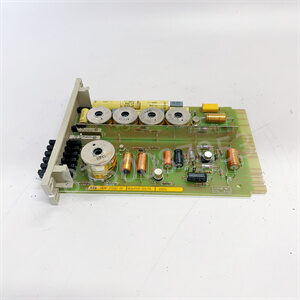
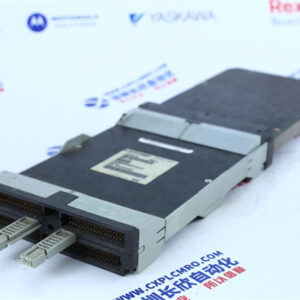
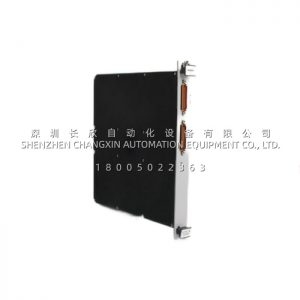
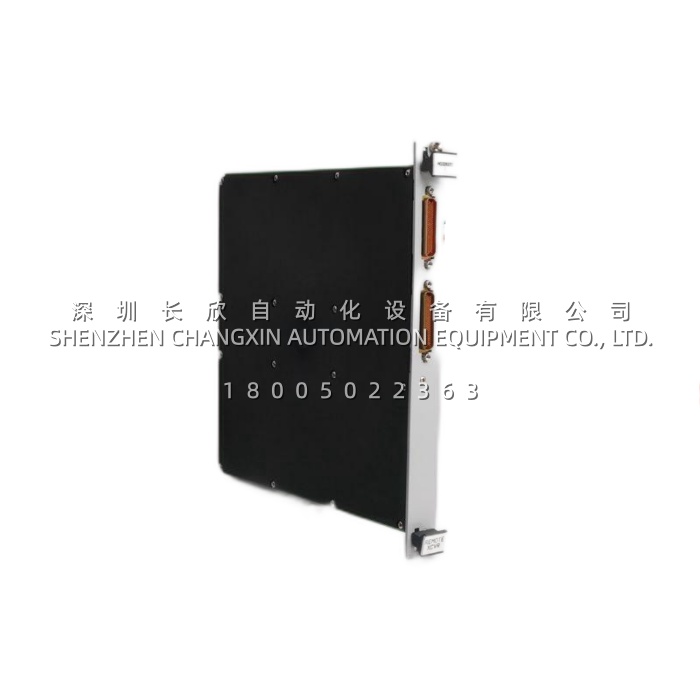
Application Scenarios
In a large-scale paper mill on the U.S. Gulf Coast, the wet-end forming section, press section, and dry-end winding section were each controlled by independent AutoMax racks separated by distances exceeding 200 feet. Without a dedicated network communications module, coordinated control was impossible, leading to web breaks that cost the plant an estimated $15,000 per hour in lost production. By deploying the 57C404C in each of the three AutoMax racks and interconnecting them via coaxial DCS-NET cable, the mill achieved seamless synchronization across all sections. The module’s 845K baud communication speed and 3000-foot distributed network length ensured that tension setpoints, speed ratios, and fault conditions were shared instantaneously across all racks. Within the first month of operation, web break frequency dropped by 72%, and the maintenance team could diagnose cross-section issues from any single rack using the RS-232 monitor port, dramatically reducing troubleshooting time.
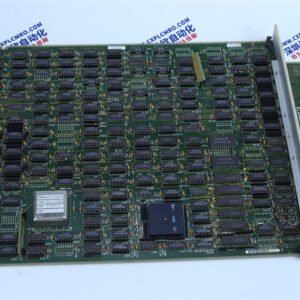
Parameter
| Main Parameters | Value/Description |
|---|---|
| Product Model | 57C404C |
| Manufacturer | Reliance Electric |
| Product Category | Network Communications Module |
| Compatible Series | AutoMax / DCS 5000 |
| Communication Speed | 845K baud |
| Max. Network Length | 3000 ft (distributed) |
| Dual-Port Memory | 4K words |
| Max. Physical Drops | 51 (up to 55 virtual drops) |
| Diagnostic Port | RS-232C (Monitor Port) |
| Fault Indication | 7-segment LED “Fault Code” display |
| Power Requirement | 5V DC @ 2.5A (via backplane) |
| Connection Type | P1/P2 female card slots on AutoMax rack backplane |
Technical Principles and Innovative Values
Innovation Point 1: Broadcast-Based Master/Slave Architecture. The 57C404C implements a deterministic master/slave software protocol where the master initiates all transmissions, and every data packet is broadcast simultaneously to all drops on the network. Each 57C404C module contains a 4K dual-port memory that maintains a live image of all network data, enabling any processor in the system to access cross-section data without polling delays. This architecture eliminates the bandwidth bottlenecks typical of request-response networks.
Innovation Point 2: Virtual Drop Configuration for System Scalability. Unlike rigid network modules that assign one physical node per card, the 57C404C can be software-configured so a single module represents multiple slave drops. With a drop depth setting, one 57C404C can represent up to 55 virtual drops, allowing engineers to design highly distributed control systems without proportionally increasing hardware count. This flexibility is particularly valuable in retrofit projects where cabinet space is constrained.
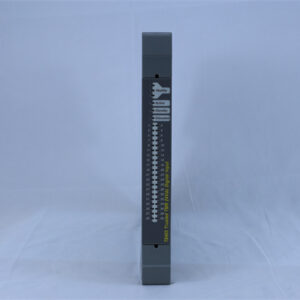
Innovation Point 3: Integrated Diagnostics with 7-Segment Fault Display. The 57C404C features a 7-segment LED indicator on the faceplate labeled “Fault Code” that displays registered error codes in real-time. Combined with the RS-232C monitor port, technicians can perform local diagnostics and system health checks without removing the module from the rack. The two thumbwheel switches on the front panel set the unique Drop Number (node address), simplifying network configuration and reducing commissioning errors.
Innovation Point 4: Media Flexibility for Harsh Environments. The 57C404C supports inter-rack connections via either coaxial cable or fiber optic cable when enhanced noise isolation is required. This media flexibility ensures reliable communication in electrically hostile environments such as steel mills, petrochemical plants, and power generation facilities where electromagnetic interference would compromise standard copper connections.
Application Cases and Industry Value
A continuous-process chemical manufacturing facility in Germany operated a multi-zone reactor system with four AutoMax racks controlling temperature, pressure, flow, and agitation across different reaction stages. The original system used hard-wired interlocks between racks, resulting in a labyrinth of copper wiring that made modifications risky and fault diagnosis extremely time-consuming. After upgrading to a 57C404C-based DCS-NET architecture, the facility eliminated over 1,200 hard-wired interlock connections, replacing them with high-speed network data exchange. The plant reported a 60% reduction in panel wiring labor for subsequent system expansions and achieved a 99.97% control system availability rating over a 24-month period. The ability to configure virtual drops allowed the engineering team to add two additional reactor zones without purchasing new hardware, delivering an estimated $85,000 in capital savings.
Related Product Combination Solutions
To build a complete AutoMax distributed control system around the 57C404C, the following Reliance Electric models work in synergy:
- 57C404 – The earlier revision of the same network communications module; functionally compatible with the 57C404C and useful as a cost-effective alternative when exact revision matching is not critical.
- 57C414 – A complementary Reliance Electric communication module for interfacing with standard external protocols, bridging the proprietary AutoMax network to broader plant systems when used alongside the 57C404C.
- AutoMax Processor Modules (57C4xx series) – The CPU cards that execute control logic and utilize the 57C404C to exchange data with peer racks and operator interfaces across the DCS-NET.
- AutoMax Power Supply Modules – Essential backplane power sources required in every AutoMax rack alongside the 57C404C; provide the 5V DC @ 2.5A the network module demands.
- AutoMax Digital I/O Modules (57C-series) – Digital input/output cards that connect field devices to the AutoMax backplane, with data accessible network-wide through the 57C404C.
- AutoMax Analog I/O Modules (57C-series) – Analog input/output cards for temperature, pressure, and flow signals that are shared across all racks via the 57C404C dual-port memory.
- AutoMax Storage Rack – The physical chassis with P1/P2 female card slots on the backplane, providing direct mechanical and electrical connection for the 57C404C.