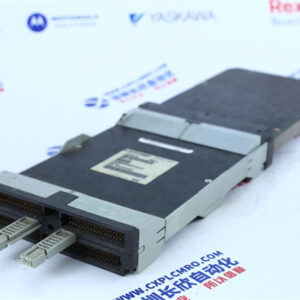
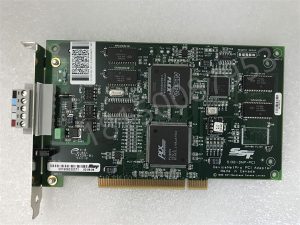
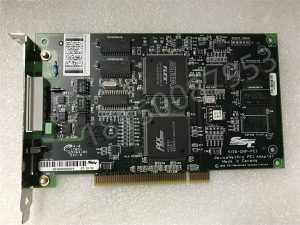
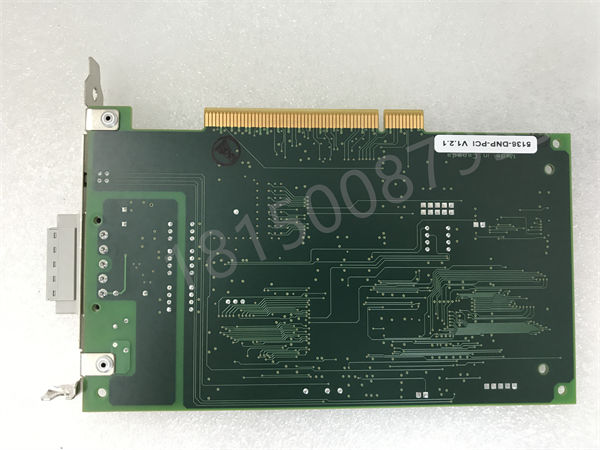
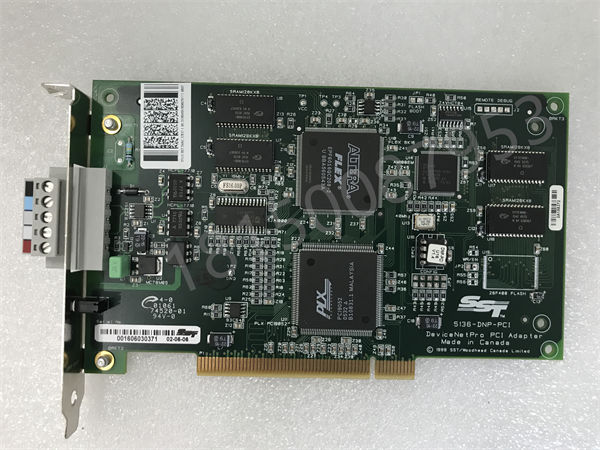
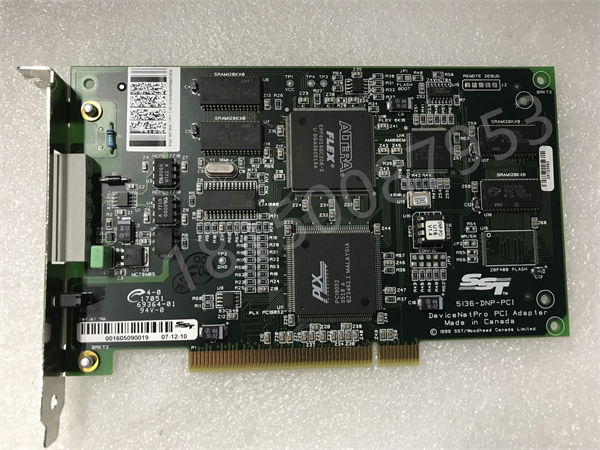
5136-DNP-PCI SST
Based on the description of the above process, the characteristics of the PLC working process can be summarized as follows:
① The PLC adopts a centralized sampling and output working mode, which reduces the impact of external interference.
② The working process of PLC is a cyclic scanning process, and the length of cyclic scanning time depends on factors such as instruction execution speed and user program length.
There is a lag phenomenon in the impact of output on input. PLC adopts a centralized sampling and output working mode. After the sampling stage is completed, changes in input status will not be received until the next sampling cycle, so the length of this lag time mainly depends on the length of the cycle. In addition, factors that affect lag time include input filtering time, output circuit lag time, etc.
The content of the output image register depends on the results of the user program’s scan execution.
The content of the output latch is determined by the data in the output image register during the last output refresh.
The current actual output state of the PLC is determined by the content of the output latch
If immediate I/O instructions are used during program execution, I/O points can be directly accessed. If I/O instructions are used, the value of the input process image register will not be updated. The program takes values directly from the I/O module, and the output process image register will be immediately updated, which is somewhat different from immediate input
After scanning the user program, the programmable logic controller enters the output refresh stage. During this period, the CPU refreshes all output latch circuits according to the corresponding state and data in the I/O image area, and then drives the corresponding peripheral devices through the output circuit. At this point, it is the true output of the programmable logic controller