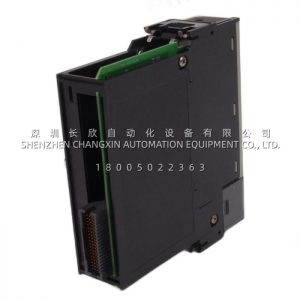
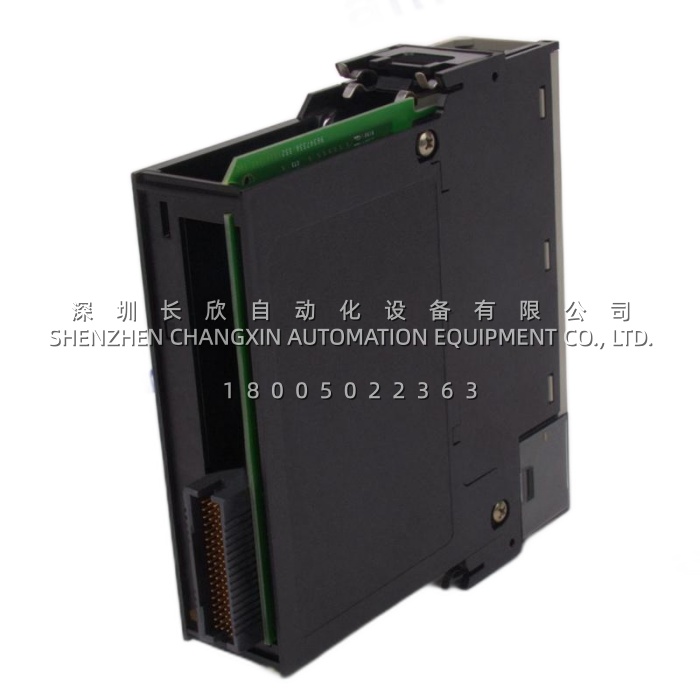
Application Scenarios
A wastewater pump station was built in the 1990s with a SLC 500 rack on a 120 V AC power supply. The station was later converted to a 24 V DC UPS-backed instrument bus, and the only 120 V load left in the panel was the PLC rack. The maintenance team was replacing the UPS batteries every three years while the PLC sat behind a small transformer that nobody trusted, and a voltage dip during a storm would drop the rack while the rest of the instruments stayed up.
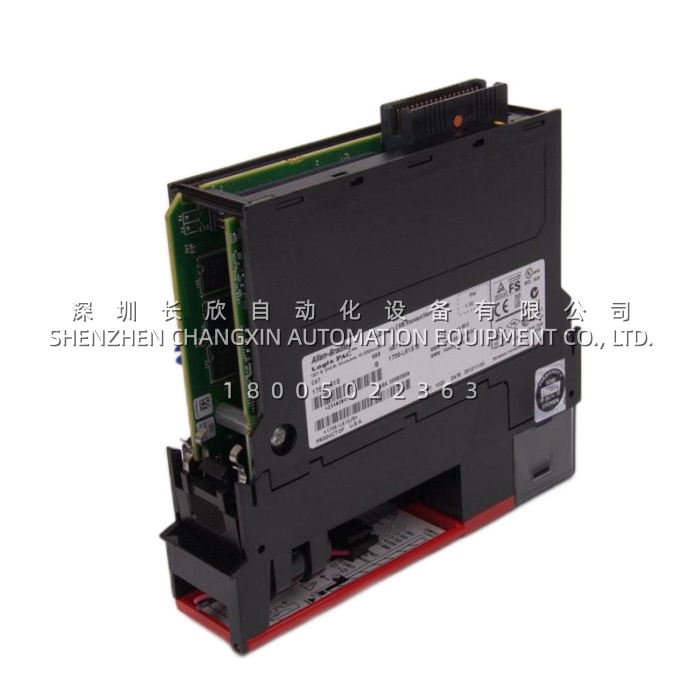
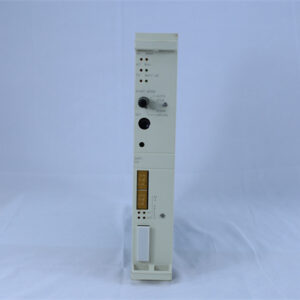
Replacing the AC supply with the 1746-P3 A put the SLC 500 on the same 24 V DC bus as the transducers and the VFD controls. The rack now rides through the same UPS that protects the instruments, the panel lost its last 120 V load, and the electrician no longer has to explain why the PLC alarm comes in five seconds before the SCADA alarm. The conversion took one shift and required no change to the ladder logic or to the I/O wiring.
Parameter
| Main Parameters | Value / Description |
|---|---|
| Product Model | 1746-P3 A (Series A) |
| Manufacturer | Allen-Bradley / Rockwell Automation |
| Product Category | Rack-mount power supply module for SLC 500 1746 chassis |
| Input Voltage | 24 V DC (nominal) |
| Input Voltage Range | 19.2 … 30 V DC |
| Input Current | 1.5 A @ 19.2 V DC; 1.0 A @ 24 V DC; 0.8 A @ 30 V DC |
| Inrush Current | 100 A for 50 ms at 24 V DC; 25 A at 30 V DC |
| Nominal Output Voltage | 5.1 V DC (backplane supply) |
| Output Current | 2.88 A @ 5.1 V DC (4.0 A surge for 3 ms) |
| Output Power | 14.7 W |
| Status Indicator | 1 × Power OK LED |
| Chassis Slots Occupied | 1 |
| Backplane Current Available | 2.88 A at 5.1 V DC (check against the chassis power budget) |
| Power Dissipation | 10.5 W (35.8 BTU/hr) |
| Heat Dissipation | 32.4 BTU/hr |
| Operating Temperature | 0 … 60 °C (32 … 140 °F) |
| Storage Temperature | -40 … 85 °C (-40 … 185 °F) |
| Relative Humidity | 5 … 95 % non-condensing |
| Shock / Vibration | 30 g operating, 50 g non-operating; 2 g at 10 … 500 Hz |
| Dimensions (H × W × D) | 141 × 51 × 145 mm (5.55 × 2.0 × 5.71 in) |
| Weight | 0.45 kg (0.99 lb) |
| Mounting | Mounts directly to the 1746 chassis |
| Certifications | UL 508, cUL, CE, C-Tick, ATEX, FM, KC, IECEx, ABS marine |
| Compatible Chassis | 1746-A4, A7, A10, A13 (1746 chassis family) |
| Compatible Products | 1746-P1, P2, P4 (other SLC 500 power supplies); 1746-BAS, 1746-BASM (base modules for fixed SLC 500) |
| Country of Origin | United States |
| Lifecycle | Discontinued by Rockwell Automation; available as surplus, refurbished and repair stock |
A note on the numbers that circulate: several reseller pages assign the 1746-P3 A a 120/240 V AC input, a 7.5 A or 10 A output, an 85–265 V AC range, a 75 W rating or a “P3” generic description that blends it with the 1746-P4. None of those match Rockwell’s technical data. The 1746-P3 A is a 24 V DC input device with a 2.88 A, 5.1 V DC output and a 14.7 W rating; the input current is 1.5 A at the low end of the input range, falling to 0.8 A at 30 V DC. Match the part by the “24 V DC” input and the 2.88 A output figure, not by the catalog number alone.
Technical Principles and Innovative Values
- Innovation Point 1 — It puts the SLC 500 on the instrument bus. A 24 V DC input means the rack can share the panel’s DC supply and UPS. The controller and the I/O ride through the same power disturbance as the field instruments, so the SCADA sees a coherent picture instead of a PLC that drops out five seconds before the level transmitters.
- Innovation Point 2 — No 120 V AC circuit, no 60 Hz noise. In panels where the SLC 500 is the only AC load, the 1746-P3 A removes that circuit entirely. The 5.1 V DC backplane is derived from a DC source, and the supply’s 100 A inrush for 50 ms at 24 V DC is absorbed by the DC bus capacitance rather than by a transformer core.
- Innovation Point 3 — A 4.0 A surge for 3 ms handles the real load. The rated output is 2.88 A, but the supply can deliver 4.0 A for 3 ms. That surge is what lets a bank of outputs switch on together without the backplane voltage dipping into the module’s undervoltage threshold — the failure that usually looks like “random I/O faults” to the maintenance team.
- Innovation Point 4 — A single Power OK LED keeps diagnostics honest. One LED and one supply: if the LED is out, the supply is the problem; if it is lit and the rack is dead, the problem is elsewhere. In a legacy panel where documentation is thin, that distinction is worth more than a complicated status display.
- Innovation Point 5 — It forces the power budget into the open. At 2.88 A and 14.7 W, the 1746-P3 A cannot hide a overloaded rack. The plant must add up the backplane current of the processor and every I/O module before the supply is ordered, which prevents the classic failure: a rack that boots on Monday, runs for six months, and then trips on a hot afternoon.
- Innovation Point 6 — A direct swap for the AC version. The 1746-P3 A occupies one slot and mounts the same way as the 1746-P1, P2 and P4. Converting a rack from AC to DC power is therefore a supply swap, not a panel redesign — no I/O wiring changes, no processor change, no ladder changes.