

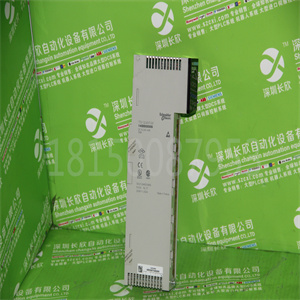
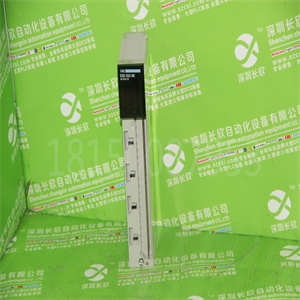
140DDI35300 SCHNEIDER
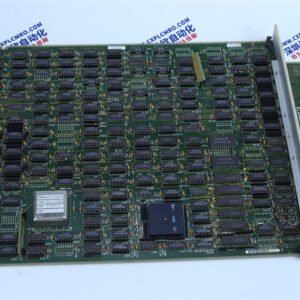
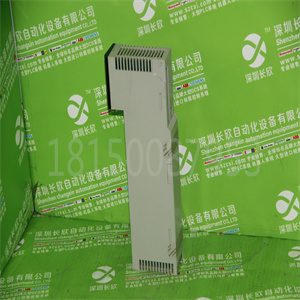
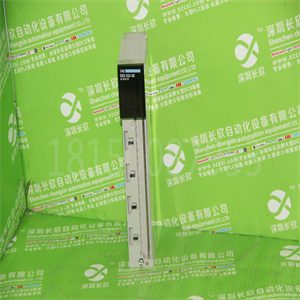
SCHNEIDER 140DDI35300 is a digital input module used to convert external digital input signals into digital signals that can be read by the PLC system. Here are some of its parameters:
-Input voltage range: 24V DC
-Input Type: Discrete Input
-Input points: 32 points
-Input current: 5 mA
-Input delay time: 0.5 ms
-Input filtering time: 1 ms
SCHNEIDER 140DDI35300 is a digital input module. It is part of Schneider Electric’s Modicon Quantum series of programmable logic controllers (PLCs). The module provides 16 digital inputs, which can be used to monitor the status of various devices or equipment in an industrial automation system. It is designed to be used in combination with other modules to create a comprehensive control system. The 140DDI35300 module offers high performance and reliable operation, making it suitable for a wide range of industrial applications.
ASEA BROWN BOVERI DSPC157 USPP DSPC157
ASEA BROWN BOVERI 57770163 NSFP 57770163
ASEA BROWN BOVERI APTBE-03 NSPP APTBE03
ASEA BROWN BOVERI 1SDA054335R1 NSPP 1SDA054335R1
ASEA BROWN BOVERI 5692435-R NSFP 5692435R
ASEA BROWN BOVERI DCS502-B02505121 USPP DCS502B02505121
Electric excitation
Its rotor is made into an explicit pole type, and the magnetic field coils installed on the magnetic pole iron core are connected in series with each other, with alternating opposite polarity, and two leads are connected to the two slip rings installed on the shaft. The magnetic field coil is excited by a small DC generator or battery. In most synchronous motors, the DC generator is installed on the motor shaft to supply the excitation current of the rotor pole coil. Due to the inability of this synchronous motor to start automatically, a squirrel cage winding is also installed on the rotor for motor starting. The squirrel cage winding is placed around the rotor and has a structure similar to that of an asynchronous motor.
When a three-phase AC power supply is applied to the stator winding, a rotating magnetic field is generated in the motor, and the squirrel cage winding cuts the magnetic field lines and generates induced current, causing the motor to rotate. After the motor rotates, its speed slowly increases to slightly lower than the speed of the rotating magnetic field. At this time, the rotor magnetic field coil is excited by direct current, causing a certain magnetic pole to form on the rotor. These magnetic poles attempt to track the rotating magnetic poles on the stator, thereby increasing the speed of the motor rotor until it rotates synchronously with the rotating magnetic field.
Synchronous motors with non excited rotors can be used on single-phase power sources as well as on multiphase power sources. In this type of motor, there is a stator winding similar to that of a split phase or multiphase motor, with a squirrel cage rotor whose surface is cut into a plane. So it belongs to a polar rotor, where the magnetic pole of the rotor is made of a magnetized steel and can maintain magnetism frequently. The squirrel cage winding is used to generate starting torque, and when the motor rotates to a certain speed, the rotor display pole synchronizes with the current frequency of the stator coil. The polarity of the display pole is induced by the stator, so its number should be equal to the number of poles on the stator. When the motor rotates to its expected speed, the squirrel cage winding loses its function. Maintaining rotation is achieved by keeping the rotor and magnetic poles synchronized with the stator magnetic poles.