

140CPU11303 SCHNEIDER
Key features and specifications of the 140CPU11303 include:
- CPU Type: The CPU module is based on a 32-bit RISC processor.
- Memory: It has 8MB of RAM for program and data storage.
- Communication Ports: The module is equipped with a single Ethernet port for network communication.
- I/O Capacity: It supports up to 8192 discrete I/O points and up to 256 analog I/O points.
- Programming: The module can be programmed using the Unity Pro software, which is a user-friendly environment for creating and managing automation projects.
- Redundancy: It supports redundancy for high availability and fault tolerance.
- Real-Time Clock: The module has a built-in real-time clock for accurate timekeeping.
- Operating Temperature: It can operate in a temperature range of 0°C to 60°C.
- Dimensions: The module has dimensions of 125 x 72 x 81 mm (H x W x D).
- Compatibility: It is compatible with various Modicon Quantum I/O modules and accessories.
- Certification: The module is UL, CSA, and CE certified.
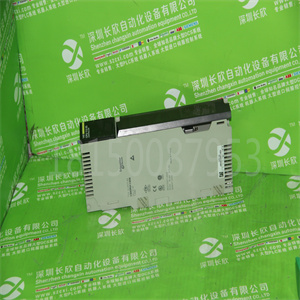
The 140CPU11303 is a Schneider Electric Quantum CPU module. It is a Programmable Logic Controller (PLC) used for automation and control systems. It is a high-performance CPU with advanced features and capabilities. The module is designed to be used with the Quantum modular PLC system from Schneider Electric. It offers fast processing speed, large memory capacity, and a wide range of communication options. The 140CPU11303 is suitable for a variety of industrial applications and provides reliable and efficient control solutions.
ASEA BROWN BOVERI DSQC-211 USPP DSQC211
ASEA BROWN BOVERI YB560103-AN USPP YB560103AN
ASEA BROWN BOVERI 3HAB-2136-1/6 USPP 3HAB213616
ASEA BROWN BOVERI 3HAB6182-1 USPP 3HAB61821
ASEA BROWN BOVERI ACS604-0260-5-00002000900 USPP ACS604
ASEA BROWN BOVERI 3E-031990 USPP 3E031990
ASEA BROWN BOVERI 57120001-P/5 USPP 57120001P5
ASEA BROWN BOVERI EH550C-1 USPP EH550C1

When a synchronous motor operates,a three-phase symmetrical current is applied to the three-phase winding of the stator,and a direct current is applied to the excitation winding of the rotor.When three-phase alternating current is applied to the three-phase symmetrical winding of the stator,a rotating magnetic field will be generated in the air gap.When DC current is applied to the rotor excitation winding,a static magnetic field with constant polarity will be generated.If the magnetic pole number of the rotor magnetic field is equal to the magnetic pole number of the stator magnetic field,the rotor magnetic field rotates synchronously with the rotating magnetic field of the stator due to the magnetic pull of the stator magnetic field,that is,the rotor rotates at a speed and direction equivalent to the rotating magnetic field,which is the basic working principle of synchronous motors.
Operation mode
There are three main operating modes of synchronous motors,namely as generators,motors,and compensation machines.
Running as a generator is the main mode of operation for synchronous motors.
Running as an electric motor is another important mode of operation for synchronous motors.The power factor of synchronous motors can be adjusted,and in situations where speed regulation is not required,the application of large synchronous motors can improve operational efficiency.Small synchronous motors are beginning to be widely used in variable frequency speed control systems.
Synchronous motors can also be connected to the power grid as synchronous compensators.At this point,the motor does not carry any mechanical load and sends the required inductive or capacitive reactive power to the power grid by adjusting the excitation current in the rotor,in order to improve the power factor of the power grid or regulate the voltage of the power grid.
Synchronous generators,like other types of rotating motors,consist of two main parts:a fixed stator and a rotatable rotor.It is generally divided into rotary synchronous motors and pivot synchronous motors.
The most commonly used type is a rotary synchronous generator,where the inner circle of the stator core is evenly distributed with stator slots,which are embedded with three-phase symmetrical windings arranged in a regular manner.The stator of this synchronous motor is also known as the armature,and the stator core and winding are also known as the armature core and armature winding.
The rotor iron core is equipped with paired magnetic poles made into a certain shape,and the magnetic poles are wound with excitation windings.When direct current is applied to the magnetic poles,a dispersed magnetic field of polarity will be formed in the air gap of the motor,which is called the excitation magnetic field(also known as the main magnetic field or rotor magnetic field).
The prime mover drives the rotor to rotate(inputting mechanical energy to the motor),and the excitation magnetic field between the polarity phases rotates with the shaft and sequentially cuts the stator windings of each phase(equivalent to the conductor of the winding cutting the excitation magnetic field in the opposite direction).