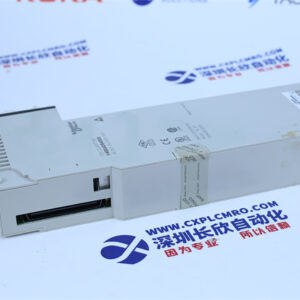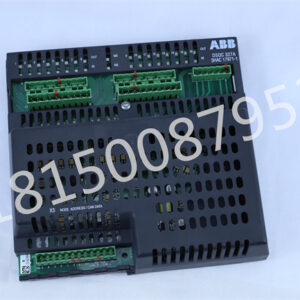
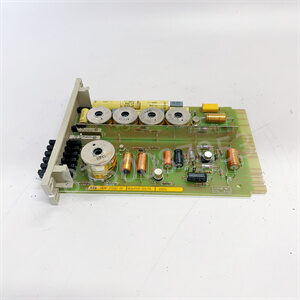
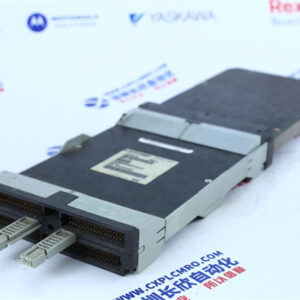
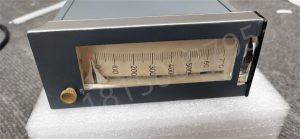
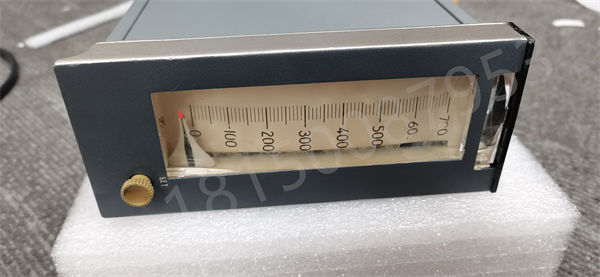
130M-N4 FOXBORO
Programmable logic controllers or PLCs are ubiquitous in various processes and manufacturing industries today.PLC was originally designed to replace electromechanical relay systems in order to provide simpler solutions for modifying the operation of control systems.No need to reconnect a large number of relays,just quickly download from a PC or programming device and change the control logic in a few seconds.
PLC is an industrial grade digital computer designed to perform control functions,particularly suitable for industrial applications.
Most PLCs today are modular,allowing users to add various functions,including discrete and analog inputs and outputs,PID control,position control,motor control,serial communication,and high-speed networks.Compared to older technologies such as relay groups,PLC is easier to troubleshoot and maintain,more reliable,cost-effective,and more versatile.
Modicon is an abbreviation for”Modular Digital Controller”,which is both the name and brand of the first PLC product invented in 1968,although it is now owned by Schneider Electric.
Although it may not look like a typical home computer,the core of PLC is exactly the same technology as most people see in computers and smart devices used in their daily lives.
Basic components
PLC consists of several basic components.They may appear slightly different from various manufacturers,but the purpose and scope of each component are the same.This includes a power supply,central processing unit(CPU),input/output cards,and a backplane or rack for placing input/output(I/O)cards.
As shown in Figure 2,the backplane establishes electrical connections between all independent components,providing a modular design for the PLC.This electrical connection includes power and communication signals.Many PLC manufacturers use proprietary communication protocols on the backplane so that I/O can safely communicate with the CPU.
Power Supply
According to the application and installation environment,the power supply can accept 120VAC or 24VDC.As mentioned above,this voltage provides power to the CPU and I/O modules through the backplane,which appear in the form of”cards”.These cards can be quickly added or removed from their slots in the carrier.
It should be noted that the power supply of the CPU does not supply power to on-site devices such as sensors and coils.This power connection must be established separately with the card.

Central Processing Unit(CPU)
CPU is the actual”brain”of PLC,making it a computer.Even small non modular PLCs include a CPU.The input signal comes from the I/O card,and the logic program makes decisions based on the signal.If necessary,the CPU then commands the output to turn on and off as the signal and conditions change.
The program may include advanced functions such as mathematical operations,timing,counting,and sharing information through modern network protocols.For older relay systems,many of these operations are extremely difficult,if not impossible.
Input/output card
Sensors,buttons,switches,relays,solenoids,and even network devices share information with the I/O signals connected to the screw terminals on the I/O card.These cards can be selected according to the needs of each machine and facility.In some small PLCs,I/O terminals are not modular cards,but are conveniently installed on the side of the PLC.