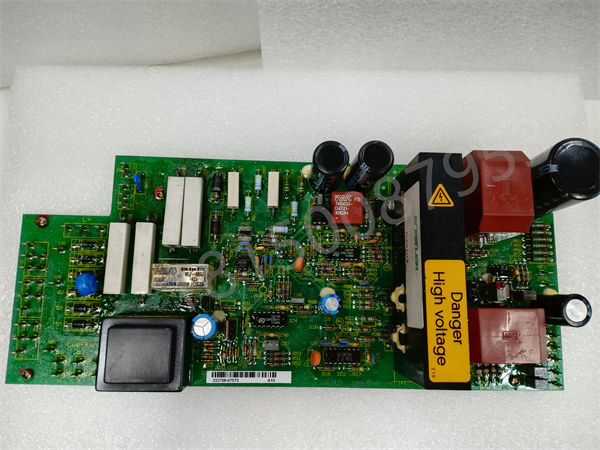
109-0743-3B04-03 REXROTH
As is well known, since the 1960s, Western countries have relied on technological advancements (i.e. new equipment, new processes, and computer applications) to transform traditional industries, resulting in rapid industrial development. The biggest change in the world at the end of the 20th century was the formation of global markets. The global market has led to unprecedented fierce competition, prompting enterprises to accelerate the time to market for new products, improve quality, reduce costs, and improve service systems. This is the T.Q.C.S. of enterprises.
Although computer integrated manufacturing system (CIMS) combines information integration and system integration to pursue more perfect T.Q.C.S., it enables enterprises to “transmit the right information to the right people in the right way at the right time, so as to make the right decision”, that is, “Five Corrects”. However, this automation requires a significant investment and is a high investment, cost-effective, and high-risk development model that is difficult for most small and medium-sized enterprises to adopt. In China, small and medium-sized enterprises and quasi large enterprises still follow the path of low-cost industrial control automation.
ndustrial control automation mainly consists of three levels, from bottom to top are basic automation, process automation, and management automation, with the core being basic automation and process automation.
In traditional automation systems, the basic automation part is basically monopolized by PLC and DCS, while the process automation and management automation parts are mainly composed of various imported process computers or small computers. The high prices of their hardware, system software, and application software make many enterprises hesitant.
Since the 1990s, with the development of PC based industrial computers (referred to as industrial PCs), PC based automation systems composed of industrial PCs, I/O devices, monitoring devices, and control networks have rapidly become popular, becoming an important way to achieve low-cost industrial automation. Almost all large heating furnaces of large enterprises such as Chongqing Iron and Steel Company in China have also removed their original DCS or single loop digital regulators and replaced them with industrial PCs to form control systems, using fuzzy control algorithms and achieving good results.