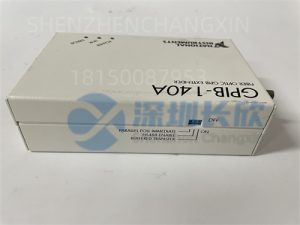
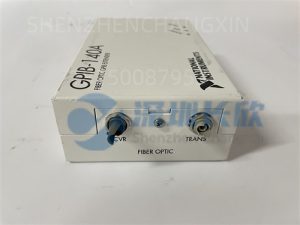
In the world of automated test, measurement, and instrumentation, seamless communication between a host computer and legacy or specialized benchtop equipment remains a foundational requirement—despite the rise of Ethernet and USB interfaces. For decades, the General Purpose Interface Bus (GPIB), also known as IEEE 488. has served as the backbone of laboratory automation, connecting oscilloscopes, signal generators, power supplies, and analyzers to centralized control systems. Among the most trusted hardware solutions enabling this connectivity is the NI GPIB-140A, particularly the 186135H-01L revision, a high-performance GPIB controller card engineered by National Instruments (NI) for robust, low-latency communication within Windows-based environments. When paired with LabVIEW, NI’s graphical system design platform, the GPIB-140A delivers a mature, stable, and highly reliable interface that continues to power mission-critical test sequences in aerospace, defense, semiconductor, and R&D laboratories worldwide.
Bridging Legacy Instruments with Modern Software Control
While newer instruments increasingly support LAN or USB-TMC protocols, a vast installed base of precision equipment—especially in calibration labs, production test floors, and government facilities—still relies exclusively on GPIB. Replacing these instruments is often cost-prohibitive or technically unnecessary; they function perfectly but require a dependable bridge to modern PC-based automation. The NI GPIB-140A 186135H-01L fills this role with exceptional fidelity.
Unlike generic USB-to-GPIB adapters that may suffer from driver instability or timing jitter, the GPIB-140A is a full-height PCI Express (PCIe) card that integrates directly into the host computer’s bus architecture. This direct hardware access minimizes communication latency and ensures deterministic data transfer—critical when synchronizing multiple instruments or capturing time-sensitive measurements. The 186135H-01L revision, in particular, benefits from refined firmware and enhanced EMI shielding, making it especially suitable for electrically noisy industrial environments where signal integrity is paramount.
Crucially, the card is natively supported by NI-VISA (Virtual Instrument Software Architecture), the universal I/O layer that underpins LabVIEW, LabWindows/CVI, and other NI software tools. This deep integration means developers can address GPIB instruments using simple, high-level commands like VISA Write and VISA Read, abstracting the complexities of handshaking, talker/listener roles, and bus arbitration.
Real-World Impact: Stability in High-Stakes Testing
A compelling validation of the NI GPIB-140A 186135H-01L’s reliability comes from a Tier-1 aerospace supplier responsible for avionics component testing. Their final acceptance test station uses over a dozen GPIB instruments—including spectrum analyzers, vector network analyzers, and precision DC sources—to validate RF performance across temperature cycles. Previously, the lab relied on third-party PCIe GPIB cards that occasionally dropped bytes during long data sweeps, causing false failures and retesting delays.
After standardizing on the NI GPIB-140A 186135H-01L, the facility reported zero communication errors over 18 months of continuous operation, even during 72-hour accelerated life tests. “The difference wasn’t just in uptime—it was in data confidence,” said the test engineering manager. “With the NI card, we know every byte received matches what the instrument sent. That’s non-negotiable when certifying flight hardware.”