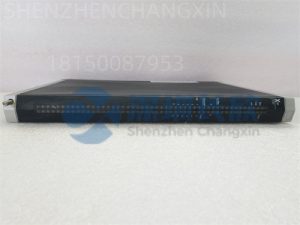
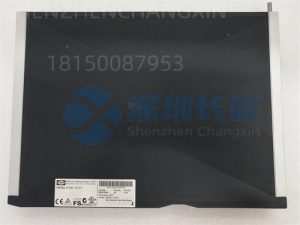
In safety-critical industrial environments—such as oil and gas processing, chemical plants, power generation, and rail infrastructure—the reliability of output signals that trigger emergency shutdowns, valve closures, or motor stops can mean the difference between routine operation and catastrophic failure. Among the trusted components ensuring this critical layer of protection is the HIMA X-DO1201 (Part Number 985210204), a certified digital output module designed for use within HIMA’s H51q and H41q programmable electronic safety systems (PES). Engineered to meet the highest functional safety standards—including IEC 61508 SIL 3 and IEC 61511. this module delivers fail-safe, high-integrity switching for actuators, solenoids, and alarm devices in the most demanding applications. This article explores its architecture, diagnostic capabilities, real-world deployment scenarios, and why it remains a cornerstone of modern safety instrumented systems (SIS).
Purpose-Built for Fail-Safe Integrity
Unlike standard PLC output modules, the X-DO1201 985210204 is not merely a signal relay—it is a safety-certified actuation interface designed with redundancy, self-monitoring, and fault tolerance at its core. Each module provides 16 galvanically isolated digital outputs, capable of switching up to 2 A per channel at 24 VDC, with short-circuit and overload protection built in.
Key safety-oriented features include:
Dual-Channel Architecture: Every output is driven by two independent semiconductor switches in series, monitored continuously for mismatch or failure.
Dynamic Signal Testing: During operation, the module performs periodic “pulse testing” to verify output integrity without interrupting the field device—detecting open circuits, short circuits, or degraded wiring.
Safe-State Enforcement: In the event of internal fault, loss of power, or communication error, all outputs default to a predefined safe state (typically de-energized), in compliance with fail-safe design principles.
Galvanic Isolation: Each channel is isolated from the backplane and adjacent channels (≥ 500 VAC), preventing fault propagation in electrically noisy environments.
This design ensures that dangerous failures—those that could prevent a safety function from activating—are reduced to a probability well below the thresholds required for SIL 3 certification.
“During a partial power sag in our offshore platform control room, the X-DO1201 maintained safe-state outputs while non-safety I/O flickered,” recalls a senior safety engineer. “It gave us time to initiate a controlled shutdown instead of an uncontrolled trip.”
Seamless Integration into HIMA Safety Architectures
The X-DO1201 is engineered exclusively for HIMA’s H51q and H41q safety controllers, which are based on a 2oo3 (Two-out-of-Three) voting architecture for maximum fault tolerance. This tight integration enables several operational advantages:
Automatic Configuration & Diagnostics: When installed in a HIMA chassis, the module is auto-detected by the Safetica engineering suite. Channel status, load current, and diagnostic flags appear in real time on the operator workstation.
Synchronized Output Updates: All 16 channels update simultaneously within < 1 ms, ensuring coordinated actuation of multi-point safety functions (e.g., closing multiple isolation valves).
Hot-Swappable Design: Modules can be replaced during operation without powering down the entire system—critical for continuous-process facilities where downtime is unacceptable.
Comprehensive Audit Trail: Every output change, diagnostic event, and maintenance action is logged with timestamp and user ID, supporting compliance with regulatory audits (e.g., OSHA PSM, API RP 14C).
Moreover, the X-DO1201 supports HIMA’s SafeNET T—a deterministic, redundant safety network—allowing distributed I/O racks to be deployed hundreds of meters from the controller while maintaining SIL 3 integrity.
Real-World Applications Across High-Risk Sectors
Oil & Gas: Emergency Shutdown (ESD) Systems
On a North Sea production platform, X-DO1201 modules drive solenoid valves on subsea Christmas trees and topside blowdown systems. During a gas leak simulation test, the module triggered valve closure within 80 ms of ESD initiation—well within the < 100 ms requirement specified in the facility’s safety requirements specification (SRS).
Chemical Processing: Reactor Trip Logic
In a batch pharmaceutical plant, the module controls agitator motor contactors and cooling jacket inlet valves. Its dynamic testing feature recently detected a developing short in a solenoid coil during normal operation, triggering a maintenance alert before a potential runaway reaction could occur.
Rail Signaling: Trackside Interlocking
A European railway operator uses HIMA systems with X-DO1201 outputs to control point machines and signal aspects. The module’s immunity to electromagnetic interference (EMI) from overhead catenary systems has resulted in zero spurious trips over five years of service—a key metric for rail safety authorities.
Operational Best Practices for Long-Term Reliability
To maximize the safety lifecycle of the X-DO1201. industry experts recommend:
Load Derating: Operate channels at ≤ 70% of rated current (e.g., ≤ 1.4 A) to reduce thermal stress and extend semiconductor life.
Regular Diagnostic Review: Use Safetica’s health monitoring dashboard to review “output deviation” trends; rising impedance may indicate corroded terminals or aging field devices.
Environmental Control: Maintain cabinet temperature below 55°C and humidity under 80% RH; condensation can compromise isolation barriers.
Functional Testing: Perform full loop checks (controller → module → field device) at least annually, per IEC 61511 proof test requirements.
Expert Insight: “Don’t assume ‘no alarm’ means ‘perfect health,’” cautions a HIMA-certified safety consultant. “The X-DO1201’s diagnostics are powerful, but they need human interpretation. A channel drawing 10% less current than its twin might be the first sign of a failing solenoid.”
User Feedback and Industry Recognition
“The X-DO1201 gives us confidence that when we pull the trigger on a safety function, it will happen,” says a process safety manager at a global petrochemical company. “Its track record in SIL 3 applications is unmatched.”
Users consistently highlight its robust construction, transparent diagnostics, and seamless integration with HIMA’s lifecycle tools—from FMEA through decommissioning—as key differentiators. The module’s 20+ year support commitment from HIMA also eases long-term asset management concerns in brownfield sites.
Conclusion: Safety You Can Trust, Down to the Last Output
The HIMA X-DO1201 985210204 is more than a digital output card—it is a manifestation of functional safety engineering at its most rigorous. By combining dual-channel redundancy, continuous self-diagnostics, and deep integration into a certified safety ecosystem, it ensures that safety commands are executed reliably, predictably, and verifiably. In industries where risk cannot be outsourced or compromised, this module serves as a silent guardian—ensuring that when danger arises, the system responds not just quickly, but correctly. For engineers designing or maintaining safety instrumented systems, the X-DO1201 isn’t just a component choice; it’s a commitment to protecting people, assets, and the environment.