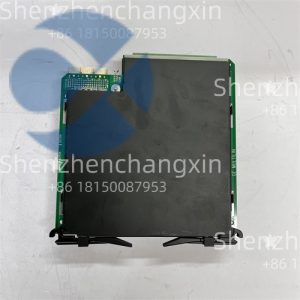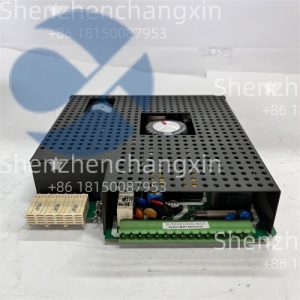
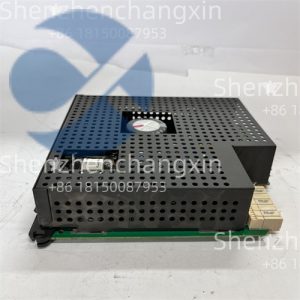
GE Multilin URRHH Bus Differential Relay with IEC 61850: Revolutionizing Bus Protection in Smart Grids
Introduction to Bus Differential Protection and IEC 61850 Integration
In modern power systems, busbars are critical nodes where multiple feeders converge, making their protection paramount to prevent catastrophic failures. The GE Multilin URRHH Bus Differential Relay stands at the forefront of this mission, offering advanced protection for medium-voltage busbars up to 36 kV. Designed to meet IEC 61850 standards, this relay exemplifies the fusion of cutting-edge technology with industry-leading protocols, ensuring seamless integration into smart substations. IEC 61850. the global standard for substation automation, enables interoperability between devices from different vendors, reducing complexity and enhancing reliability. By adopting this protocol, the URRHH relay not only safeguards against internal faults but also aligns with the digital transformation of power grids, where real-time data exchange and intelligent decision-making are essential.
Key Features and Benefits of URRHH Relay
Advanced Protection Functions
The URRHH relay integrates multiple protection schemes tailored for busbars, including:
Differential Protection: Detects internal faults by comparing currents at each end of the bus, ensuring rapid isolation to minimize damage.
Overcurrent Protection: Addresses external faults with time-delayed settings to avoid unnecessary tripping.
Ground Fault Protection: Identifies earth leakage currents, crucial for preventing insulation failures.
Overvoltage/Undervoltage Protection: Monitors voltage levels to safeguard against surges or drops that could destabilize the grid.
These functions are complemented by IEC 61850-compatible communication, allowing the relay to exchange data with other devices via GOOSE (Generic Object-Oriented Substation Event) messaging. This enables fast, deterministic responses to faults, reducing downtime and improving grid resilience.
User-Friendly Design and Flexibility
Engineers appreciate the URRHH relay for its intuitive interface and adaptability. Its modular design supports various configurations, such as:
Three-Phase or Single-Phase Current Inputs: Accommodates diverse busbar setups.
Flexible Settings: Adjustable protection parameters via front-panel buttons or remote software, streamlining commissioning.
Comprehensive Monitoring: Real-time data logging and event recording aid in fault analysis and preventive maintenance.
A substation technician notes, “The URRHH’s ease of use and robust performance make it ideal for retrofitting older systems. Its IEC 61850 compliance ensures future-proofing against evolving standards.”
Real-World Applications and Case Studies
Case Study: Urban Substation Upgrade
In a metropolitan power distribution network, aging electromechanical relays were replaced with URRHH units. The transition involved:
Integration with Existing SCADA: Using IEC 61850 MMS (Manufacturing Message Specification), the relays transmitted data to the control center, enabling remote monitoring.
GOOSE-Based Tripping: During a simulated fault, the relay sent GOOSE messages to breakers, achieving fault clearance in milliseconds—a critical improvement over traditional methods.
Outcome: Reduced outage times by 60% and enhanced system reliability, as reported by the utility company.
Industry Adoption Trends
Globally, utilities are prioritizing IEC 61850-compatible devices like URRHH to meet smart grid mandates. For instance, in Europe, regulatory frameworks emphasize interoperability, driving demand for standardized relays. Similarly, emerging markets in Asia are adopting these technologies to leapfrog legacy systems, citing cost savings from reduced cabling and simplified maintenance.
Expert Insights and Future Outlook
Technical Advantages Highlighted by Experts
Interoperability: IEC 61850 eliminates vendor lock-in, allowing mix-and-match deployment of devices.
Scalability: The protocol supports hierarchical data models, enabling seamless integration into larger networks.
Future-Readiness: As grids evolve toward distributed energy resources (DERs), IEC 61850 provides a foundation for incorporating renewables and storage systems.
Challenges and Solutions
While IEC 61850 adoption is growing, challenges like initial setup complexity persist. Experts recommend:
Training Programs: Utilities invest in hands-on workshops to equip staff with protocol expertise.
Standardized Testing: Pre-commissioning checks ensure compatibility between devices.
Conclusion: Why URRHH Excels in Modern Grids
The GE Multilin URRHH Bus Differential Relay with IEC 61850 represents a paradigm shift in busbar protection. By combining advanced protection algorithms with industry-standard communication, it addresses the core needs of today’s grids: reliability, efficiency, and adaptability. As smart substations become ubiquitous, the URRHH relay is poised to play a pivotal role in shaping resilient energy infrastructure worldwide.