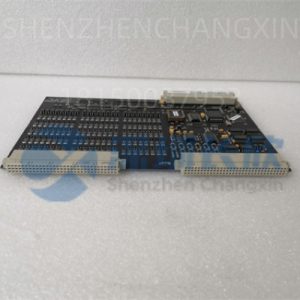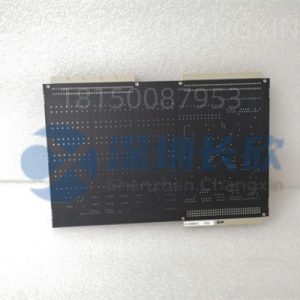
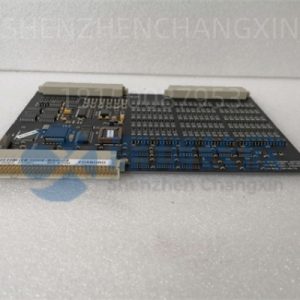
FOXBORO SY-0399095E DCS Controller: Reliable Real-Time Process Management
In the world of continuous process industries—where refineries, chemical plants, and power stations operate 24/7 under stringent safety and efficiency mandates—the reliability of the distributed control system (DCS) is non-negotiable. At the core of many such installations lies the FOXBORO SY-0399095E DCS controller, a high-integrity processing module from Schneider Electric’s I/A Series® platform. Engineered for deterministic execution, fault tolerance, and seamless integration into large-scale automation architectures, the SY-0399095E delivers the kind of real-time process management that keeps critical operations stable, compliant, and productive—even under extreme conditions. This article examines its architectural strengths, operational resilience, deployment best practices, and why it remains a trusted workhorse in some of the world’s most demanding industrial environments.
Built for Determinism: The Foundation of Real-Time Control
Unlike general-purpose industrial PCs or soft PLCs that share resources with non-critical tasks, the SY-0399095E is a purpose-built, hard real-time controller. Its design prioritizes predictable scan cycles, low jitter, and microsecond-level response consistency—essential for applications like boiler combustion control, distillation column regulation, or emergency shutdown sequencing.
Key features enabling this determinism include:
Dedicated Real-Time Operating System: Based on a proprietary, time-sliced kernel optimized for IEC 61131-3 logic execution, with guaranteed task scheduling down to 10 ms intervals.
Hardware-Accelerated I/O Handling: Direct memory mapping between field I/O modules and the CPU eliminates software buffering delays, ensuring analog inputs and outputs are updated within a single scan cycle.
Deterministic Network Stack: When used with FOXBORO’s Fault Tolerant Ethernet (FTE), communication between controllers, operator stations, and I/O racks maintains bounded latency (< 10 ms), even during network reconfiguration.
This level of timing precision ensures that control loops remain stable under load transients—a critical factor in processes where a few hundred milliseconds of delay could trigger a trip or safety event.
“During a sudden feedstock upset in our crude unit, the SY-0399095E maintained reflux control while pressure spiked,” recalls a senior process engineer at a North American refinery. “The PID loop responded in under 20 ms—no oscillation, no manual intervention needed.”
High Availability Through Integrated Redundancy
While real-time performance is vital, true reliability comes from continuous availability. The SY-0399095E supports 1:1 hot-standby redundancy as a standard feature, with both primary and secondary units installed in the same or separate chassis:
Synchronized State Mirroring: All process variables, sequence states, alarm buffers, and historical trends are continuously replicated via a dedicated sync link.
Bumpless Failover: In the event of a CPU failure, power loss, or communication fault, the standby unit assumes control in < 50 milliseconds, with no disruption to analog outputs or digital interlocks. Automatic Re-Synchronization: After recovery, the former primary unit seamlessly reintegrates without requiring operator action or logic reload. This redundancy model has proven invaluable in SIL2-rated safety instrumented functions (SIFs), where regulatory standards demand zero single points of failure. Seamless Ecosystem Integration Within I/A Series The SY-0399095E does not operate in isolation—it is a native component of the broader FOXBORO I/A Series DCS ecosystem, which includes engineering workstations, redundant I/O modules, operator consoles, and asset management tools. This tight integration delivers several operational advantages: Unified Engineering Environment: Control strategies are developed once in Control Builder and deployed across redundant pairs with automatic version matching. Centralized Diagnostics: The System Management Station (SMS) provides real-time health monitoring, including CPU load, memory usage, sync status, and last failover timestamp. Interoperability with Field Devices: Supports HART, PROFIBUS PA, and Foundation Fieldbus I/O, enabling transparent access to device diagnostics and calibration data. Secure Data Publishing: Historical process data and alarms can be securely shared with enterprise systems via OPC UA or ODBC, supporting compliance reporting and advanced analytics. This holistic approach ensures that real-time control is matched by real-time visibility—empowering operators and maintenance teams alike. Proven Performance Across Critical Industries Oil & Gas: Offshore Platform Process Control On a North Sea production platform, SY-0399095E controllers manage separator level, gas compression, and flare knockout drum systems. Despite harsh environmental conditions—salt spray, vibration, and ambient temperatures ranging from –20°C to +50°C—the units have operated continuously for over eight years with zero unplanned outages. Power Generation: Combined-Cycle Plant Coordination A European utility uses redundant SY-0399095E pairs to coordinate steam turbine bypass valves and HRSG (Heat Recovery Steam Generator) drum level control. During grid frequency events, the fast loop response prevents drum dry-out or flooding, maintaining ASME PTC 4 compliance. Chemical Manufacturing: Batch Reactor Sequencing In a pharmaceutical intermediate plant, the controller executes complex temperature-pressure profiles across multi-step batch reactions. Its deterministic sequencing ensures adherence to FDA 21 CFR Part 11 requirements, with full audit trails of setpoint changes and operator actions. Operational Best Practices for Long-Term Reliability To maximize the service life and performance of the SY-0399095E, experienced users recommend: Regular Firmware Validation: Apply updates during planned outages using the “update standby first” method to avoid process interruption. Environmental Monitoring: Install cabinet temperature sensors; sustained operation above 60°C accelerates capacitor aging. Periodic Failover Drills: Conduct controlled switchover tests quarterly to verify redundancy integrity. I/O Load Balancing: Avoid overloading a single controller beyond 70% CPU utilization to maintain headroom for transient events. Expert Insight: “Redundancy only works if you test it,” emphasizes a Schneider Electric certified DCS specialist. “We’ve seen sites go five years without a failover—then discover during an emergency that the sync cable was loose. Schedule it like a fire drill.” User Feedback and Industry Endorsement “The SY-0399095E is the backbone of our control system,” says a plant automation manager at a global chemical company. “It’s boringly reliable—which is exactly what you want in a DCS controller.” Users consistently praise its long lifecycle support (Schneider Electric typically offers >15 years of spare parts availability), comprehensive documentation, and resilience in electrically noisy environments—a common challenge in older industrial facilities.
Conclusion: Stability You Can Build On
The FOXBORO SY-0399095E DCS controller exemplifies the principle that in process automation, the best technology is often the one you don’t notice—because it simply works, day after day, year after year. By combining hard real-time execution, integrated redundancy, and deep ecosystem synergy, it delivers the kind of dependable process management that keeps critical infrastructure running safely and efficiently. For engineers designing or maintaining continuous processes, the SY-0399095E isn’t just a controller—it’s a foundation of trust in an unpredictable world.