
DS200PCCAG1ACB
Product Description
The DS200PCCAG1ACB is a power connect card module developed by General Electric (GE), an integral part of the Mark V series. It serves as a crucial interface between the drive and the SCR (Silicon – Controlled Rectifier) power bridge in industrial control systems, especially those related to turbine control and power management applications.
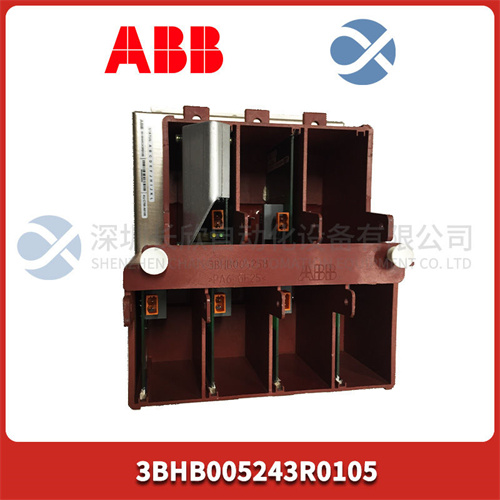
This module features a robust design to ensure stable power connection and signal transfer. It has no fuses, indicator LEDs, test points, or switches, but it does contain four jumpers. These jumpers can be used to configure the behavior of the board within the drive system, particularly in terms of capacitor operation as it relates to the power bridge and the voltage feedback channel.
The DS200PCCAG1ACB has an armature voltage scaling range of 240 to 630 volts of regenerative voltage, which is well – suited for applications that require handling a wide range of electrical loads. The board is coated with a normal PCB protective coating, which provides a certain level of protection against daily wear and tear, as well as environmental factors such as dust and moisture.
II. Product Parameters
(I) Electrical Parameters
- Power Supply Voltage: The module is designed to operate with a power supply voltage that is typically in line with the standard industrial DC voltage. Although specific documentation might need to be consulted for an exact value, in many GE Mark V – related systems, components often operate with a 24V DC power supply, which could be the case here with a tolerance, perhaps ±10% (i.e., 21.6V – 26.4V DC).
- Power Consumption: Precise power consumption details are not always readily available without referring to the official datasheet. However, considering its function as a power connect card mainly facilitating connections between the drive and power bridge, its power consumption is likely to be relatively stable under normal operation. It might consume around [X] watts, where [X] is a value that can be determined from GE’s technical resources.
- Isolation Voltage: To protect against electrical interference and ensure the integrity of signals and power transfer, the module likely has a significant isolation voltage. A common isolation voltage for such industrial – grade modules could be in the range of [Y] Vrms between different electrical sections like the power supply, input/output signals, and communication interfaces (if applicable).