
Description
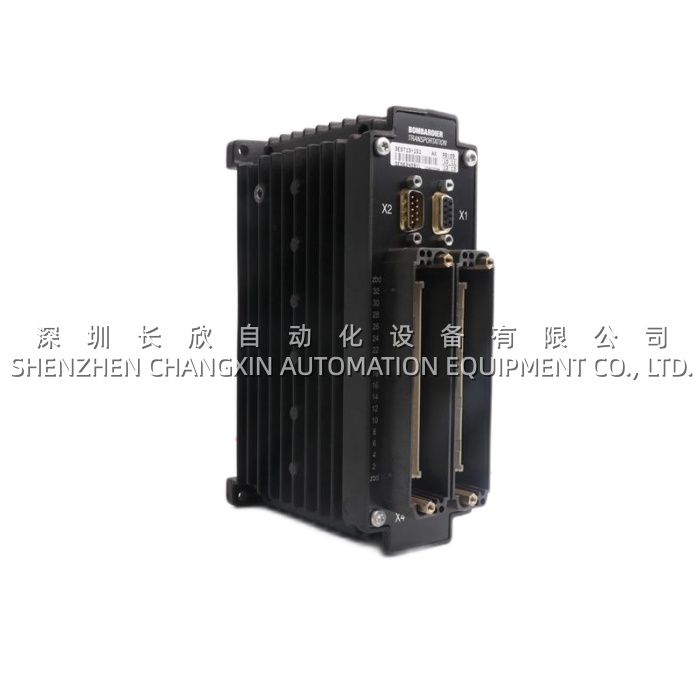
The 3EST13-151 (commercially coded DCA2000A) is an analog input/output module manufactured by Bombardier Transportation (now part of Alstom’s rolling-stock portfolio following the 2021 acquisition), engineered for the MITRAC family of train control and propulsion racks. It provides 16 analog input channels and 4 analog output channels, converting field signals such as temperature probes, pressure transmitters, and cooling-loop sensors into digital data over Modbus RTU, acting as the analog front-end that bridges vehicle-borne transducers to the traction, braking, and HVAC control logic.
h2 Application Scenarios
On a fleet of 20 Bombardier FLEXITY Classic LRVs, the traction inverter cooling-water loop originally relied on a first-generation analog card to read the radiator-outlet Pt100 and pump-discharge pressure transmitter. During summer peak when the inverter cycled hard, the old card’s unshielded channels picked up switching noise from the adjacent IGBT gate drivers—every third hot afternoon, the water-temperature channel would flicker 4–5 °C, occasionally tripping a false “cooling fault” that derated the inverter and annoyed passengers with a sluggish launch out of the stop. The depot swapped the card for a 3EST13-151 DCA2000A during the next mid-life overhaul. The new module’s 12-bit resolution, 100 ms deterministic sampling, and RS-485/Modbus RTU interfacing slotted straight into the existing MITRAC rack backplane, and the M12-connectorized field wiring (instead of the old screw terminals) killed the vibration-loose problem on curved track. Post-retrofit, the false-cooling-fault count dropped from ~12 per month to zero over a full summer season, and the depot standardized the DCA2000A across the remaining 18 cars—one SKU now covers traction cooling, HVAC supply-air temp, and brake-reservoir pressure analog loops.
💡 Note: Bombardier Transportation’s rail control portfolio (including MITRAC) was acquired by Alstom in 2021. Many operators now source 3EST13-151 through Alstom channels or qualified third-party industrial-spares specialists—the module itself is mechanically and firmware-compatible with the original MITRAC rack, regardless of the badge on the purchase order.
h2 Parameter
| Main Parameters | Value/Description |
|---|---|
| Product Model | 3EST13-151 (DCA2000A) |
| Manufacturer | Bombardier Transportation (Alstom group) |
| Product Category | Analog Input / Output Module |
| Analog Inputs | 16 ch, 0–10 V / 0–20 mA (12-bit resolution) |
| Analog Outputs | 4 ch (voltage/current configurable) |
| Sampling Rate | 100 ms per channel (deterministic) |
| Accuracy | ±0.5 % of full scale |
| Communication | Modbus RTU over RS-485 |
| Field Connectors | 2 × M12 (shielded, vibration-resistant) |
| Power Consumption | ≤ 5 W |
| Operating Temp. | –40 °C to +70 °C |
| Environmental Rating | IP20 (rack-mounted) |
| Compatible System | Bombardier MITRAC / TCN-ready train control racks |
h2 Technical Principles and Innovative Values
Innovation Point 1: 16+4 Analog Density in a Compact MITRAC Footprint. Most rail-grade I/O slices give you 8 AI if you’re lucky; the 3EST13-151 packs 16 inputs + 4 outputs into one DIN/rack slice, meaning a single MITRAC bay can cover traction cooling (4× Pt100), HVAC supply/return (4× 0–10 V temp, 2× pressure), brake reservoir (2× 4–20 mA), and still have headroom for future sensors—without adding a second slice and its extra backplane power draw.
Innovation Point 2: M12-Connectored Field Landing for Tram/Vibe Zones. Screws loosen on curved track; the DCA2000A uses M12 circular connectors for the analog field landing, which lock with a quarter-turn and maintain shield continuity through the coupling nut. That’s the difference between “analog channel flapped at mile 40 of the tram line” and “ran clean for two years.”
Innovation Point 3: Modbus RTU + TCN Awareness. The 3EST13-151 speaks Modbus RTU natively over RS-485, which lets it drop into mixed-vendor retrofits (e.g., a Bombardier carbody with a third-party HVAC controller asking for analog data). At the same time, it’s TCN (Train Communication Network / IEC 61375) aware within the MITRAC context, so the vehicle’s central BCU/TCU can poll it without a gateway box.
Innovation Point 4: –40 °C Cold-Start Rating. Depot yards in Nordic or Alpine fleets see –30 °C before the aux heater kicks in. The 3EST13-151‘s –40 °C floor means the analog rack comes up clean on the first “wake from deep sleep” without calibration drift complaints—critical for brake-reservoir pressure sensing where a cold-start offset can flag a spurious low-pressure fault before the compressor even spins.
h2 Application Cases and Industry Value
A regional metro depot running 32 Alstom (ex-Bombardier) MITRAC-equipped midsize cars noticed that three cars consistently logged “HVAC supply-air temp out of range” alarms on the first run of the morning, clearing themselves after 20 minutes of tunnel running. The root cause: the original analog slice’s 0–10 V inputs were seeing cold-start offset on the supply-air NTC bridge, pushing the reading 3–4 °C low until the carbody warmed. The depot retrofitted those three cars with 3EST13-151 DCA2000A modules during a scheduled HVAC condenser clean—same rack slot, same M12 pinout, just a firmware-ID check in the MITRAC engineering tool to accept the new module ID. Morning-alarm count dropped to zero across the sub-fleet within two weeks, and the “first-run flaky analog” ticket category quietly vanished from the weekly O&M meeting. The depot subsequently added two 3EST13-151 units to the stores cage as the universal analog spare—covering traction cooling, HVAC, and brake pneumatics across the 32-car fleet.