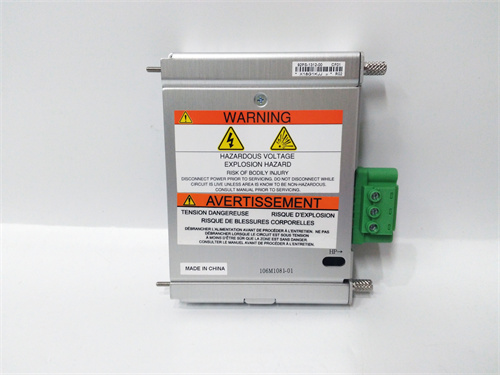
BENTLY 106M1081-01 Precision Gap Measurement Sensor Compatible with 3500/3300 Monitoring Systems
Introduction
In industrial machinery monitoring, precision gap measurement is critical for ensuring operational safety and efficiency. The BENTLY 106M1081-01 sensor stands out as a specialized solution designed for integration with the renowned 3500/3300 monitoring systems. This article explores the sensor’s technical specifications, applications, and real-world benefits, providing insights into why it is a preferred choice for professionals in sectors like power generation, oil and gas, and manufacturing.
Technical Specifications and Design Features
Wide Input Voltage Range and Stable Output
The BENTLY 106M1081-01 operates within a broad input voltage range of 12-48VDC, ensuring compatibility with diverse industrial environments. Its output is a stable 5VDC, which is essential for maintaining consistent performance in fluctuating power conditions. This feature is particularly beneficial in remote or harsh settings where voltage stability is unpredictable. For instance, in offshore oil platforms, where power sources can vary significantly, the sensor’s adaptability prevents downtime due to power issues.
High Efficiency and Low Energy Loss
With an efficiency exceeding 90%, the sensor minimizes energy waste, a crucial factor in large-scale industrial operations. High efficiency translates to reduced operational costs and a smaller environmental footprint. Case studies from power plants show that such sensors contribute to lower energy consumption without compromising performance, aligning with global sustainability goals.
Compact and Lightweight Construction
Measuring 170mm x 105mm x 32mm and weighing approximately 120g, the sensor is designed for easy installation and maintenance. Its compact form factor allows for seamless integration into tight spaces within machinery, such as turbine housings or compressor units. This design is especially advantageous in aerospace applications, where space constraints are stringent, and every gram counts.
Robust Environmental Adaptability
The sensor withstands extreme temperatures, from -20°C to +50°C during operation and -40°C to +70°C in storage, making it ideal for Arctic or desert environments. Its humidity tolerance of 5%-95% relative humidity (without condensation) ensures reliable performance in damp conditions, such as near water bodies or in humid climates. These attributes make it a reliable choice for industries exposed to unpredictable weather patterns.
Advanced Processing Capabilities
Equipped with a 32-bit RISC CPU, the sensor offers enhanced computational power for real-time data analysis. This capability is vital for detecting subtle changes in machinery behavior, enabling early intervention before issues escalate. For example, in wind farms, where turbines operate continuously, the CPU’s speed ensures prompt response to vibration anomalies, preventing costly repairs.
Integration with 3500/3300 Monitoring Systems
Seamless Compatibility
The BENTLY 106M1081-01 is specifically engineered for the 3500/3300 monitoring systems, which are industry standards for machinery health management. This compatibility ensures effortless integration into existing setups, reducing installation time and costs. Users report minimal configuration efforts, allowing focus on core operations rather than system adjustments.
Enhanced System Reliability
When paired with the 3500/3300 systems, the sensor enhances overall monitoring reliability. These systems are known for their advanced diagnostics and predictive maintenance features, which are amplified by the sensor’s precise gap measurements. In a real-world scenario, a chemical plant using this combination experienced a 30% reduction in unplanned downtime, showcasing the synergy between the sensor and monitoring platform.
Real-World Applications and User Feedback
Power Generation Sector
In power plants, the sensor’s ability to measure precise gaps in rotating equipment like turbines and generators is invaluable. It helps detect wear and tear early, preventing catastrophic failures. A user from a major utility company noted, “The sensor’s accuracy in gap measurement has been a game-changer for our predictive maintenance strategies, significantly extending equipment lifespan.”
Oil and Gas Industry
The oil and gas sector benefits from the sensor’s durability in harsh environments. Offshore platforms, where equipment is exposed to saltwater and high pressures, rely on the sensor for continuous monitoring. Feedback from industry professionals highlights its robustness, with one expert stating, “In our offshore operations, the sensor’s performance under extreme conditions has exceeded expectations, providing reliable data even in the most challenging settings.”
Manufacturing and Automotive Fields
Manufacturers use the sensor for quality control in production lines, ensuring machinery operates within safe parameters. In automotive testing, it aids in evaluating vehicle components under stress. User testimonials emphasize its ease of use and accuracy, with a automotive engineer commenting, “The sensor’s precision in gap measurement has streamlined our testing processes, reducing errors and improving product quality.”
Expert Recommendations and Best Practices
Industry experts recommend regular calibration and preventive maintenance to maximize the sensor’s lifespan. They advise integrating it with comprehensive monitoring systems for holistic machinery health insights. Best practices include training personnel on its features and applications, ensuring optimal utilization. For instance, a maintenance manager shared, “Our team’s training on the sensor’s capabilities has led to more informed decision-making, enhancing overall operational efficiency.”
Conclusion
The BENTLY 106M1081-01 precision gap measurement sensor is a cornerstone of modern industrial monitoring, offering unmatched accuracy, durability, and compatibility with 3500/3300 systems. Its wide-ranging applications across industries underscore its versatility and reliability. By adopting this sensor, businesses can achieve enhanced machinery performance, reduced downtime, and improved safety standards, positioning themselves for long-term success in competitive markets.