
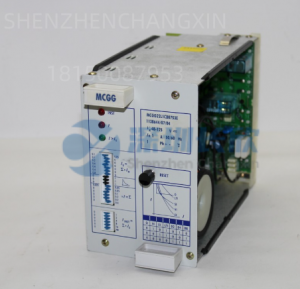
 ALSTOM MCGG22L1CB0753 Synchronizing and Excitation Interface Module – Ensures Grid Compliance in Power Plants
The seamless integration of a power generation unit into the electrical grid is a ballet of precision engineering and real-time control. It is a moment where milliseconds and millivolts matter, dictating the difference between a successful connection and a catastrophic failure. Beyond the initial synchronization, maintaining stable operation within the narrow parameters defined by grid codes is an ongoing imperative for plant operators. The ALSTOM MCGG22L1CB0753 Synchronizing and Excitation Interface Module stands as a dedicated sentinel in this process. This sophisticated device, part of ALSTOM’s proven MCGG family of protection and control solutions, consolidates critical functions for both generator synchronization and interface with the excitation system. By ensuring precise matching of generator and grid conditions during breaker closure and providing a robust link for voltage regulation, it directly addresses the fundamental requirements for grid compliance, operational safety, and asset protection in power plants worldwide.
1. Technical Architecture: The Dual Pillars of Synchronization and Excitation Control
1.1 Advanced Synchronization (Sync-Check) Functionality
The primary role of the MCGG22L1CB0753 module is to perform automatic synchronizing checks, a critical step before closing the generator circuit breaker. It continuously monitors and compares key parameters from two sources: the generator side (via potential transformers, PTs) and the busbar or grid side (via PTs).
Voltage Matching: The module calculates the magnitude of both voltages and ensures their difference is within a pre-set permissible limit (e.g., ±5%). Exceeding this limit could cause a large reactive power surge upon connection.
Frequency Matching: It measures the slip frequency (the difference between generator and grid frequencies) and verifies it is below a safe threshold. A high slip frequency would result in the generator experiencing severe torque oscillations as it “pulls into step” with the grid.
Phase Angle Matching: This is the most critical and time-sensitive parameter. The module computes the instantaneous phase angle difference between the two sine waves. It will only permit a closing command when this angle is crossing zero within a very narrow “close window” (often less than 10 degrees). Some advanced versions may even predict the zero-crossing point and issue a timed closing pulse to compensate for breaker closing time, ensuring the breaker contacts close as close to zero phase difference as possible.
Integrated Logic and Safety: The module incorporates configurable logic that requires ALL conditions (voltage, frequency, phase) to be satisfied simultaneously before enabling a close signal. It also includes built-in safeguards, such as checking that the generator voltage is present and stable, preventing a synchronization attempt onto a dead bus.
1.2 Excitation System Interface and Voltage Regulation Support
Once synchronized, the generator must maintain its terminal voltage within strict limits to support grid voltage and provide required reactive power (VAr) support. The MCGG22L1CB0753 facilitates this by serving as a key interface between the generator’s Automatic Voltage Regulator (AVR) or the plant’s Distributed Control System (DCS) and the excitation system.
Signal Conditioning and Isolation: It receives voltage reference signals (raise/lower commands) from the AVR and conditions them into robust, isolated signals suitable for transmission to the excitation system’s power components, which operate at different voltage levels and in electrically noisy environments.
Protection Interlocks: The module can integrate protective interlocks from various sources (e.g., overfluxing protection, loss-of-field protection). If a protection relay trips, the interface module can block or rapidly reverse excitation commands to safeguard the generator rotor and stator windings.
Mode Switching: It may support logic for smooth switching between different excitation control modes, such as from manual field control to automatic voltage control during startup and synchronization sequences.
1.3 Robust Hardware Design for Critical Applications
Designed for the demanding environment of a power plant relay panel or control cubicle, the MCGG22L1CB0753 features industrial-grade construction. Its design prioritizes immunity to electromagnetic interference (EMI) from switchyard operations and other high-power equipment. The module typically offers multiple isolated input channels for voltages and binary signals, and reliable output relays for issuing breaker close commands or excitation control signals. Clear front-panel indicators provide immediate status on synchronization conditions and module health.
2. Ensuring Grid Compliance: From Theory to Practice
Grid codes are stringent technical specifications enforced by transmission system operators (TSOs). They mandate how generating units must behave to ensure overall grid stability, power quality, and security of supply. The MCGG22L1CB0753 module is instrumental in meeting several key compliance areas.
2.1 Synchronization Compliance
Grid codes explicitly define the maximum allowable deviations for voltage, frequency, and phase angle during synchronization. The module’s precise measurements and configurable settings allow plant engineers to set limits that are well within these regulatory requirements, providing a documented, hardware-enforced guarantee that every synchronization event is compliant. This eliminates the risk of human error during manual synchronization and provides a consistent, repeatable process.
Case Study – Rapid Restart Compliance: A combined-cycle gas turbine plant used for peak shaving is required by its TSO to be capable of a “hot restart” and synchronization within 30 minutes of receiving a dispatch instruction. The plant’s legacy manual synchronization procedure was time-consuming and occasionally resulted in out-of-spec closures, risking penalties. By integrating the ALSTOM MCGG22L1CB0753 module into its startup sequence, the plant automated the entire synchronization check. The module’s fast, accurate measurement and automatic close command enabled reliable synchronization in under 2 minutes once the generator was at speed, consistently meeting the grid code’s rapid response requirement and improving the plant’s dispatchability.
2.2 Voltage and Reactive Power Support Compliance
Post-synchronization, grid codes require generators to maintain terminal voltage within a specified band (e.g., ±5%) and to be capable of providing dynamic reactive power support during grid voltage dips (Low Voltage Ride-Through, LVRT). The excitation interface function of the MCGG22L1CB0753 is crucial here. It ensures that voltage reference commands from the AVR are faithfully and rapidly transmitted to the excitation system. During an LVRT event, when the AVR must switch to a boosting mode to inject reactive current, a reliable and fast interface is essential to execute the grid code-mandated response without delay.
2.3 Data Logging and Reporting
Modern grid compliance often requires event reporting. The module can be configured to log synchronization events, capturing timestamps, and the values of voltage, frequency, and phase angle at the moment of breaker closure. This data is invaluable for internal analysis, performance optimization, and providing evidence of compliance during audits by the grid operator.
User Perspective: “In our fleet of hydroelectric plants, grid compliance audits have become increasingly detailed,” shares a Senior Protection Engineer at a utility company. “The ALSTOM sync-check modules like the MCGG22L1CB0753 are not just control devices; they are our compliance partners. The event reports they generate give us concrete, indisputable data to prove that every unit synchronization was performed within the limits of our grid connection agreement. It turns a subjective operational procedure into a documented, objective fact.”
3. Application Across Power Generation Technologies
3.1 Conventional Thermal and Nuclear Plants
In large baseload plants, the module manages the critical synchronization of massive steam turbine generators. Its high reliability is paramount for infrequent but crucial synchronization events after major maintenance outages.
3.2 Renewable Integration: Biomass and Hydro
For dispatchable renewables like biomass or hydro, which may start and stop frequently, the automation provided by the module is key to efficient and compliant operation. It allows for quick, unattended synchronization as water flow or fuel supply dictates.
3.3 Gas Turbine and Combined-Cycle Plants
As highlighted in the case study, fast-starting gas turbines benefit immensely from the speed and accuracy of automatic synchronization to capture market opportunities and provide grid services, all while adhering to strict cycling-related grid code provisions.
3.4 Expert Recommendation on System Integration
“The true value of a dedicated synchronizing and excitation interface module is realized through careful integration,” advises Dr. Fiona Kerr, a consultant specializing in power plant control systems. “It should not be a standalone ‘black box.’ Its status signals and permissive outputs must be seamlessly woven into the plant’s overall unit sequencing logic. Furthermore, its settings must be periodically reviewed and validated against any updates to the grid code. Treating it as an integral part of the plant’s compliance and control architecture, rather than just a protective device, maximizes its contribution to operational excellence and regulatory adherence.”
4. Conclusion: A Critical Link in the Compliant Power Chain
The ALSTOM MCGG22L1CB0753 Synchronizing and Excitation Interface Module transcends its role as a mere component. It is a critical control node that embodies the technical bridge between a generating unit’s internal operation and the external demands of the public electricity grid. By automating and perfecting the synchronization process, it enhances safety, protects valuable assets, and enables operational agility. More importantly, by providing a precise, reliable, and auditable means to meet voltage, frequency, and phase matching requirements, it serves as a foundational tool for ensuring grid compliance.
In an era where grid stability is challenged by energy transition and decentralization, the importance of predictable, code-compliant generator behavior cannot be overstated. Modules like the MCGG22L1CB0753 provide plant operators with the confidence and the technical capability to not only connect to the grid but to do so as a responsible and reliable partner in maintaining the integrity of the entire power system. Investing in such dedicated, intelligent interface technology is a strategic decision that safeguards both the plant’s equipment and its license to operate within the modern electrical network.