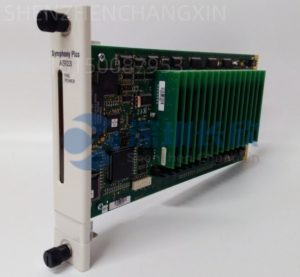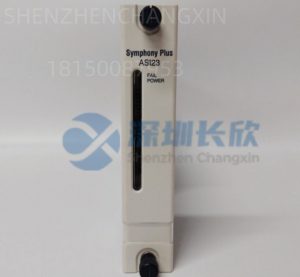
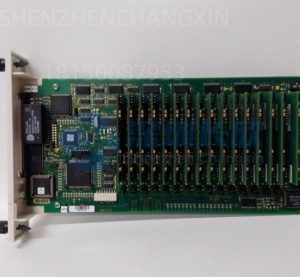
ABB SPASI23 Analog Input Module: Engineered for Reliability from -40°C to +85°C
In the most demanding corners of industrial automation—where Arctic cold snaps meet desert heatwaves, and where precision measurement must survive electrical noise, vibration, and decades of continuous operation—analog input modules are the unsung sentinels of process integrity. The ABB SPASI23 stands out as a purpose-built solution for these extremes. Designed for use in ABB’s System 800xA and AC 800M control platforms, this high-density analog input module delivers exceptional accuracy, robust isolation, and an industry-leading operating temperature range of –40°C to +85°C. Whether monitoring turbine bearing temperatures in Siberian gas fields or pH levels in tropical wastewater plants, the SPASI23 ensures that every millivolt tells the truth—no matter how harsh the environment.
This isn’t just another I/O card; it’s a testament to ABB’s philosophy that reliability begins at the signal source.
Beyond Standard Specifications: What Makes the SPASI23 Exceptional?
While many analog input modules claim “industrial” ratings, few are truly engineered for sustained operation beyond +60°C or below freezing. The ABB SPASI23 breaks that mold. Its extended temperature tolerance stems from careful component selection, thermal design, and rigorous validation:
16 single-ended or 8 differential analog inputs per module, supporting voltage (±10 V, 0–10 V) and current (0/4–20 mA) signals
16-bit resolution with ±0.1% full-scale accuracy at 25°C—and less than ±0.3% drift even at –40°C or +85°C
Galvanic isolation (≥1500 Vrms) between field circuits, internal power, and backplane bus, preventing ground loops and protecting controllers from surges
Integrated signal conditioning with software-configurable filtering (0–20 ms) to suppress EMI from VFDs or arc furnaces
Front-panel diagnostic LEDs per channel, indicating open-circuit, overrange, or configuration mismatch
Unlike commodity modules that degrade in extreme climates, the SPASI23 uses automotive-grade capacitors, metal-film resistors, and conformal-coated PCBs to maintain performance across its full thermal envelope.
Real-World Validation: Where Temperature Extremes Test Limits
Case Study: Offshore Oil Platform in the North Sea
An aging platform required retrofitting its turbine monitoring system without replacing the entire DCS. Ambient temperatures in the electronics room regularly dropped to –30°C during winter storms, causing drift in legacy analog cards. After installing ABB SPASI23 modules, engineers observed stable readings on lube oil pressure and exhaust thermocouples—even during rapid temperature swings from –35°C to +50°C during maintenance heater cycles. “The SPASI23 didn’t just work in the cold—it performed like it was in a lab,” said the lead instrumentation technician.
Case Study: Solar Thermal Power Plant in the Atacama Desert
In one of the world’s driest and hottest regions, ambient temperatures inside non-air-conditioned field junction boxes routinely exceed +75°C. Standard I/O modules suffered accelerated aging and calibration drift, leading to false high-temperature alarms on receiver tubes. The plant replaced them with SPASI23 units, which maintained <0.25% error over 18 months of continuous exposure. Crucially, the module’s wide supply tolerance (19–32 VDC) compensated for voltage drops in long cable runs under high load—another hidden advantage in remote sites.
User Perspectives and Engineering Insights
“We installed SPASI23 modules in a lithium brine evaporation facility at 4.000 meters elevation. Between UV degradation, thermal cycling, and saline air, most electronics fail within two years. Three years later, these modules are still rock-solid.”
— Project Engineer, Mining & Minerals Division
Expert Recommendations for Deployment:
In high-noise environments (e.g., near large motors), use differential input mode to reject common-mode interference
Always pair with shielded, twisted-pair cable, grounding the shield at the cabinet end only
Enable open-wire detection in Control Builder M for 4–20 mA loops—it catches broken sensor wires before they cause process upsets
For outdoor cabinets without climate control, allow adequate airflow around the module; avoid stacking multiple high-power modules adjacent to the SPASI23
Perform annual calibration checks using a certified signal simulator—though drift is minimal, regulatory compliance often requires it
Seamless Integration into ABB’s Automation Architecture
The SPASI23 is not a standalone device but a native component of ABB’s integrated control ecosystem:
Mounts on standard S800 I/O baseplates (e.g., TB840. TB850) alongside digital and specialty modules
Fully supported in Control Builder M, enabling drag-and-drop configuration, real-time trending, and diagnostic logging
Synchronizes with AC 800M controllers for deterministic scan cycles as fast as 10 ms
Compatible with System 800xA for enterprise-wide data visibility and alarm management
This tight integration ensures that high-reliability analog acquisition doesn’t come at the cost of engineering complexity.
Installation, Maintenance, and Long-Term Support
Installation follows standard S800 practices: slide the module into the baseplate, connect field wiring to spring-clamp or screw terminals, and configure channels in software. No jumpers or DIP switches are needed—the SPASI23 auto-detects signal type based on terminal wiring and software settings.
For maintenance, the per-channel LEDs provide instant status: green = valid signal, red = fault (e.g., open circuit or overrange). Detailed diagnostics—including min/max recorded values and error counters—are accessible via Control Builder M for predictive upkeep.
ABB recommends inspecting terminal torque annually in high-vibration environments and replacing modules every 10–12 years under continuous operation. However, numerous installations in hydroelectric and nuclear facilities have exceeded 15 years with no functional degradation—proof of its ruggedized design.
Conclusion
The ABB SPASI23 Analog Input Module redefines what’s possible at the edge of industrial measurement. By extending reliable operation from the deep freeze of polar winters to the scorching heat of desert summers, it eliminates one of the last environmental constraints on control system design. More than just surviving extremes, the SPASI23 delivers laboratory-grade accuracy where it matters most—on the front lines of energy, water, mining, and manufacturing. For engineers tasked with building infrastructure that must operate flawlessly for decades, the SPASI23 isn’t merely a specification checkbox; it’s a commitment to unwavering signal fidelity, no matter the conditions.