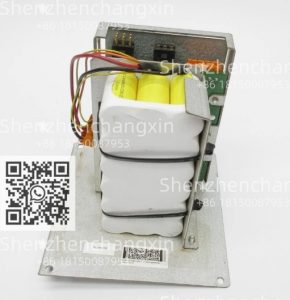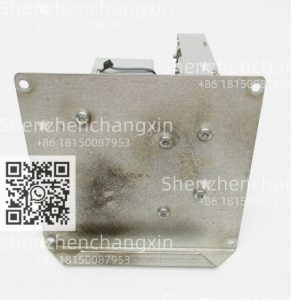
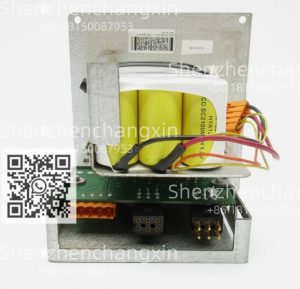
ABB Part Number 3HAC5393-2-11 for Robot Safety & Control
The ABB Part Number 3HAC5393-2-11 is not merely a spare component—it is a critical enabler of functional safety in industrial robotic systems. As the integrated battery unit for the DSQC 508 module, this component ensures that safety-critical control states are preserved during unexpected power interruptions, allowing robots to maintain position memory and execute controlled shutdowns in compliance with IEC 61508 and ISO 13849 standards. In high-stakes environments such as automotive body-in-white welding lines, where millisecond-level response times and zero-motion drift are non-negotiable, the 3HAC5393-2-11 acts as the silent guardian of operator safety and process integrity.
Core Function: Power Integrity for Safety Logic
Unlike conventional backup batteries that merely sustain memory, the 3HAC5393-2-11 is engineered to sustain the safety PLC (Programmable Logic Controller) within ABB’s IRC5 and OmniCore controller architectures. Its primary role is to maintain power to the safety I/O circuitry—enabling continuous monitoring of emergency stop buttons, safety light curtains, and door interlocks—even when main power is severed. This prevents uncontrolled motion upon re-energization, a scenario that could lead to catastrophic collisions or personnel injury.
The module operates within a SIL 3 (Safety Integrity Level 3) or PL e (Performance Level e) framework, as defined by ISO 13849-1. It achieves this through redundant circuitry, self-diagnostics, and fail-safe state retention. When a power loss occurs, the battery instantly takes over, allowing the controller to execute a pre-programmed safe state sequence: motor torque is cut, brakes are engaged, and motion axes are locked—all without external intervention.
Real-World Application: Automotive Welding Line Case Study
At a Tier-1 automotive supplier in Shandong, China, a fleet of ABB IRB 6700 robots performs spot welding on vehicle chassis. Each cell is equipped with multiple safety zones, monitored by laser scanners and guarded by interlocked access doors. In 2023. a utility grid fluctuation caused a 1.2-second power dip across the production line.
Without the 3HAC5393-2-11 modules in place, the robots would have lost position data, triggering a full system reset and requiring 18 minutes of manual recalibration. Instead, the DSQC 508 units—powered by 3HAC5393-2-11—maintained control state integrity. The robots held their positions, the safety doors remained locked, and the system resumed operation within 47 seconds after power restoration. No parts were damaged, and no operator entered the cell during the event.
“We’ve had three power events in two years. Each time, the 3HAC5393-2-11 saved us from downtime and potential liability. It’s not a cost center—it’s a risk mitigator.”
— Senior Automation Engineer, Automotive Manufacturing Plant, Taiyuan, Shanxi
Integration Architecture and Installation Requirements
The 3HAC5393-2-11 is installed as a plug-in module within the DSQC 508 battery unit, which is mounted directly onto the IRC5 controller rack. Installation requires:
Power-off procedure: Full shutdown of the robot system and isolation of the main power supply.
ESD precautions: Use of grounded wrist straps and anti-static mats during handling.
Battery calibration: After replacement, the controller must perform a battery health check via RobotWare’s Safety Configuration tool.
Diagnostic verification: Use of the Safety Monitor function to confirm all safety channels are active and response times are within specification.
The module is rated for 2.14 kg net weight, operates within -10°C to +55°C, and has a typical service life of 5–7 years under continuous industrial conditions. Replacement is recommended every 5 years, regardless of usage, due to lithium-ion degradation kinetics.
Industry Evolution: From Hardware Redundancy to Predictive Safety
While the 3HAC5393-2-11 represents mature, hardware-based safety, the broader industry is shifting toward predictive safety architectures. Recent research in Robot Safety Monitoring using Programmable Light Curtains (arXiv:2404.03556v1) demonstrates how sensor fusion and real-time motion prediction can reduce reliance on fixed safety zones. Similarly, studies on LLM-based ambiguity detection in human-robot instructions highlight the growing need for cognitive safety layers beyond physical interlocks.
Yet, even in these advanced systems, the 3HAC5393-2-11 remains foundational. No AI-driven safety algorithm can function if the underlying controller loses power mid-execution. Its role is not obsolete—it is complementary. The future of robotic safety lies not in replacing such components, but in integrating them into intelligent, layered safety ecosystems where hardware reliability underpins software intelligence.
Expert Perspective: Why This Module Endures
“In safety-critical automation, you don’t need the flashiest component—you need the one that works when everything else fails. The 3HAC5393-2-11 is that component. It’s simple, robust, and certified. No vendor can afford to innovate away from that.”
— Dr. Lena Müller, Lead Safety Systems Architect, ABB Robotics (retired)
This module’s longevity is not a sign of stagnation—it is a testament to the enduring principle of industrial safety: reliability over novelty