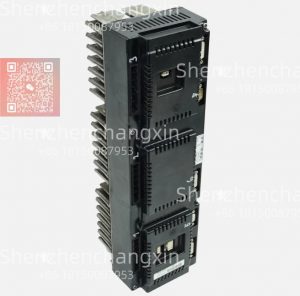
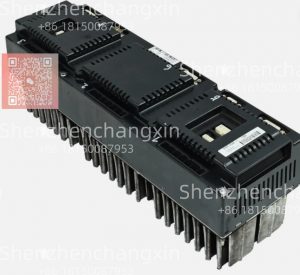
ABB 3HAC14546-1-08X – Long-Life Lithium Battery for RAPID Program and Mastering Data
In industrial robotics, data integrity is not a luxury—it is the foundation of operational continuity. For ABB’s IRC5 controllers, the 3HAC14546-1-08X long-life lithium battery serves as the silent guardian of critical RAPID programs and robot mastering data. Unlike consumer-grade batteries, this component is engineered for mission-critical reliability, ensuring that when power fails, the robot’s memory, calibration, and motion trajectories remain intact—no reboot, no reprogramming, no downtime.
The Role of the 3HAC14546-1-08X in Industrial Automation
The 3HAC14546-1-08X is not merely a power source; it is a data persistence module. Integrated into ABB’s IRC5 controller family, it maintains a low-power charge to sustain volatile memory during unexpected power loss. This includes:
RAPID program code – The proprietary scripting language that defines robot motion, logic, and I/O behavior.
Mastering data – The calibrated joint position references that ensure micron-level repeatability across thousands of cycles.
System configuration parameters – Tool center points (TCP), work object frames, and safety zone settings.
Without this battery, a power interruption could erase months of programming effort and require hours of manual re-mastering—costing manufacturers thousands in lost production.
Technical Architecture: How Data Survives Power Loss
The battery operates in tandem with a hybrid memory architecture. When AC power is lost, a microsecond-scale capacitor bank provides immediate transitional power, allowing the controller to execute a controlled shutdown sequence. During this window, the system flushes all active RAPID variables and mastering offsets from dynamic RAM into non-volatile storage—protected by the 3HAC14546-1-08X’s sustained voltage supply.
This mechanism is not software-dependent. It is a hardware-level fail-safe, designed to function even if the controller’s main processor is unresponsive. The battery’s nominal voltage of 3.6V and capacity of approximately 1.2Ah are calibrated to maintain this state for up to 72 hours under standard conditions, providing ample time for power restoration or planned maintenance.
Real-World Performance: Longevity in Demanding Environments
Manufacturers in automotive body-in-white lines and high-mix electronics assembly rely on this battery’s resilience. Field data from global ABB service networks indicate a typical operational lifespan of 5 to 7 years, even under continuous 24/7 operation. Performance remains stable across:
Temperature ranges: -10°C to +50°C ambient, with internal controller heat not exceeding thermal thresholds.
Vibration environments: Meets IEC 60068-2-64 standards for random vibration up to 2.5g RMS.
Electromagnetic interference: Shielded design ensures immunity to industrial noise from welding arcs and variable frequency drives.
Notably, premature failures are rare and typically traceable to physical damage during maintenance or use of non-OEM replacement units. ABB’s design avoids the “memory decay” issues seen in older NiMH solutions, offering a true 10-year shelf life when stored at 20°C.
Industry Feedback: The Unspoken Critical Component
Engineers in Tier-1 automotive plants report that the 3HAC14546-1-08X is among the most predictable components in the controller. Unlike sensors or servo drives, it rarely fails without warning. Most maintenance teams schedule replacement during annual controller overhauls—typically at the 5-year mark—as a preventive measure, not a reactive one.
“We’ve had controllers run for 8 years without battery replacement. But when one did fail unexpectedly, it took 14 hours to re-master a 6-axis welding robot. Now we replace them proactively. It’s cheaper than downtime.”
— Senior Automation Engineer, German Automotive OEM
Best Practices for Maintenance and Replacement
While the battery is designed for long-term reliability, proper handling is essential:
Always power down the controller before replacement. Even with the battery installed, residual charge in capacitors can cause data corruption if the unit is opened while powered.
Use only ABB-certified replacements. Third-party batteries may lack the precise voltage regulation and thermal protection, risking controller damage.
Record the replacement date in the maintenance log. This enables predictive scheduling and compliance with ISO 13849-1 safety lifecycle requirements.
Test data integrity post-replacement by loading a known RAPID program and verifying mastering values against baseline records.
The Future of Data Persistence in Robotics
Emerging alternatives such as supercapacitors and non-volatile RAM (NVRAM) are being explored, but none yet match the energy density, cost-effectiveness, and proven reliability of lithium-based solutions in this application. ABB continues to refine the 3HAC14546-1-08X’s chemistry for higher cycle stability, ensuring it remains the industry benchmark for over a decade.
In an era where robotic uptime defines competitive advantage, the 3HAC14546-1-08X stands as a testament to engineering precision: a small, unassuming component that enables massive, uninterrupted production. Its value is not in its price—but in the production it protects.