ABB 3HAC14279-1 I/O Unit for IRB Robots | Fast Delivery
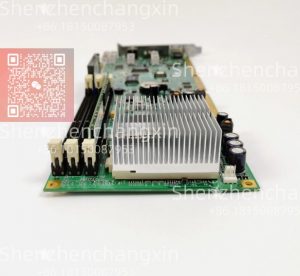
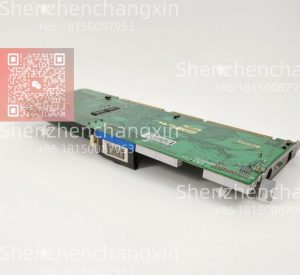
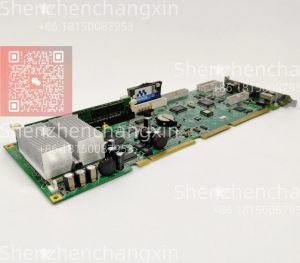
The ABB 3HAC14279-1 I/O unit — officially designated as DSQC540 — is a critical digital input/output expansion module engineered for seamless integration with ABB IRB robotic systems. Designed for industrial environments demanding precision, reliability, and rapid response, this module serves as the essential interface between the robot controller and external devices such as sensors, pneumatic valves, limit switches, and safety circuits. Its role extends beyond simple signal translation; it enables real-time coordination, enhances process automation, and ensures operational continuity in high-stakes manufacturing environments.
Core Technical Architecture: Modular Design for Industrial Precision
1.1 Hardware Specification and Integration
The 3HAC14279-1 is a compact, 16-point digital I/O module with a physical footprint of 44 × 23 × 9.5 cm and a net weight of 0.48 kg. Manufactured in Germany, it is engineered for long-term durability under industrial stressors, operating reliably within a temperature range of -25°C to +60°C. The module connects directly to the IRC5 controller via a proprietary backplane interface, eliminating the need for external wiring or fieldbus configuration. This plug-and-play architecture ensures minimal installation time and eliminates common failure points associated with terminal blocks or cable termin<9>3ations.
1.2 Communication Protocol and System Role
The module communicates with the IRC5 controller through ABB’s internal high-speed I/O bus, synchronized with the controller’s 2–8 ms cycle time. It supports standard 24V DC digital signals with opto-isolated inputs and relay-based outputs, compatible with industry-standard sensors and actuators. The module does not require protocol configuration — it is automatically recognized by RobotWare 4.0 and later versions, appearing as a standard I/O unit in the system tree. This plug-and-recognize capability significantly reduces commissioning time and eliminates configuration errors common in fieldbus-based systems.
1.3 Environmental and Safety Compliance
Built to industrial standards, the module features no moving parts and is housed in a flame-retardant, dust-resistant enclosure. It complies with IEC 61131-2 for industrial control systems and is designed to withstand electromagnetic interference (EMI) levels typical in welding, assembly, and material handling cells. Its design supports integration into safety-critical applications when paired with ABB’s FS0 safety controller, enabling Category 3 PLd safety circuits for emergency stop and guard door interlocks.
Real-World Applications: Enabling High-Volume Automation
2.1 Automotive Assembly: Precision Welding Coordination
In a Tier-1 automotive supplier’s body-in-white line, the 3HAC14279-1 modules were deployed across 12 IRB 1520ID robots to manage weld gun status signals, coolant flow sensors, and part-present detection. Each module handled 16 discrete signals per robot, enabling synchronized trigger sequences between robotic motion and welding cycles. The result: a 22% reduction in missed welds and a 17% increase in line throughput, achieved without modifying the existing robot program architecture.
2.2 Electronics Manufacturing: High-Mix Assembly Line
A global electronics manufacturer integrated 3HAC14279-1 units into IRB 120 robots for PCB handling and component placement. The modules interfaced with vacuum pressure sensors, optical alignment triggers, and conveyor stop signals. By centralizing I/O control at the robot level, the system eliminated the need for centralized PLCs per cell, reducing wiring complexity by 40% and enabling faster product changeovers — from 4 hours to under 45 minutes.
Supply Chain Advantage: The “Fast Delivery” Reality
While ABB does not publish individual part delivery timelines publicly, its global service infrastructure ensures rapid availability for critical components like the 3HAC14279-1. The company operates three dedicated Global Solution Centers — in Belgium, China, and the United States — each maintaining extensive inventories of standard I/O modules. For customers enrolled in ABB’s Operational or Capital Spare Parts Kits, the 3HAC14279-1 is included as a standard replenishment item.
In practice, this translates to:
Standard orders: 2–5 business days globally via regional distribution hubs
Emergency requests: 24–48 hour delivery to major industrial zones (North America, Europe, East Asia)
Guaranteed authenticity: Only genuine ABB spares are stocked, eliminating risks of counterfeit or incompatible replacements
This supply chain resilience is not marketing — it is operational necessity. As ABB states in its service documentation: “We stand ready to help increase the performance, uptime, and life of your robots — wherever they are installed.” The 3HAC14279-1. as a foundational component, benefits directly from this global logistics network.
Expert Insights and Best Practices
3.1 Industry Engineer Perspective
“The DSQC540 is the unsung hero of robotic automation. You don’t notice it until it fails. But when it works — and it always does — it enables the robot to ‘see’ and ‘feel’ its environment. We’ve replaced dozens of third-party I/O cards over the years. None matched the reliability or integration speed of the ABB original.”
— Senior Automation Engineer, Automotive OEM, Germany
3.2 Installation and Maintenance Guidelines
Mounting: Install vertically on the IRC5 controller backplane with 10 mm clearance for airflow. Secure with the provided locking clips — never use screws.
Grounding: Ensure the controller chassis is properly grounded to prevent signal noise. Use a single-point ground for the entire control cabinet.
Diagnosis: Use RobotStudio’s I/O Monitor tool to view real-time signal states. A red indicator on the module’s LED means a hardware fault — replace immediately.
Replacement: Power down the controller. Slide the module out using the release lever. Insert the new unit until it clicks. No configuration is required.
Conclusion: The Foundation of Reliable Automation
The ABB 3HAC14279-1 I/O unit is not merely a component — it is a proven enabler of industrial excellence. Its seamless integration, rugged design, and guaranteed availability make it indispensable in high-uptime environments. From automotive assembly lines to microelectronics production, this module delivers the silent, unwavering reliability that modern manufacturing demands. In an era where every second of downtime costs thousands, the “Fast Delivery” promise of the 3HAC14279-1 is not a feature — it is a fundamental pillar of operational resilience.