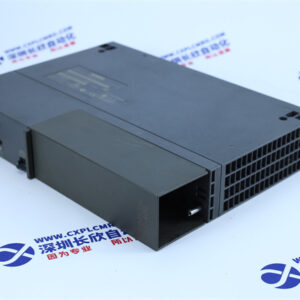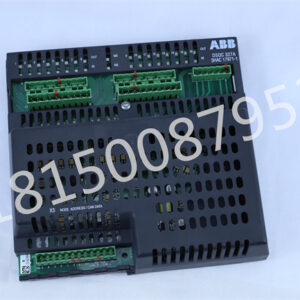
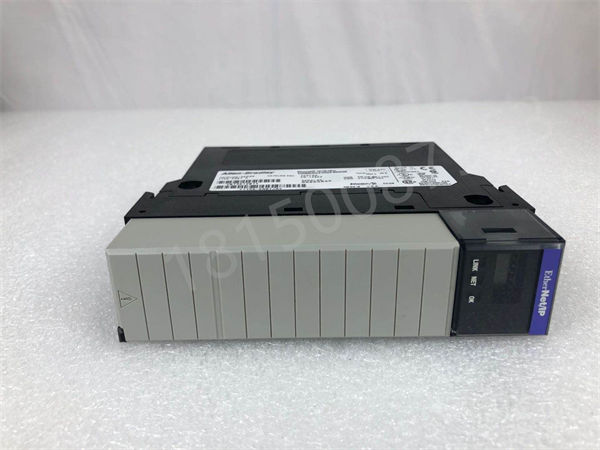
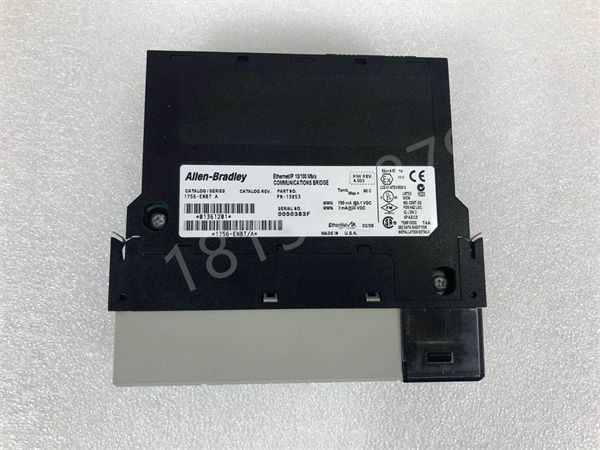
1756-ENBT AB
With the development of integrated circuit technology and computer technology, there are already fifth generation PLC products.
In the manufacturing industry characterized by changing geometric shapes and mechanical properties
as well as in the process industry characterized by converting raw materials into products through physical and chemical changes, in addition to feedback control mainly based on continuous quantities, there are a large number of open loop sequential control mainly based on switching quantities in the manufacturing industry, which operates sequentially according to logical conditions
n addition, there are controls for interlocking protection actions that are independent of sequence and timing and follow logical relationships; And a large number of state variables such as switch quantity, pulse quantity, timing, counter, analog quantity exceeding limit alarm, etc. – discrete quantity data collection and monitoring
Due to these control and monitoring requirements, PLC has developed into a product that mainly replaces relay circuits and performs sequential control. Over the years of production practice, a tripartite balance has gradually emerged between PLC, DCS, and IPC, as shown in Table 1. Other single circuit intelligent regulators also account for a certain percentage in the market.
From the 1980s to the mid-1990s, PLC was the fastest growing period, with an annual growth rate of 30-40%. Due to the advancement of PLC machine communication processing simulation capabilities and network functions, it has squeezed a portion of the DCS market (process control) and gradually monopolized industries such as sewage treatment. However