
Application Scenarios
Picture a petrochemical furnace-control retrofit in a Texas refinery: the existing PLC-5 rack drives sixteen Type K thermocouples spread across three burner boxes, each sensor sitting at a different ground potential due to legacy thermowell bonding. The original multi-channel analog card (non-isolated) constantly produced false overtemperature alarms caused by inter-channel ground circulating currents. The integrator specifies a new ControlLogix chassis and loads it with three 1756-IT6I2 modules. Immediately, the per-channel 250 V isolation breaks every ground loop, and the dual cold-junction compensation sensors on the 1756-IT6I2 track the terminal-block ambient temperature far more accurately than the single-CJC predecessor, eliminating the daily morning-drift alarm burst. The plant control engineer then wires two additional channels across the high-resolution -12 to 30 mV range to pick up fine-grained mV output from a specialized hydrogen-trace sensor — a mixed-signal flexibility the legacy card simply could not offer. Fault alarm count drops to near zero, and the same 1756-IT6I2 architecture later scales into adjacent reactor bays without redesigning the rack layout.
Parameter
| Main Parameters | Value / Description |
|---|---|
| Product Model | 1756-IT6I2 (Series A, Firmware Rev. 1.11+) |
| Manufacturer | Allen-Bradley / Rockwell Automation |
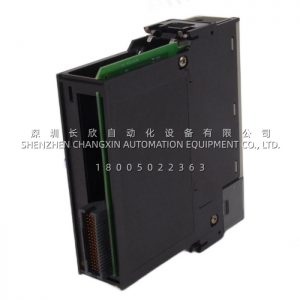
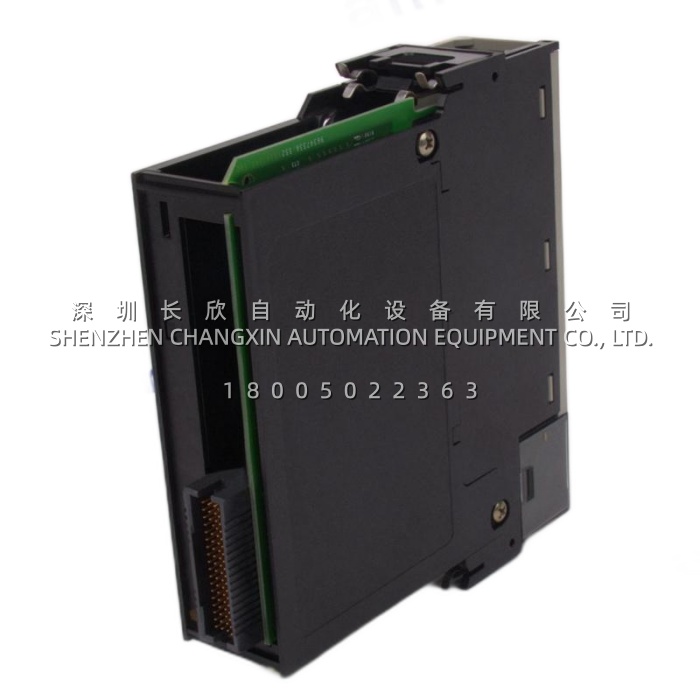
| Product Category | ControlLogix Enhanced Isolated Thermocouple/mV Analog Input Module |
| Number of Channels | 6, individually isolated per channel |
| Isolation Voltage | 250 V continuous (channel-to-channel and channel-to-backplane) |
| Input Signal Ranges | Millivolts: -12 to 78 mV; -12 to 30 mV (high-resolution range) |
| Supported Thermocouples | B, C, D, E, J, K, L (TXK/XK), N, R, S, T — ITS-90 linearization |
| Input Resolution | 16 bits; 1.4 µV/count typical (-12 to 78 mV); 0.7 µV/count (high-resolution range) |
| Conversion Method | Sigma-delta with programmable notch filter |
| Module Error (over temperature) | 0.15% of range |
| Gain Drift with Temperature | 15 ppm/°C nominal |
| CJC Accuracy | ±0.3 °C remote CJC; ±0.3 to 3.2 °C local CJC (channel-dependent) |
| Noise Rejection | Normal mode: 60 dB @ 60 Hz; Common mode: 120 dB @ 60 Hz, 100 dB @ 50 Hz |
| Scan Time | 10 ms min (integer mV); 25 ms min (floating-point mV); 50 ms min (floating-point temperature) |
| Backplane Current | 200 mA @ 5.1 V DC; 120 mA @ 24 V DC |
| Power Dissipation | 4.6 W max; thermal dissipation 15.7 BTU/hr |
| Input Impedance | >10 MΩ; channel bandwidth 15 Hz (-3 dB) |
| Overvoltage Protection | 120 V AC/DC maximum |
| Data Formats | Integer mode (left-justified, 2’s complement) and IEEE 32-bit floating point |
| Terminal Block (RTB) | 20-pin; 1756-TBNH (screw) or 1756-TBSH (spring clamp) |
| Operating Temperature | 0 to 60 °C (32 to 140 °F) |
| Temperature Code | T4A (North America); T4 (IEC) |
| Slot Width | 1 ControlLogix slot |
| Module Weight | 272 g (0.6 lb) |
| Programming Software | RSLogix 5000 / Studio 5000 Logix Designer |


