Application Scenarios
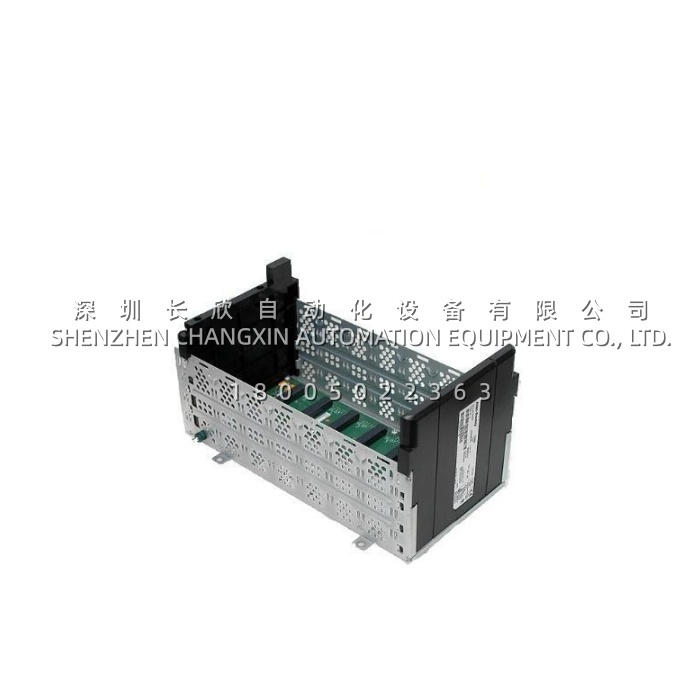
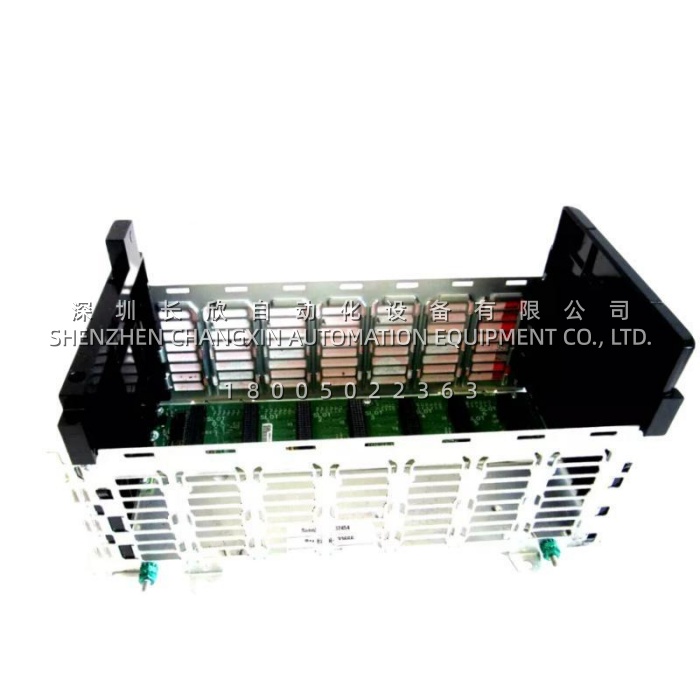
A wastewater treatment plant’s blower control room experiences seasonal humidity levels that routinely exceed 85% relative humidity, with condensation forming on cool metal surfaces during temperature swings between day and night shifts. The existing standard ControlLogix chassis in the motor control center has shown intermittent backplane faults traced to moisture-induced corrosion on the connector pins. The maintenance team specifies the 1756-A7K as the replacement chassis because its conformal coating—applied to the backplane and internal surfaces—provides a barrier against the condensation that the standard chassis cannot resist . The 1756-A7K accepts the same 1756-L55M12 processor, 1756-ENBT communication module, and analog I/O cards as the original chassis, allowing the team to transfer existing modules without reprogramming or rewiring changes. After the swap, the plant reports that the intermittent backplane faults cease, and the coated chassis operates through two full humid seasons without requiring the desiccant packs and enclosure heaters that had been a temporary mitigation.
Parameter
| Main Parameters | Value/Description |
|---|---|
| Product Model | 1756-A7K |
| Manufacturer | Allen-Bradley / Rockwell Automation |
| Product Category | ControlLogix Chassis (Conformally Coated) |
| Slot Count | 7 |
| Mounting Orientation | Horizontal rear panel only |
| Backplane Current (5V DC) | 10 A |
| Backplane Current (24V DC) | 2.8 A |
| Power Dissipation (Max) | 4.5 W |
| Minimum Enclosure Size | 50.8 × 60.9 × 20.3 cm (20 × 24 × 8 in) |
| Operating Vibration | 2 g at 10–500 Hz |
| Operating Shock | 30 g |
| Relative Humidity | 5–95%, non-condensing |
| Certifications | UL Listed, CE, ATEX, IECEx, China CCC, RCM, ABS |
| Lifecycle Status | Active |
Key parameter notes: The conformal coating is the defining differentiator between the 1756-A7K and the standard 1756-A7 chassis. It protects the backplane from the moisture and chemical contaminants that can degrade uncoated connectors over time. The 10A @ 5V backplane capacity supports a fully populated seven-slot chassis with a processor, multiple communication modules, and analog I/O, though power budgeting should account for the cumulative draw of all installed modules against this limit.
Technical Principles and Innovative Values
Innovation Point 1 – Conformal Coating for Condensation and Corrosion Resistance: The 1756-A7K applies a conformal coating to the backplane and internal surfaces, creating a protective barrier against moisture, condensation, and airborne contaminants that would otherwise corrode exposed connector pins and circuit traces . In installations where ambient humidity fluctuates or enclosures are subject to temperature cycling, this coating extends the chassis’s service life without requiring active environmental controls. The coating is transparent and thin enough that module insertion and backplane communication are unaffected, meaning the 1756-A7K is functionally identical to the standard chassis from the module’s perspective.
Innovation Point 2 – Same Backplane Architecture as Standard Chassis: The 1756-A7K uses the same high-speed backplane communication path and slot-to-slot architecture as the uncoated 1756-A7 . Any 1756 module can be installed in any slot, and the chassis supports the same power supply options (1756-PA75, 1756-PH75, etc.) and communication bridges. This compatibility means that specifying the 1756-A7K for a harsh environment does not require changes to module selection, programming, or power budgeting—the coating is the only variable.
Innovation Point 3 – Broad Certification for Global and Hazardous Area Deployment: The 1756-A7K carries ATEX and IECEx certifications in addition to UL, CE, and CCC . These certifications qualify the chassis for installation in environments where flammable atmospheres may be present, provided the overall enclosure and system design meet the relevant protection concepts. For projects spanning multiple regions, a single chassis specification with this certification breadth simplifies compliance documentation and reduces the risk of substitution during procurement.