Technical Specifications
| Parameter Name | Parameter Value |
|---|---|
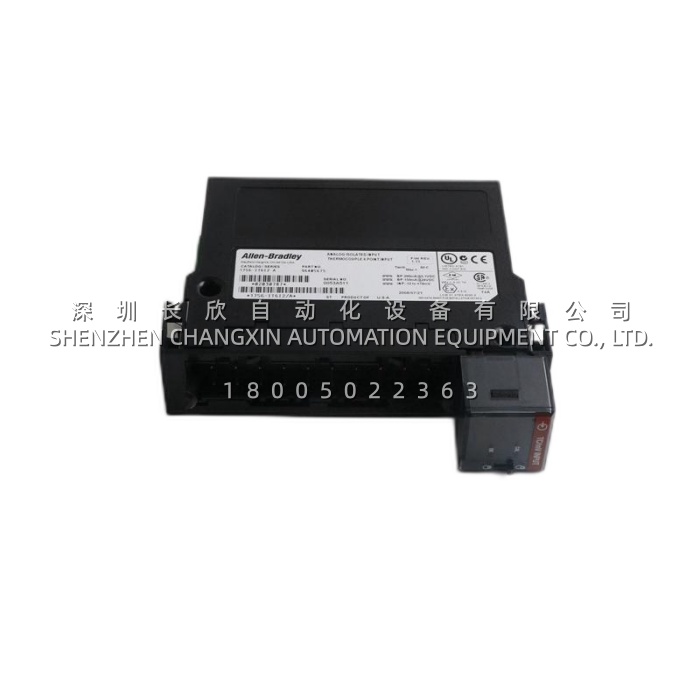
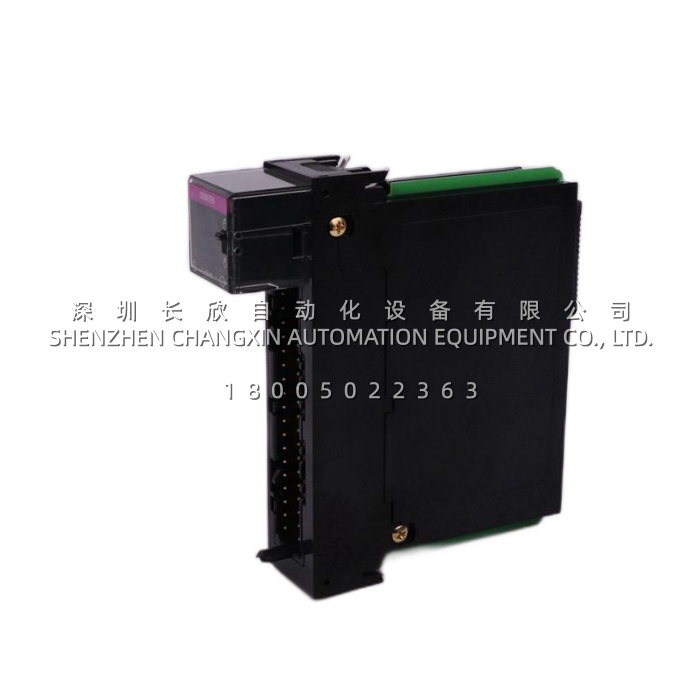
| Product Model | 1746-OA16 |
| Manufacturer | Allen-Bradley (Rockwell Automation) |
| Product Type | SLC 500 16-Channel AC Output Module |
| Output Channels | 16 (8 points per common) |
| Output Signal | 85–265 VAC @ 47–63 Hz |
| Output Device | TRIAC |
| Backplane Current (5V DC) | 0.370 A |
| Minimum Load Current | 10 mA |
| Off-State Leakage Current | 2 mA max |
| Continuous Current per Point | 0.50 A @ 30°C / 0.25 A @ 60°C |
| Continuous Current per Module | 8.0 A @ 30°C / 4.0 A @ 60°C |
| Max Surge Current per Point | 10.0 A for 25 ms |
| Isolation (Backplane) | 1500 VAC |
| Operating Temperature | 0°C to +60°C |
| Terminal Block Color | Red (AC I/O) |
Main Features and Advantages
The 1746-OA16 provides a direct AC switching solution that eliminates the need for intermediate relays in many SLC 500 applications. By using TRIAC outputs rated for 85–265 VAC, the module can drive 120V or 240V field devices directly from the controller’s I/O system, reducing panel space and wiring complexity. The zero-crossing turn-off characteristic of the TRIAC helps minimize electrical noise and extends the life of connected contactors and solenoids by reducing arcing at the switching point .
Built-in protection features enhance the 1746-OA16’s reliability in industrial environments. Optical isolation separates the sensitive backplane circuitry from field wiring, while the module’s design includes input filtering and surge protection to withstand the electrical noise typical of motor control centers and process equipment . The red color-coded removable terminal block (RTB) distinguishes AC output modules from DC (blue) and relay (orange) types, reducing the risk of wiring errors during installation or maintenance .
The 8-point-per-common grouping gives users flexibility in how field devices are distributed across the 1746-OA16’s outputs. This arrangement is particularly useful when outputs need to be separated by voltage source or when different field circuits must be isolated from one another. Status indicators per channel allow quick visual verification of output state during commissioning and troubleshooting, without requiring a meter or programming terminal.