Application Scenarios
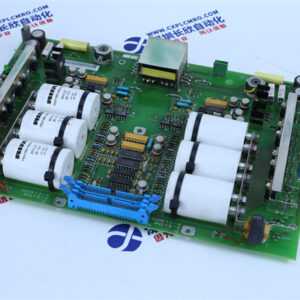
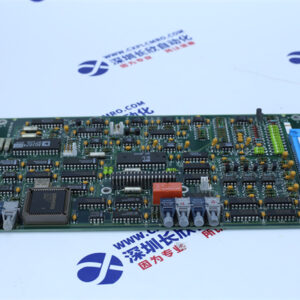
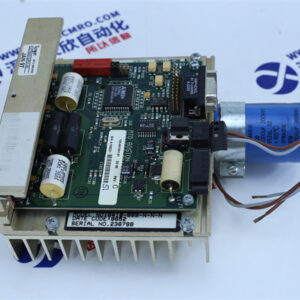
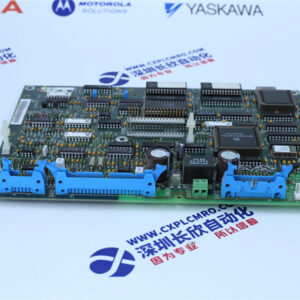
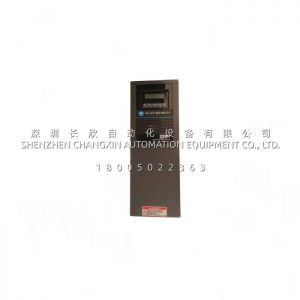
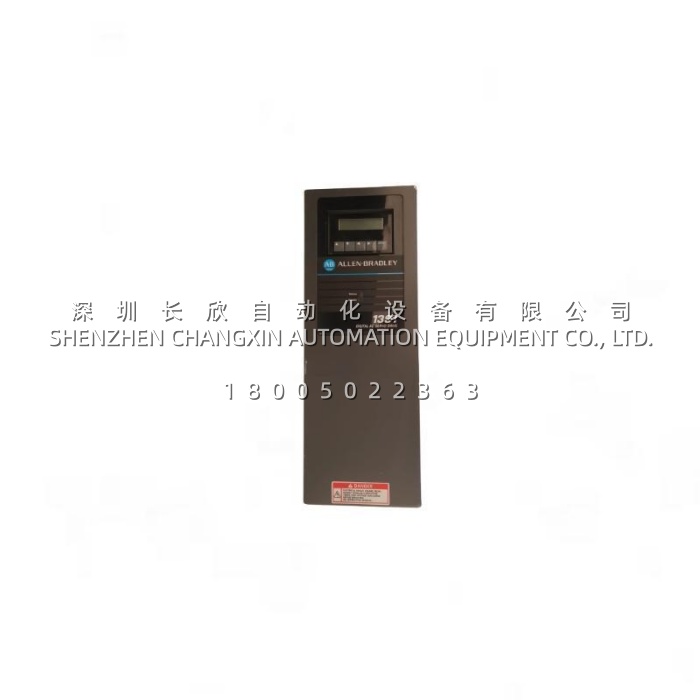
In a high-precision CNC machining center, the tool positioning axis requires rapid acceleration and micron-level accuracy during contouring operations. The 1391-DES45-DI-AQB receives velocity and torque commands from the machine controller, processes them through its digital velocity and current loops, and outputs precisely modulated PWM signals to the servo motor. When the tool encounters varying cutting loads, the drive’s 90 A peak current capability provides the dynamic torque response needed to maintain programmed feed rates without position deviation. If the drive’s encoder feedback path fails, the machine controller loses closed-loop control entirely—potentially causing tool breakage or workpiece scrapping. In automated material handling and robotic positioning systems, the 1391-DES45-DI-AQB’s integral display and five-key keypad enable technicians to monitor drive status, adjust velocity loop gains, and diagnose faults without external programming tools .
Parameter
| Main Parameters | Value/Description |
|---|---|
| Product Model | 1391-DES45-DI-AQB |
| Manufacturer | Allen-Bradley / Rockwell Automation |
| Product Category | Digital AC Servo Drive (Single-Axis) |
| Product Line | 1391 AC Servo Series |
| Input Voltage | 230 V AC, 3-Phase, 50/60 Hz |
| Nominal Bus Voltage | 300 V DC |
| Continuous Current (RMS) | 45 A |
| Peak Current (RMS) | 90 A |
| Continuous Power Output | 15 kW |
| Peak Power Output | 30 kW |
| Input Circuit Breaker Rating | 38 A RMS |
| Encoder Output | Quad encoder, selectable 2048/1024/512/256 PPR |
| User Interface | Integral 2-line LCD display with 5-key keypad |
| M Contactor Coil Voltage | 115 V AC (standard) / 24 V DC variant |
| Weight | 17.24 kg (38 lbs) |
| Operating Temperature | 0°C to 60°C |
| Cooling | Integral fan, 50 CFM |
Technical Principles and Innovative Values
- Innovation Point 1: Full Digital Velocity and Current Loop Control. The 1391-DES45-DI-AQB employs a microprocessor-based architecture that executes digital velocity and current regulation algorithms, replacing the analog control loops typical of earlier servo drives. This digital implementation enables precise parameter adjustment through the integral display, including velocity loop proportional (Kp) and integral (Ki) gains, feed-forward compensation, and velocity low-pass filter bandwidth settings . Digital control eliminates the thermal drift and component tolerance issues inherent in analog servo amplifiers, maintaining consistent dynamic response over the drive’s operating temperature range.
- Innovation Point 2: Integrated LCD Display with Multi-Level Parameter Access. Unlike basic servo drives that require external programming terminals, the 1391-DES45-DI-AQB features a 2-line, 16-character Super-Twist LCD display and a five-key keypad that provide direct access to drive parameters organized in three levels: View, Modify, and Maintenance . The View level allows operators to monitor critical variables such as drive size, velocity command, velocity feedback, Iq (torque) current reference, and current limit without risking parameter corruption. The Modify level unlocks configuration parameters including bandwidth settings, auto-tune functions, and ramp adjustments. This tiered access architecture prevents accidental misconfiguration while still providing comprehensive diagnostic capability.
- Innovation Point 3: Configurable Encoder Output for System Integration. The 1391-DES45-DI-AQB provides a quad encoder output with user-selectable resolution of 2048, 1024, 512, or 256 pulses per motor revolution . This flexibility allows the drive to interface with downstream motion controllers, position displays, or secondary feedback devices without additional signal conditioning hardware. Higher pulse settings deliver finer velocity and position resolution for demanding applications, while lower settings reduce signal processing burden on external controllers.
- Innovation Point 4: Over-Speed Capability with 1326 Motors. The 1391-DES drive family is designed to operate compatible Allen-Bradley 1326 servo motors at 33–50% above their rated speed when paired with the . This over-speed margin extends machine throughput in applications where higher traverse rates reduce cycle times, such as rapid positioning axes in automated assembly or material handling systems.