Product Overview
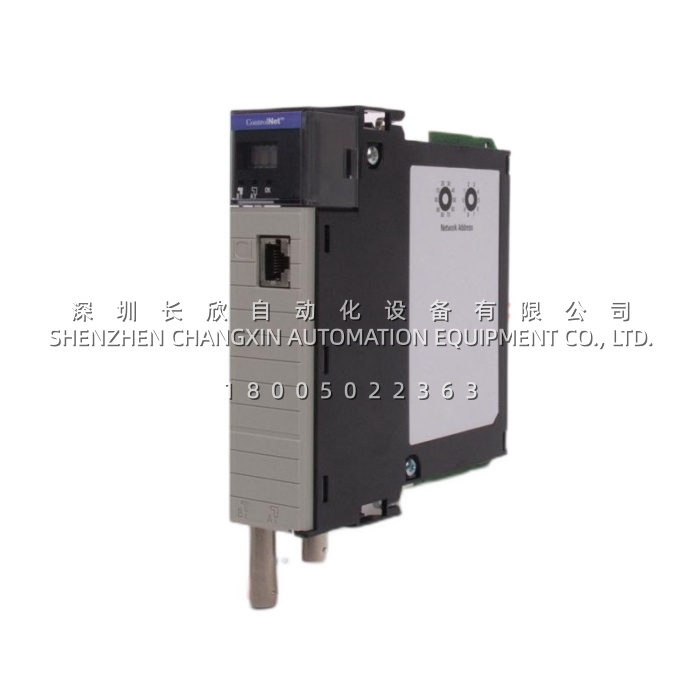
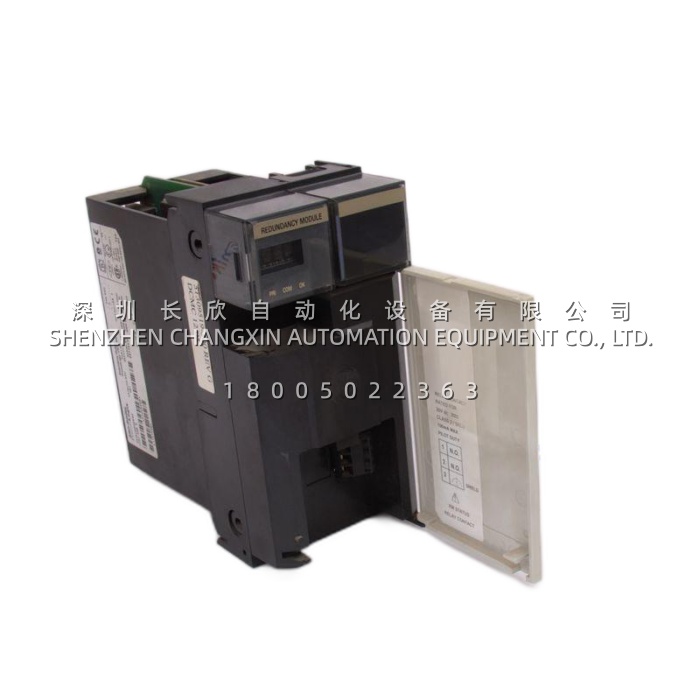
The Allen-Bradley 440R-H23178 is a Series A monitoring safety relay from the Rockwell Automation Guardmaster Minotaur MSR200 modular family, carrying the relay type designation MSR220P. It occupies the narrow end of the range at 17.5 mm of DIN rail width, which matters in a crowded control cabinet where every millimetre of rail is already accounted for. Powered from a 24 V DC supply and drawing roughly 2 W, the Allen-Bradley 440R-H23178 monitors two independent safety input circuits and accepts a range of wiring configurations — single N.C., two N.C., three N.C., and safety mat connections — so one catalogue number covers several different device types on the same machine.
Functionally, the Allen-Bradley 440R-H23178 is the module that lets a base unit in the MSR200 system watch more safety devices than its own inputs allow. Emergency-stop buttons, interlocked guard doors with tongue or hinge switches, safety mats and SIPHA-type sensors connect to it directly, and the module applies pulsed input monitoring to catch faults to supply, faults to ground and cross-channel short circuits before a demand is ever placed on the safety function. Status is reported back over the inter-module ribbon connection, so the base relay retains a single, coherent view of the whole guarding circuit.
Its position in the safety architecture is that of an expansion and monitoring element rather than a standalone output relay — the published configuration lists no safety output contacts of its own, and it is normally paired with a base unit that carries the outputs. The Allen-Bradley 440R-H23178 is rated to Category 4 per EN 954-1, corresponding to the top tier of ISO 13849-1, with SIL 3 capability under IEC 61508 and IEC 62061. Rockwell discontinued the part on 31 December 2017 and nominates 440R-D22R2 as the migration target, which makes remaining stock relevant primarily to installed machines rather than to new designs.
Technical Specifications
| Parameter Name | Parameter Value |
|---|---|
| Product Model | 440R-H23178 |
| Manufacturer | Allen-Bradley / Rockwell Automation (Guardmaster Minotaur) |
| Product Type | Monitoring safety relay module, MSR220P, Series A |
| Series / Platform | Guardmaster MSR200 modular safety relay family, Bulletin 440R |
| Supply Voltage | 24 V DC |
| Power Consumption | 2 W |
| Safety Input Circuits | 2 independent input circuits |
| Supported Input Configurations | 1 N.C., 2 N.C., 3 N.C., safety mat, SIPHA sensor input |
| Connectable Devices | Emergency-stop buttons, guard door interlock switches, safety mats, safety switches |
| Safety Output Contacts | None as a standalone unit; output configuration listed as 0 / 0 / 0 / 0 — used with an MSR200 base unit |
| Safety Classification | Category 4 per EN 954-1; PLe under ISO 13849-1; SIL 3 under IEC 61508 / IEC 62061 |
| Diagnostics | Four front-panel diagnostic status indicators; status and error reporting over fieldbus to HMI |
| Terminal Type | Removable screw terminals |
| Mounting | 35 mm DIN rail |
| Enclosure Width | 17.5 mm |
| Approvals and Certification | CE marked for all applicable directives, cULus listed, TÜV certified, C-Tick compliant |
| Lifecycle Status | Discontinued by manufacturer 2017-12-31; engineering replacement 440R-D22R2 |
Main Features and Advantages
Narrow footprint, real panel savings: At 17.5 mm wide, the Allen-Bradley 440R-H23178 takes less than half the rail space of a conventional 45 mm safety relay. In a retrofit where the cabinet was filled a decade ago and the machine now needs two more monitored zones, that difference decides whether the job is a rail extension or a five-minute module swap.
One part number, several device types: The input stage accepts single N.C., dual N.C., three N.C., safety mat and SIPHA sensor wiring, so a plant with a mixture of e-stop mushrooms, tongue interlocks and pressure-sensitive mats does not need to stock a different relay for each. Fewer variants to qualify, fewer part numbers on the spares list, less chance of pulling the wrong unit during a night callout.
Pulsed input monitoring that finds hidden faults: Rather than simply watching whether the loop is closed, the pulses its inputs and looks for shorts to supply, shorts to ground and cross faults between channels. This is the difference between a safety system that fails dangerously and one that fails safely — a welded contact or a bridged channel is detected before an operator ever reaches for the e-stop, which is exactly what Category 4 and SIL 3 assessment demands.
Diagnostics that shorten fault-finding: Four status indicators on the front face report module and channel condition, and status can be transferred over the fieldbus to an HMI. When a cell trips on a guard fault, maintenance can identify which input circuit opened rather than walking the perimeter testing each door switch in turn.
Removable terminals for fast replacement: The terminal blocks unplug from the body, so a failed module is replaced without disturbing a single wire. For a production line where every minute of downtime is costed, that alone justifies keeping one on the shelf.
Application Field
Robotic welding and assembly cells are a natural fit for the , because these cells carry a large guarding footprint relative to their physical size — operator access doors with tongue interlocks, a rear maintenance gate, two-hand control stations, e-stop mushrooms at several positions and a safety mat at the load position. The usual constraint is not a shortage of relays but a shortage of panel space and wiring budget, and that is the problem this module is built to solve.
Press and stamping lines use it to consolidate emergency-stop circuits and safety mat inputs at the feed and extraction positions, where Category 4 is a hard requirement rather than a preference. Packaging and food processing machinery benefit where washdown cabinets are tight and removable terminals let a module be swapped without re-terminating a single conductor. The also appears in CNC machining centres and in automotive body shops, monitoring hinge and sliding guard switches on enclosures that are opened frequently for tool changes and part loading.
There is one more context worth naming explicitly: legacy support. Machines built around the MSR200 family are still in service, and with the module discontinued since the end of 2017, sourcing is the practical issue rather than the technology. Plants running these cells keep the as insurance stock — a safety relay failure stops the line completely and cannot be bypassed, so the cost of holding one unit is trivial against a cell that is down until a replacement arrives. For new installations, the migration path leads to the 440R-D22R2 or to current Guardmaster relays.