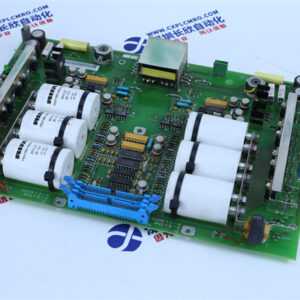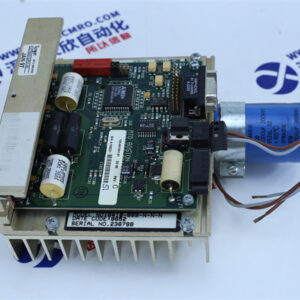
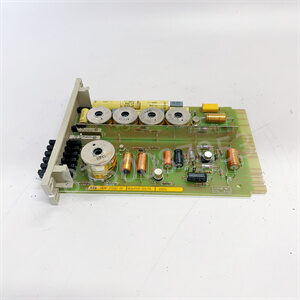
Application Scenarios
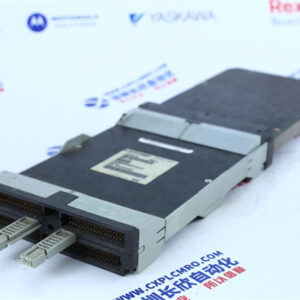
Picture a 10kV/35kV substation switchgear during normal bus transfer. The operator needs to switch from the main transformer to a standby source. If the two buses differ by even 10° in phase angle and the breaker closes hard—the resulting current surge can trip the protection system, or worse, twist the generator shaft. ABB 424K1105 sits as the last hard logic gate before the close circuit is enabled.
In power plants, this relay is typically installed in the generator circuit breaker panel. It takes PT secondary signals from both the generator side and the grid side, continuously calculating phase angle slip, voltage difference, and frequency deviation. When all parameters align within the set tolerance, the relay’s contacts close, allowing the automatic synchronizer to issue the breaker close command. If one side is dead (line dead or bus dead), the 25V variant includes options to allow closing under dead-bus conditions—a useful feature for black-start scenarios or emergency restoration.
For maintenance engineers, the ABB 424K1105 is a favorite because it’s testable with just a multimeter, no software or laptop required. You can verify contact states and PT voltages directly at the terminals—which makes troubleshooting quick and accessible for field staff.
Parameters
| Main Parameters | Value / Description |
|---|---|
| Product Model | 424K1105 |
| Manufacturer | ABB |
| Product Series | Circuit Shield 25S (Synchronism Check Relay) |
| Product Category | Protection & Control Relay |
| Coil / Operating Voltage | 110 V AC (50/60 Hz) |
| PT Input Voltage | 100 / 110 / 120 V AC (Transformer secondary) |
| Frequency Range | 45 – 65 Hz |
| Contact Configuration | 2 Normally Open (NO) + 2 Normally Closed (NC) |
| Contact Rating | 10 A @ 250 V AC / 30 V DC (Resistive) |
| Function Logic | Voltage OK, Magnitude Match, Frequency Match, Phase Match → Close Enabled |
| Time Delay | 0 – 10 seconds adjustable |
| Mounting | 35 mm DIN Rail |
| Operating Temperature | -20 °C to +60 °C |
| Insulation Class | Class F |
| Protection Rating | IP20 (Panel-mounted) |
| Certifications | CE, UL, CSA, IEC 60255, ANSI/IEEE C37.90 |
| Net Weight | ~0.35 kg |
Technical Principles and Innovative Values
Innovation Point 1: Hard-Logic Synchronization Check
Unlike electronic synchronizers that rely on microprocessor calculations and require software updates, the ABB 424K1105 uses precision solid-state measuring circuitry with calibrated, adjustable controls. This means no firmware dependencies—what you set on the front panel is what you get. For power plants that cannot afford software-related failures or cybersecurity vulnerabilities, this hard-logic approach remains the standard.
Innovation Point 2: Dead-Bus Closing Options (25V Type)
The 25V variant of this relay includes a front-panel function switch that allows closing under conditions where one side is dead (dead bus or dead line), with configurable voltage thresholds starting at 30V default and adjustable from 0-120V. This is critical for black-start scenarios, emergency load restoration, and applications where the grid side is de-energized but the generator needs to pick up load.
Innovation Point 3: Visual and Accessible Settings
All adjustments—voltage threshold, frequency window, phase angle, and time delay—are accessible via front-panel controls with calibrated markings. Technicians can quickly verify settings at a glance without connecting a laptop or navigating menu trees. This transparency reduces commissioning time and allows confident on-the-fly adjustments during system changes.
Innovation Point 4: Comprehensive Fault Prevention
The relay simultaneously monitors three conditions—voltage magnitude, frequency difference, and phase angle—before issuing a close-enable signal. This is not a simple voltage monitor or phase sequence relay; it is a true synchronism check device with all three conditions independently validated.