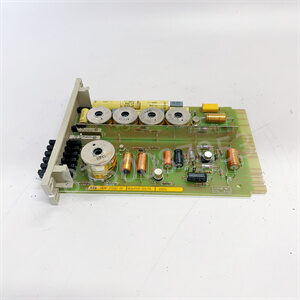
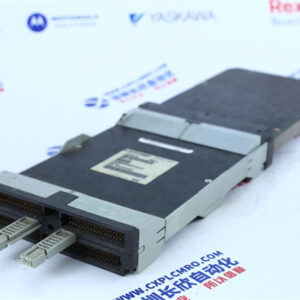
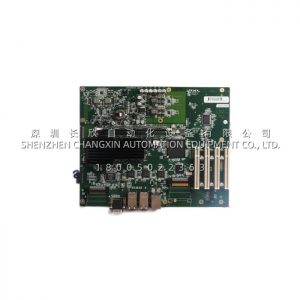
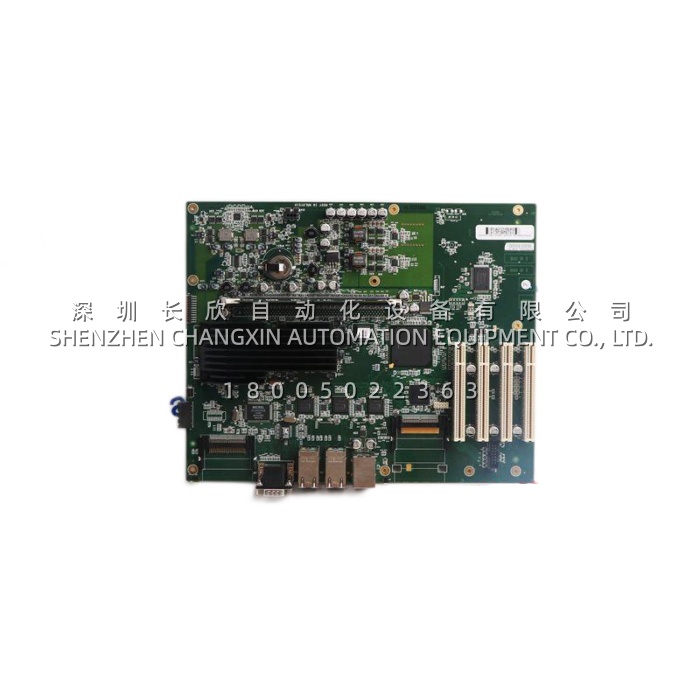
Application Scenarios
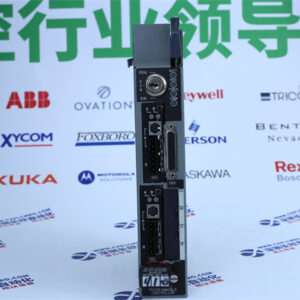
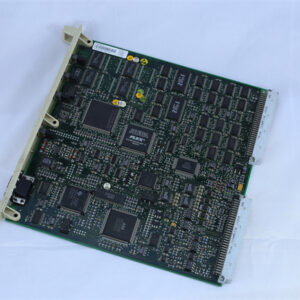
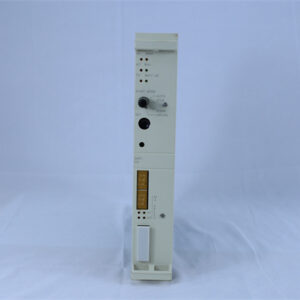
In a thermal power plant’s steam turbine control system, the electrohydraulic actuator responsible for regulating steam admission to the turbine experienced erratic behavior due to an aging analog control module. The inconsistent positioning of the control valves resulted in pressure fluctuations that threatened both efficiency and equipment safety. After upgrading to the ABB 83SR07F-E (GJR2392700R1210), the plant achieved stable, bumpless control with a 50 ms scan cycle, ensuring smooth valve positioning and eliminating oscillations. The module’s built-in redundancy capability—supporting parallel processing with bumpless transfer to a standby unit—provided an additional layer of security for this mission-critical application. This real-world scenario demonstrates how the ABB 83SR07F-E directly addresses the industry’s core pain points of process stability, equipment protection, and operational continuity.
Parameters
| Main Parameters | Value/Description |
|---|---|
| Product Model | 83SR07F-E (GJR2392700R1210) |
| Manufacturer | ABB (Sweden / Switzerland) |
| Product Category | Analog Control Module / Process Controller |
| System Platform | Procontrol P14 DCS |
| Control Capability | 1 or 2 independent PID control loops |
| Analog Inputs | 4 channels: 0-20mA / 4-20mA configurable, 12-bit resolution, 50Ω input impedance |
| Analog Outputs | 2 channels: 4-20mA / 0-10V, ≤500Ω load, short-circuit protected |
| Digital I/O | Drive release outputs + status feedback inputs (24V DC) |
| Power Supply | 24 V DC (USA/USB), typical consumption 140mA / 3.2-3.8W |
| Scan Cycle | 50 / 60 / 80 / 100 ms (selectable) |
| Communication | Local bus via X11 (48-pin DIN 41612); RS-485 Modbus RTU |
| Operating Temperature | -20°C to +70°C |
| Dimensions | 160 × 100 × 34 mm (6U DIN41612 standard) |
| Weight | Approx. 0.55 – 0.6 kg |
| Certification | CE, UL, cULus, SIL3 |
| Status | Original product discontinued; market served by new/refurbished units |
Technical Principles and Innovative Values
Innovation Point 1: Decentralized PID Control Architecture
Unlike conventional DCS designs that centralize all PID computation in the main controller, the ABB 83SR07F-E offloads loop processing directly to the I/O level. This “smart I/O” approach significantly reduces the computational burden on the main processor, improves system responsiveness, and enables more deterministic control performance for fast-responding loops.
Innovation Point 2: High-Precision Analog Front-End
The ABB 83SR07F-E features a precision analog front-end with 12-bit resolution and exceptionally low temperature drift of ≤50 ppm/K. With common-mode rejection of 120 dB and differential-mode rejection of 50 dB at 50/60 Hz, the module delivers outstanding measurement accuracy even in electrically noisy environments characteristic of power plants and heavy industrial facilities.
Innovation Point 3: Automatic Address Configuration
The module eliminates manual DIP switch configuration by automatically identifying its slot position upon insertion into the Procontrol P14 rack. This self-addressing mechanism simplifies system expansion and reduces commissioning time, while the onboard EEPROM retains the user program even after power loss, ensuring rapid system recovery after outages.
Innovation Point 4: Redundant Operation with Bumpless Transfer
When paired with a redundancy control module, the ABB 83SR07F-E supports parallel processing with seamless, bumpless transfer between online and standby units. This ensures continuous process control in the event of a module failure—a critical advantage for safety-related applications and continuous-process industries where downtime directly impacts production output and safety compliance.
Innovation Point 5: Direct Actuator Compatibility
The module’s two continuous analog outputs are designed to directly interface with electrohydraulic, electropneumatic, and electric-motor-powered actuators without requiring additional signal conditioning or conversion stages. This simplifies sys