Description
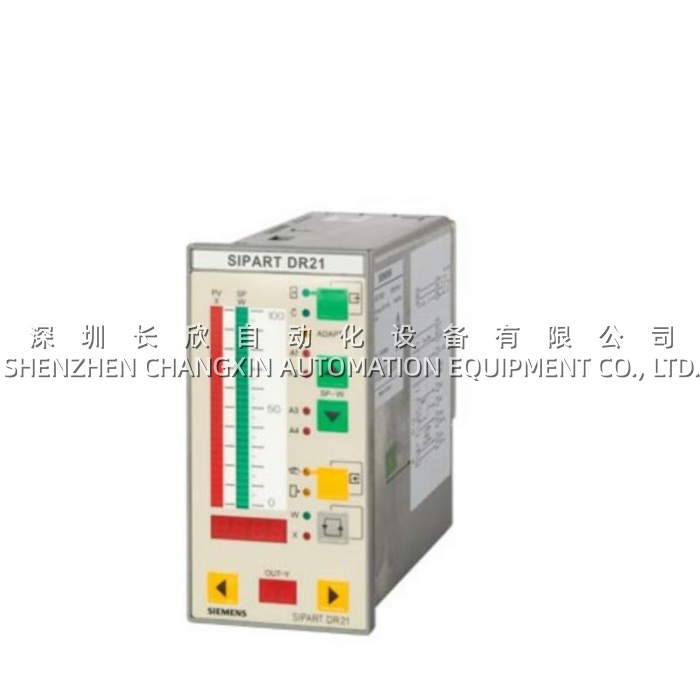
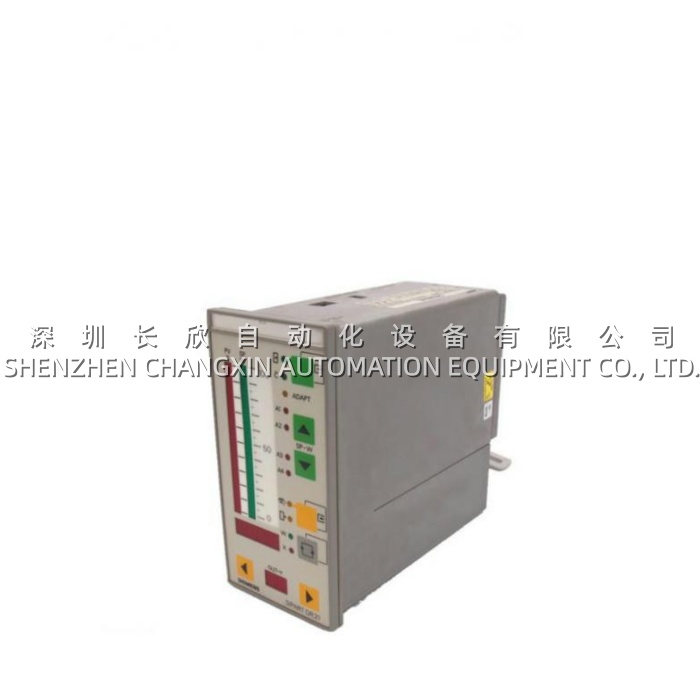
The Siemens 6DR2100-5 is the SIPART DR21 stand-alone digital process controller, a mid-to-high performance single-loop instrument in a 72 × 144 mm DIN 43700 panel format, equipped with K-output (continuous 0/4–20 mA) and S-output (stepper relay for motorized valve drives), two analog current inputs, and two digital inputs plus two digital outputs. Powered by switchable AC 230/115 V (50/60 Hz), the 6DR2100-5 delivers PID control with built-in self-tuning for fast loops (flow) and slow loops (temperature) alike, targeting skid-mounted packages, pilot-plant reactors, burner management, and any application where dedicating a DCS or PLC analog loop is overkill. Unlike the 6DR2100-4 sibling (24 V DC), the 6DR2100-5 is the AC-powered variant and remains an active Siemens catalog item (PM300), making it a current-spec choice for new panel builds as well as a drop-in replacement for aging analog controllers.
Application Scenarios
On a batch-pharmaceutical pilot plant in Basel running 12 jacketed 2 m³ glass-lined reactors, the original panel held twelve 1990s-vintage analog temperature controllers—each a separate vendor, each needing manual re-tuning every campaign because the jacket-water supply temp swung 8 °C between winter and summer. The engineering team replaced them one-for-one with the 6DR2100-5: the DR21’s self-tuning function runs a brief step test on first autoclave heat-up, extracts Kp/Tn/Tv for the jacket-PID, and re-adapts if the operator switches from water-glycol (–10 °C jacket) to steam (145 °C jacket) via the recipe. The 6DR2100-5 K-output drives the control valve positioner (4–20 mA), while the S-output toggles the motorized bypass on the jacket pump during low-load holds—two control actions in one 72×144 faceplate, no extra DIN space. Campaign changeover tuning time dropped from 45 minutes per reactor to “press Auto-Tune, walk away.” The plant’s takeaway: “When the loop count is < 20 and the panel is 30-year-old DIN cutouts, a 6DR2100-5 beats a new S7-1500 + analog card on footprint, cost, and ‘the operator already knows what the LED means.'”
Parameter
| Main Parameters | Value / Description |
|---|---|
| Product Model | 6DR2100-5 |
| Manufacturer | Siemens (SIPART DR series) |
| Product Category | Digital Single-Loop Process Controller (DR21) |
| Form Factor | 72 × 144 mm (DIN 43700 horizontal), panel cutout ~68 × 138 mm |
| Analog Inputs | 2 × current (0/4–20 mA), configurable; TC/RTD/voltage via signal-converter expansion |
| Digital I/O | 2 DI + 2 DO (status, alarm, remote setpoint select, etc.) |
| K-Output (Continuous) | 0/4–20 mA (for control valve positioner, VFD setpoint, etc.) |
| S-Output (Stepper) | Relay pulses for motorized valve / actuator drives |
| Control Functions | PID, three-component, ratio, follow-up/sync, fixed-setpoint, computer mode (SPC/DDC) |
| Self-Tuning | Yes – auto-step-test extracts Kp/Tn/Tv; handles dead-time compensation |
| Power Supply | AC 230 V / AC 115 V switchable, 50/60 Hz |
| Power Consumption | ~8.5 W / 12 VA (@230 V) ; ~12 W / 17 VA (@115 V) |
| Voltage Tolerance | ≤ 20 ms dip at 0.85 × Un |
| Display | Dual-row LED (PV + SP / output / alarm) |
| Operating Temp. | –10 … +60 °C |
| Weight / IP (front) | ~1.52 kg / IP20 (front IP65 optional with gasket) |
| Lifecycle | PM300 Active (Siemens catalog current) |
Technical Principles and Innovative Values
- Innovation Point 1: K + S Dual Output in One 72×144 Brick. Most standalone loop controllers give you either a 4–20 mA (continuous) or relay pulses (stepper) but not both. The 6DR2100-5 carries a K-output (0/4–20 mA for analog final control) and an S-output (relay pulses for a motor-operated valve or damper actuator) on the same CPU. That means one DR21 can run, say, a jacket-temperature PID where the K-output trims a control valve at steady state and the S-output nudges a motorized three-way bypass when the deviation exceeds a band—no second controller, no DCS loop pair.
- Innovation Point 2: Self-Tuning That Handles Dead-Time. The DR21’s adaptation routine (activated by a front-key press or digital-input trigger) injects a small step, watches PV response, and computes Kp / Tn / Tv automatically. It’s tuned for compensated systems with aperiodic behavior and also factors in larger dead-times—meaning slow loops like reactor temperature (τ_dead ~ 90 s) and fast loops like flow (τ_dead ~ 200 ms) both converge without the engineer touching a single P/I/D pot. For plants where “the guy who tuned it retired” is a recurring risk, the 6DR2100-5 restores sanity.
- Innovation Point 3: Expandable via Plug-In Signal Converters. The 6DR2100-5 base has 2 analog current inputs—fine for (PV = 4–20 mA from transmitter, SP = 4–20 mA or manual). But if you need TC, RTD, voltage input, or extra AO, up to four SIPART signal-converter modules (6DR4xxx series) plug into the back of the sealed unit without breaking the DIN mount. This turns a “basic” DR21 into a three-component (fuel/air/flue) burner controller or a ratio (flow A : flow B) skid controller without leaving the 72×144 footprint.
Application Cases and Industry Value
Case 1 – Skid-Mounted Biogas Upgrade (Denmark, 2022). A biogas OEM builds 6-containerized upgrade skids (pressure swing adsorption) per quarter, each needing inlet-pressure PID, outlet-CO₂ trim, and bed-purge timing. They evaluated S7-1200 + analog cards (€340/loop × 3 = €1,020 + panel space + TIA license) vs. three 6DR2100-5 units (list ~€600 each, no license, 72×144 cutouts already in the skid panel). They went : K-output drives the inlet-regulator I/P, S-output pulses the purge-vent motor valve, DI accepts “high CO₂” alarm from the analyzer as a feedforward bump. Commissioning: “Auto-tune on first container, copy parameters to the other five via the front keypad menu.” Zero TIA Portal seats consumed. The OEM standardized the 6DR2100-5 across 40+ skids/year.
Case 2 – Edible-Oil Deodorizer (Malaysia, 2020). A 4-tray deodorizer had an aging Honeywell UDC 3000 on the stripping-steam/fatty-acid ratio loop (ratio: steam-flow : oil-flow). The UDC’s ratio math was fixed at 1:1 with offset; the plant wanted variable ratio (0.8–1.4×) by oil-grade recipe. Retrofitting an S7-400 channel meant a new analog card + FDR cable run; instead they dropped a 6DR2100-5 in the spare DIN cutout, landed oil-flow (4–20 mA) + steam-flow (4–20 mA) on the two AIs, configured “ratio control with manipulated variable” in the menu (no PC tool needed—all front-keypad), and the K-output drives the steam-valve I/P. Recipe change: operator selects SP on the LED, ratio factor adjusts via the ‘s internal math. Downtime: 35 minutes including wiring.