Application Scenarios
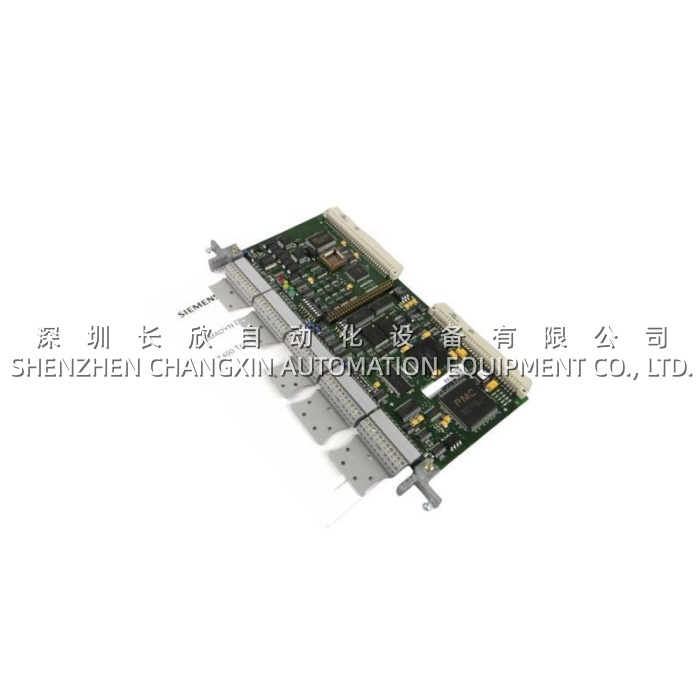
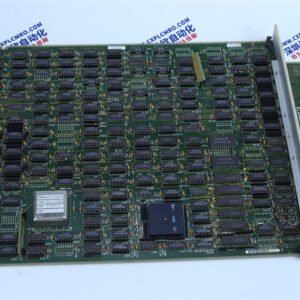
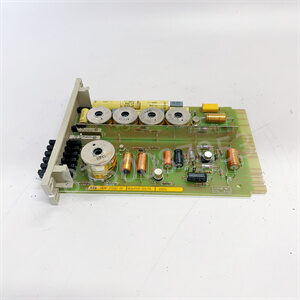
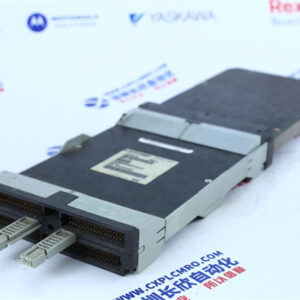
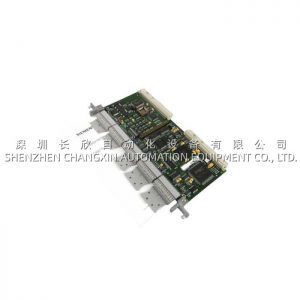
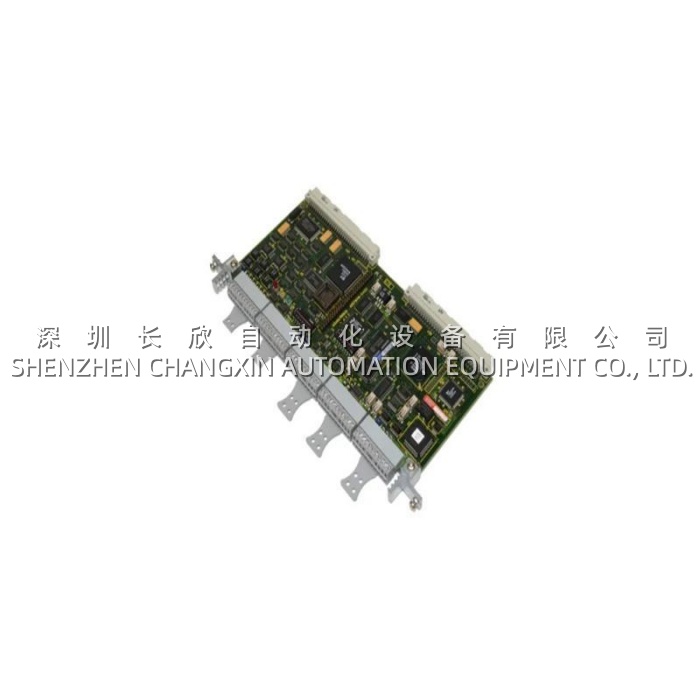
In a Northeast Chinese cold-rolling mill’s #2 tandem pickle line, the exit bridle + tension-leveller section originally ran tension closed-loops on the S7-400, but the 4 ms OB35 cycle wasn’t fast enough to catch strip-break transients when the welder fired at 450 m/min—three breaks per shift, each costing ~18 minutes of re-threading. The retrofit inserted a 6DD1606-0AD1 T400 into the SRT400 box bolted to the 6SE70 VC inverter rack, offloading the bridle tension PID, diameter calculation, and dancer-position feed-forward to the T400’s 100 µs-class task cycle. The 6DD1606-0AD1 reads the two bridle-stand pulse encoders (A/B + SSI for the dancer LVDT) directly over its onboard encoder inputs, runs the tension algorithm in CFC, and writes the torque-setpoint back to the 6SE70 via the backplane (< 1 ms data exchange). Strip-break frequency dropped from 3/shift to 0.4/shift in the first month, and the S7-400 was relieved of the high-speed loop entirely. Two years on, the mill still runs that 6DD1606-0AD1—and keeps two tested spares on the shelf because Siemens no longer makes them.
Parameter
| Main Parameters | Value / Description |
|---|---|
| Product Model | 6DD1606-0AD1 (T400) |
| Manufacturer | Siemens (SIMADYN D family) |
| Product Category | Technology Module (Process / Motion CPU board) |
| Processor | 32-bit RISC + FPU, 32 MHz |
| Memory | 1 MB Flash / 2 MB RAM / 32 KB EEPROM |
| Digital I/O | 8 DI (24 V DC, 4 with 50 µs interrupt) / 2 DO + 4 bidirectional |
| Analog I/O | 5 AI (2 diff + 3 SE, ±10 V, 12-bit) / 2 AO (±10 V / ±10 mA, 12-bit) |
| Encoder Inputs | 2 × pulse (HTL/TTL, ≤1.5 MHz) + up to 2 × SSI (100 kbps–2 Mbps) |
| Serial / Comm | 2 × SER interface (RS-485/RS-232, free protocol) |
| Fieldbus | PROFIBUS DP integrated, up to 12 Mbit/s, Master/Slave |
| Backplane | High-speed data exchange with 6SE70/71 (< 1 ms) |
| Config. Software | D7-SYS V5.0+ / STEP 7 + CFC |
| Supply / Power | 24 V DC (20.4…28.8 V), typ. ~0.6 A / ~3–5 W |
| Mounting | 19″ SIMADYN D rack / SRT400 chassis / 6SE70 insert |
| Operating Temp. | 0 … +60 °C (some sources cite –25 … +60 °C) |
| Lifecycle | PM500 Discontinued (Oct 1, 2023, no replacement) |
| Weight / Dimensions | ~0.47 kg / 14 × 267 × 140 mm (W×H×D) |
Technical Principles and Innovative Values
- Innovation Point 1: A “Drive-Embedded CPU”, Not a Passive I/O Card. The biggest misconception about the 6DD1606-0AD1 is treating it like a signal board. It is a standalone 32-bit processor with its own Flash/RAM/EEPROM that executes CFC charts in parallel with the 6SE70’s drive control board. Minimum task cycle reaches ~100 µs—an order of magnitude faster than S7-300/400 OB35—which is why T400 owns the inner loop (tension PID, diameter calc, cam phase) while the S7 handles sequencing. This offload architecture is why a single 6DD1606-0AD1 can stabilize a 6-stand bridle that would choke a general-purpose PLC.
- Innovation Point 2: Encoder-Rich Front-End with SSI Flex. The 6DD1606-0AD1 offers two pulse-encoder inputs (HTL/TTL, 1.5 MHz cap) plus a configurable serial block that can be 2 SER + 1 SSI or 1 SER + 2 SSI. That lets you land a dancing-roll LVDT (SSI absolute) and two motor-end incremental encoders on one board—no external interpolation card. For flying-shear and register-cut apps, the T400’s encoder pre-processing (quadrature decode, zero-mark latch, direction) happens before the CFC even sees the value.
- Innovation Point 3: D7-SYS CFC + Built-In Process Libraries. Siemens shipped D7-SYS with T400-optimized function-block libraries: tension control, winder/unwinder diameter, dancer PID, electronic gear/cam skeleton, flying shear sync, and ramp generators are all pre-written FBs. An engineer building a 6DD1606-0AD1 project for a new slitter typically drags 6–8 FBs onto the CFC sheet, wires the AI/AO pins, tunes Kp/Ki, and compiles—days of work, not weeks. That’s why survived three decades in niche converting lines.
Application Cases and Industry Value
Case 1 – Copper Rod Drawing & Annealing (Spain, 2020). A 9-die copper rod line running 6SE70 MasterDrives VC needed multi-block tension balance across the capstan + spooler. The OEM initially tried S7-315 + technology objects, but the 8 ms cycle produced visible “barber-poling” on the annealed rod during acceleration. They dropped a 6DD1606-0AD1 into the spooler’s SRT400 box: the reads spooler dancer (SSI) + capstan encoder (A/B), runs a cascade PID (tension outer / torque inner), and feeds the 6SE70 torque setpoint over the backplane. Acceleration barber-poling vanished, and the line hit 22 m/s sustained. The plant still runs that 6DD1606-0AD1 four years later and stocks one spare—Siemens discontinuation notwithstanding.
Case 2 – Tissue Winder / Slitter (Brazil, 2021). A 2.8 m wide tissue parent-roll slitter ran 12 rewind stations, each with a 6SE70 MC (Motion Control) and a 6DD1606-0AD1 for rider-roll force + core-diameter ramp + taper-tension profile. The ‘s “winder FB” handled lay-on force transition from core to full roll without a separate tension transducer—saving ~€4k/slitter in load cells. When one 6DD1606-0AD1 finally died (caps on the 24 V rail, classic 15-year wear), the plant swapped a tested-pulled unit in, loaded the D7-SYS project from the PG, and was back in 23 minutes. They’ve since bought five more spares pre-tested.