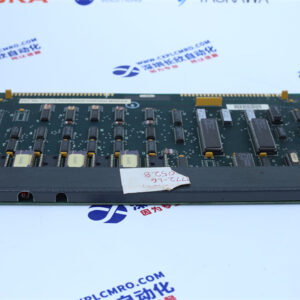
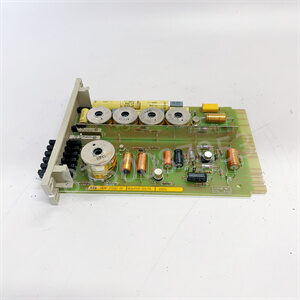
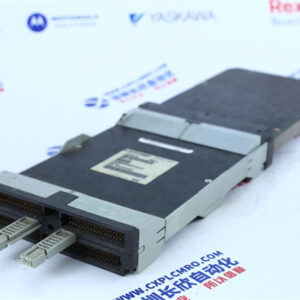
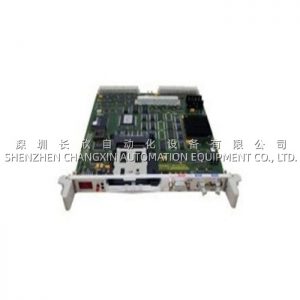
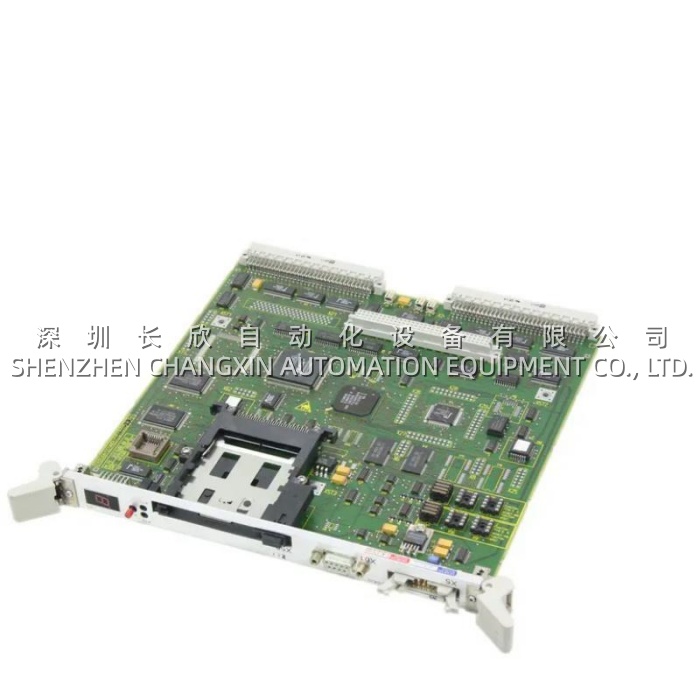
Technical Specifications
| Parameter Name | Parameter Value |
|---|---|
| Product Model | 6DD1600-0AK0 |
| Manufacturer | Siemens |
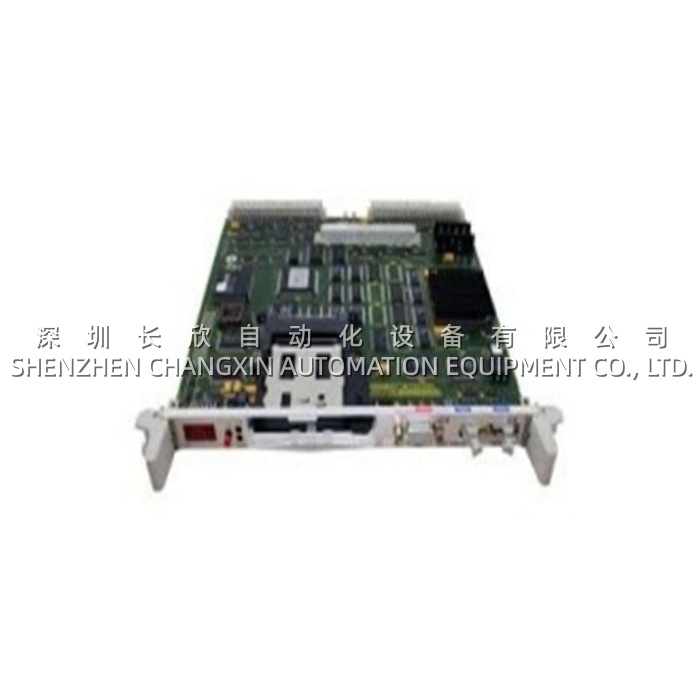
| Product Type | SIMADYN D PM6 Processor Module (CPU) |
| Processor | 64-bit RISC RAPID, 64 / 128 MHz |
| User Memory (DRAM) | 8 MB (optional 16 MB on some PM6 variants) |
| Retentive Memory | 256 kB SRAM, battery-backed |
| Onboard Digital Inputs | 8 × 24 V DC binary (4 interrupt-capable) |
| Communication Buses | L-bus (rack backplane), C-bus (inter-rack) |
| Serial Interface | 1 × RS-232 (DUST1, front) |
| Optional Fieldbus | PROFIBUS DP 12 Mbps (via 6DD1640-0AC0 piggyback) |
| Program Load | Via MS5 / MS51 / MS52 Flash-EPROM memory card |
| Minimum Cycle Time | ~0.1 ms (hardware limit) |
| Typical Configured Loop | ~0.5 ms |
| Supply Voltage | 24 V DC (via rack EB1 PS, ±20 %) |
| Power Consumption | Max. 8 W |
| Operating Temperature | –25 … +70 °C |
| Storage Temperature | –40 … +85 °C |
| Protection Class | IP20 |
| Mounting | SIMADYN D rack slot (EU 500 mm housing) |
| Weight | ~0.6 kg |
| Certifications | CE, UL, CSA Class I Div 2 |
| Lifecycle Status | PM500 – Discontinued (1 Oct 2017) |
| Successor Platform | SINAMICS / SIMOTION + S7-1500T (new designs only) |
Main Features and Advantages
64-bit RAPID RISC with sub-millisecond determinism
The Siemens 6DD1600-0AK0 is built on Siemens’ proprietary RAPID 64-bit RISC architecture — not an off-the-shelf Intel/ARM — tuned for floating-point heavy loop math (PID-FF, polytropic surge calc, tension observer) with a 0.1 ms minimum cycle and 0.5 ms typical configured task. On a 5-stand tandem hot-mill where inter-stand tension must be held within ±2% across 2000 m/min strip, the 6DD1600-0AK0 closes the tension PI + roll-force feedforward + looper angle loop at 2 kHz while the S7-400 upstairs handles sequence. The 128 MHz top clock and 8 MB DRAM let the PM6 host 2000+ FB instances (D7-FB library: FB401 tension, FB402 speed, FB410 anti-surge, FB420 hydraulic position) without scan overruns — something a 400 MHz S7-400 CPU with technology objects still struggles on when the axis count passes 12–16.
L-bus / C-bus backplane + PROFIBUS DP optional
A SIMADYN D rack is a backplane architecture, not a PLC chassis with point-to-point cabling. The Siemens 6DD1600-0AK0 owns the L-bus master — it polls EM11/EM12 binary I/O, IT41/IT42 analog + encoder, EB1 power status, and DSxx drive interface modules across the rack in microsecond order. For multi-housing systems (e.g., a tandem mill with 3 SIMADYN D racks — one per 2 stands), the 6DD1600-0AK0 also drives C-bus fiber between racks so the stand-1 PM6 can read stand-2 looper angle and stand-3 tension without PROFIBUS jitter. If the plant modernises drives to SINAMICS S120, a 6DD1640-0AC0 piggyback on the 6DD1600-0AK0 adds PROFIBUS DP 12 Mbps so the PM6 can stay as the loop-closer while the drive I/O moves to DP — a common brownfield pattern that extends SIMADYN D life another 10 years.
8 DI with 4 interrupt-capable + RS-232 DUST1
The front plug of the Siemens 6DD1600-0AK0 brings 8 × 24 V DC binary inputs — modest by I/O standards but strategically placed: 4 of the 8 can fire hardware interrupts mapped to D7-SYS C-task ISRs. On a compressor anti-surge skid, the 6DD1600-0AK0 uses one interrupt on the surge-proximity probe zero-cross and another on the recycle-valve end-switch to guarantee capture even if the 0.5 ms loop is mid-scan — the ISR preempts, snapshots the polytropic calc state, and flags the surge event to the 2 ms task. The RS-232 DUST1 port doubles as engineering (D7-ES download, DUST terminal monitor) and as a runtime logger — plants often leave a small serial data logger hanging off the 6DD1600-0AK0 DUST1 to capture 10 Hz tag dumps for post-surge analysis without touching the PROFIBUS bandwidth.
MS5 / MS51 / MS52 card-based project storage
Unlike a PLC where the project lives in onboard flash, the Siemens 6DD1600-0AK0 boots its D7-SYS application from a removable Flash-EPROM card (MS5 2 MB, MS51 4 MB, MS52 8 MB — 6DD1610-0AH2 is the common MS52). This has two implications. First, a 6DD1600-0AK0 swap is literally: power rack, pull card from old PM6, insert into new PM6, push into rack, power — no laptop, no download cable, no D7-ES on the crane. Second, version control is physical: the MS52 card carries the compile date/time in the EPROM header, so a plant can keep “MS52-A = looper tunings March 2019”, “MS52-B = looper tunings October 2022” and swap cards to A/B test tuning without recompiling. For PM500 spare strategy, this matters: keep 2 spare 6DD1600-0AK0 CPUs + 1 spare with the live project burned, and a rack swap is <20 minutes including EB1 re-seat.