Application Scenarios
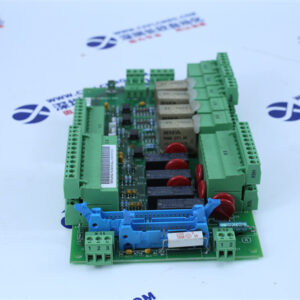
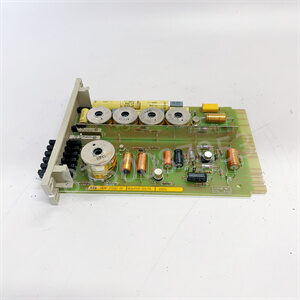
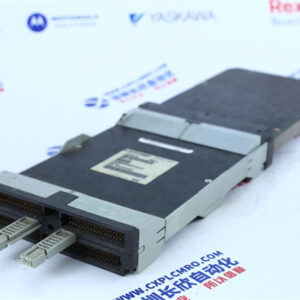
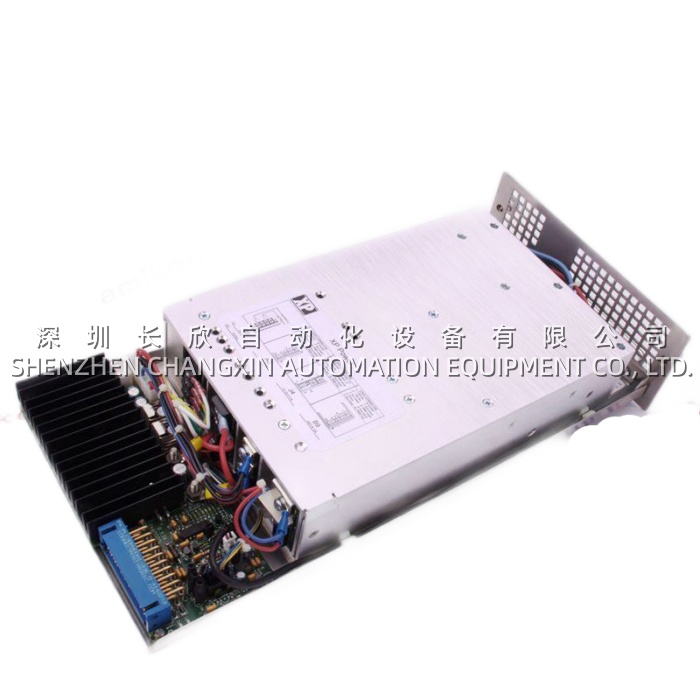
A specialty polymer plant in Germany runs its reactor temperature and pressure loops on FF H1 smart multivariable transmitters (Rosemount 3051S FF and Emerson Micro Motion Coriolis), with FF H1 digital valve controllers (Fisher DVC6200) on the jacket-water and monomer-feed valves. Originally spec’d with a competitor DCS, the plant migrated the control layer to ABB 800xA but wanted to keep the $180k-worth of FF field devices rather than re-instrument. The integration hinge was the ABB LD 800HSE 3BDH000320R02: two H1 ports on each LD 800HSE let them land four H1 segments (two LD units total, redundant HSE uplink) and the 800xA Connectivity Server pulled the FF blocks via OPC/MMS without a separate FF-configurator workstation. Commissioning the 3BDH000320R02 took one morning — the bigger job was re-tagging the FF devices into the 800xA tag database. Six months later, the control engineer’s note: “The LD 800HSE just sits there. No alarms, no missed block updates, DD files load clean. I’d forgotten it was there until we had to add a third H1 segment and I reached for the spare.” For 800xA plants with FF footprints, the LD 800HSE is that invisible node — until you don’t have a spare and the H1 segment goes dark.
Parameter
| Main Parameters | Value / Description |
|---|---|
| Product Model | 3BDH000320R02 (LD 800HSE) |
| Manufacturer | ABB |
| Product Category | FOUNDATION Fieldbus HSE Linking Device (800xA / AC 800M ecosystem) |
| Fieldbus H1 Ports | 2 × FF H1 (31.25 kbps), H1 cable via terminal block / micro-footprint |
| HSE Uplink | 100 Mbps Ethernet (RJ-45 or fiber via media converter, HSE backbone) |
| Protocol (Uplink) | FF HSE + MMS/OPC for 800xA / AC 800M integration |
| Protocol (Downlink) | FF H1 (LAS passthrough capable; LD acts as HSE-H1 bridge, LAS on H1 side served by H1 coupler/linking) |
| Power Supply | 24V DC (typical 800xA cabinet auxiliary rail) |
| Power Consumption | ~8–12 W (typical, verify per batch) |
| Mounting | 35 mm DIN rail (TS35) |
| Operating Temp. | 0°C to +60°C (standard industrial; check specific batch label) |
| Protection | IP20 (cabinet-mounted), conformal-coated PCB |
| Certifications | FF (Fieldbus Foundation) Registered; CE; relevant Ex/HAZLOC variants by batch |
| Dimensions (approx.) | ~120 × 110 × 60 mm (DIN footprint, compact) |
| LED Indicators | PWR, HSE Link, H1-A / H1-B status, ERR |
Technical Principles and Innovative Values
Innovation Point 1 – HSE↔H1 Bridging Without a PC Gateway. The LD 800HSE implements the FF HSE Linking Device class: it terminates the H1 segments on its two onboard H1 ports and publishes the H1 device blocks to the 800xA/AC 800M world over HSE using MMS/OPC. The 800xA Connectivity Server sees the FF devices as native objects — no separate FF configuration PC, no OPC wrapper hack. This collapses a traditional “FF interface card in PLC rack + OPC server + config tool” stack into one DIN rail node.
Innovation Point 2 – Dual-H1 Density in a Slim DIN Footprint. At roughly a 22.5 mm width class (compact DIN housing), the 3BDH000320R02 carries two independent H1 ports. That’s 2× 32-device segments per LD (64 devices total) before you need a second unit — density that matters when a reactor train has 40+ FF devices spread across jacket, feed, and vent loops and you want one LD per train for clean segmentation.
Innovation Point 3 – Native 800xA / AC 800M Integration Path. The LD 800HSE speaks the same MMS/OPC dialect that the 800xA Connectivity Server and AC 800M PM8xx controllers expect. DD (Device Description) files for the H1 devices load through the standard 800xA FF administration workflow — the LD disappears into the background, which is exactly where a linking device belongs.
Innovation Point 4 – Redundancy at the HSE Layer. Two LD 800HSE units can land the same pair of H1 segments and dual-home to redundant 800xA HSE networks (A/B). If one LD powers off or its HSE uplink drops, the 800xA side fails over to the second LD’s MMS session — the H1 segments themselves stay live because LAS is served from the H1 side (typically the H1 coupler/segment root, not the LD itself). This lets you design FF architectures where the control room side is redundant even if the H1 spur side is single.
Application Cases and Industry Value
Case – Oil Refinery FCCU (North America). A fluid catalytic cracking unit retroitted its riser-temperature rakes and feed-balance valves from 4–20mA+HART to FF H1 (multivariable temp transmitters + FF positioners) for better advanced-process-control visibility. The DCS was ABB 800xA, and the integration path chosen was LD 800HSE 3BDH000320R02 nodes at each FCCU level (reactor, regenerator, main fractionator) landing 2–3 H1 segments per LD. The HSE side dual-homed to the plant’s redundant 800xA networks. During a turnaround 18 months later, one LD developed a flickering HSE link LED (bad RJ-45 termination on the cabinet patch panel, not the LD itself). The operator never saw a process alarm because the redundant LD carried the MMS session. The I&E tech re-terminated the patch, and both LDs went back to green. The process control engineer’s comment: “The LD 800HSE did exactly what it’s supposed to — nothing visible, until you need the redundancy.”
Case – Biopharma Fermentation Suite (EU GMP). A biologics suite runs FF H1 on the seed-bioreactor skids (pH, DO, temp, antifoam, harvest-valve positioners) for audit-trail reasons — FF gives block-level timestamps that 4–20mA can’t. The site standardized on ABB 3BDH000320R02 LD 800HSE to bridge the skid-level H1 segments into the suite’s 800xA DCS (which also handles the non-GMP utilities side). During a FDA pre-inspection mock audit, the ability to pull DD-level block data + 800xA event timestamps for a harvest-valve stroke event satisfied the “data integrity” checklist without a separate FF historian. The validation lead logged it as a “no-findings” item.
Related Product Combination Solutions
When building an 800xA + FF H1 cabinet around the ABB 3BDH000320R02 (LD 800HSE), these companion models commonly share the same BOM or sparing plan:
ABB CI801 / CI802 – AC 800M Communication Interface modules; the LD 800HSE lands into the same 800xA/AC 800M ecosystem, often on the same cabinet DIN rail bank.
ABB PM8xx series (e.g., PM856. PM860. PM866) – AC 800M controller CPUs that the LD 800HSE serves via HSE/MMS; keep one CPU spare per cabinet bay.
ABB 3BDH000xxx LD 800H1 – The H1-side coupler variant (different animal: LD 800H1 is H1-only, no HSE uplink). Sometimes confused with 3BDH000320R02 — verify before ordering.
ABB 800xA Connectivity Server (OPC) – Software/node that consumes the LD 800HSE‘s MMS/OPC feed; essential for FF device visibility in 800xA.
ABB SD8xx / SB8xx I/O modules – The 800xA/AC 800M S800L remote I/O family; often in the same cabinet as the LD 800HSE for mixed FF + discrete/analog loops.
FF H1 Terminators & Spur Cable (Microfoot/MSTB) – The H1 physical layer that lands on the 3BDH000320R02‘s two H1 ports; keep a few 100Ω terminators on the shelf, they walk away.
ABB 3BSEseries 24V DC PSU (e.g., 3BSE018295R1) – The auxiliary 24V rail that feeds the LD 800HSE; common sparing with the rest of the 800xA DIN rail nodes.