Application Scenarios
In a steel mill’s hot rolling line, the main drive motor experienced frequent thermal overload trips and premature bearing wear due to the immense starting torque shocks and load surges inherent in the metal-forming process. The existing power modules were struggling with the thermal cycling and high current demands, leading to costly unplanned downtime. By upgrading to the ABB 2MBI450VX-120-50 paired with the ZGAD-582 gate driver, the plant dramatically improved system reliability. The module’s low saturation voltage (VCE(sat) ≤ 1.9V) reduced conduction losses, while its superior thermal cycling capability—withstanding over 10.000 temperature shocks—ensured stable operation through the mill’s punishing start/stop cycles . The result was a 40% reduction in drive-related faults and a substantial extension of scheduled maintenance intervals, proving the ABB 2MBI450VX-120-50 is not just a component, but a strategic investment in industrial productivity.
Parameters
| Main Parameters | Value/Description |
|---|---|
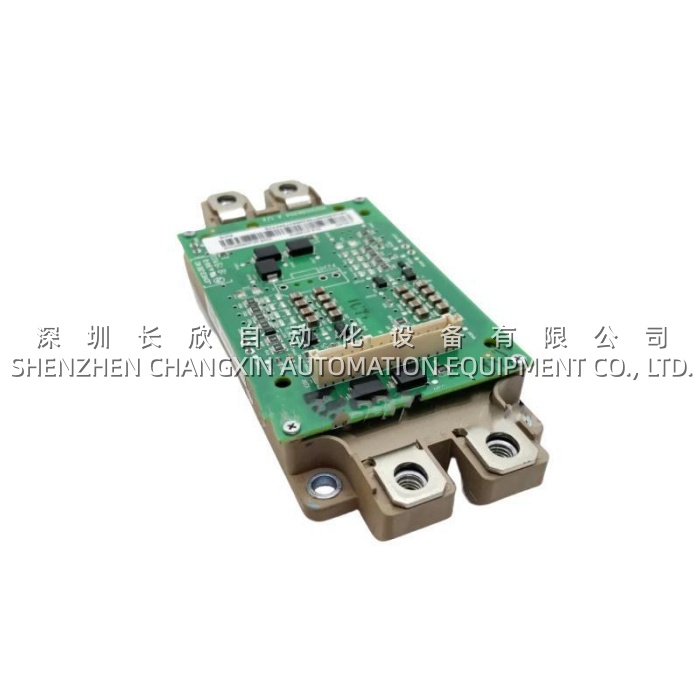
| Product Model | ABB 2MBI450VX-120-50 (with ZGAD-582 gate driver) |
| Manufacturer | ABB (now Hitachi Energy) / Fuji Electric V-series technology |
| Product Category | Dual IGBT Power Module with Gate Driver Kit |
| VCES (Collector-Emitter Voltage) | 1200 V – suitable for up to 690V AC drives |
| IC (Continuous Collector Current) | 450 A @ Tc = 80°C |
| ICM (Peak Collector Current) | 900 A (1 ms pulse) |
| Configuration | 2-Pack (Two independent IGBT half-bridge units) |
| VCE(sat) (Saturation Voltage) | ≤ 1.9 V @ 450A, VGE = 15V – ultra-low conduction loss |
| Switching Frequency | 2 – 8 kHz (typical), up to 20 kHz |
| Maximum Junction Temperature (Tvj) | 175°C (150°C for continuous operation) |
| Package Type | Dual XT Module (M282 size) |
| Dimensions (W x L) | 62 mm x 150 mm |
| Net Weight | Approx. 350 g – 1.5 kg |
| Isolation Voltage | 4000 V AC (baseplate to terminals) |
Technical Principles and Innovative Values
Innovation Point 1: 6th-Generation Trench Gate Field-Stop Technology
The ABB 2MBI450VX-120-50 utilizes advanced trench gate field-stop (TFS) semiconductor architecture, which significantly reduces the trade-off between conduction loss (VCE(sat)) and switching loss (Eon+Eoff) . Compared to previous generations, this technology yields up to 35% lower overall losses, enabling higher power density and smaller heatsinks in inverter designs . The result is a more compact, efficient, and cost-effective power system for your critical applications.
Innovation Point 2: Unmatched Thermal Cycling Durability
The ABB 2MBI450VX-120-50 is built to endure the most punishing thermal environments. Using high-reliability chip-sintering (or advanced welding) processes and a low-thermal-resistance AlSiC or copper baseplate, this module can withstand >10.000 thermal shock cycles between -40°C and +125°C . This is vital for applications like wind turbines in harsh climates or steel mill drives with frequent load reversals, where competitors’ modules often fail prematurely due to solder fatigue.
Innovation Point 3: Symmetrical Design for Seamless Paralleling
For applications requiring more than 450A per phase, the ABB 2MBI450VX-120-50 features an optimized internal layout with low stray inductance, allowing multiple modules to be paralleled with a current imbalance of less than 5% . This engineering detail simplifies the creation of high-current bridge arms (e.g., 900A or 1800A) without complex external balancing circuits, significantly enhancing system scalability and reducing design complexity.
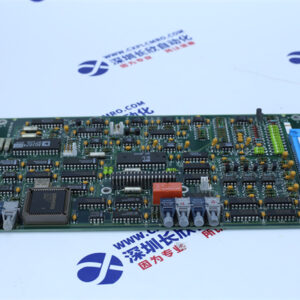
Innovation Point 4: Integrated ZGAD-582 Gate Driver for Optimized Performance
The ZGAD-582 gate driver is more than a simple trigger board; it is engineered to complement the module’s dynamic characteristics perfectly . It provides precise gate voltage control (±15V), desaturation detection for short-circuit protection (response time < 2µs), and soft turn-off to prevent overvoltage spikes . This synergy between the ABB 2MBI450VX-120-50 and its driver maximizes efficiency and safeguards the module against shoot-through, short-circuit, and over-temperature faults.