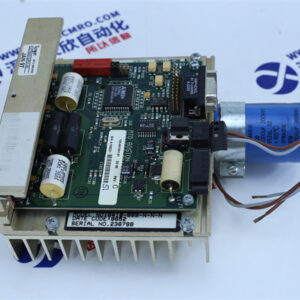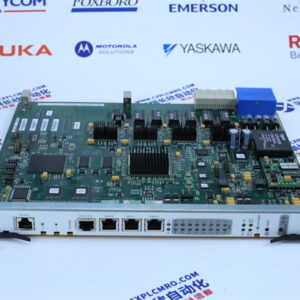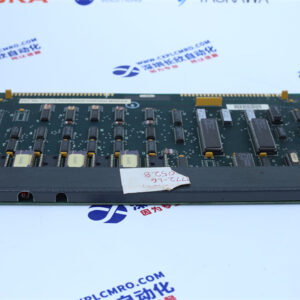
Technical Specifications
| Parameter Name | Parameter Value |
|---|---|
| Product Model | 1SF536268D1007 |
| Manufacturer | ABB Ltd. |
| Product Type | Soft Starter Main Control Motherboard (MCU Board) |
| Compatible Series | ABB PSTX soft starter, frames 370 A – 720 A (PSTX370/400/440/500/560/600/650/720) |
| Supply Voltage | Via PSTX internal PSU: 24 V DC or 100–240 V AC auto-sensed (controller side) |
| Current Sensing | Hall-effect interface + external CT input (3-phase) |
| SCR Gate Drive | 6-channel isolated trigger output (对应 6 × thyristor) |
| Communication | RS485 Modbus RTU (built-in), optional Anybus / DeviceNet daughter-card slot |
| Local HMI Port | Keypad/graphic LCD interface (detachable, IP66 when separated) |
| Fault Relay Output | 2 × relay, NO/NC, 5 A @ 250 V AC |
| Analog / Digital I/O | Digital in/out, analog in (CT / PT100 / PTC) per PSTX frame config |
| Operating Temperature | -25 °C to +60 °C |
| Storage Temperature | -40 °C to +85 °C |
| PCB Protection | Conformal coating (dust, moisture, corrosive atmosphere) |
| Mounting | Backplane gold-finger into PSTX chassis slot, guided rail |
| Certification | CE, UL, CSA, IEC 60947-4-2 (inherited from PSTX host) |
| Weight (approx.) | 0.8 kg |
Main Features and Advantages
Torque-control and application-specific algorithms on-die:
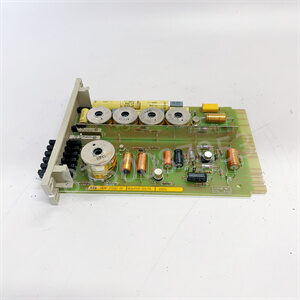
The ABB 1SF536268D1007 does not merely ramp voltage — its MCU runs a true torque-control law that adjusts the SCR firing angle based on load feedback, not just a timer. This matters for conveyor starts (where breakaway torque is nonlinear) and crusher applications (where a voltage-ramp would either stall or jerk). The same die also hosts pump-cleaning (periodic reverse-jog to shed settled solids), motor-preheat (PTC/PT100-triggered low-voltage warm-up before start, useful in freezing climates), energy-save mode (drops voltage under light-load to cut iron loss), and water-hammer suppression on pump coast-down. None of these require an external PLC — the ABB 1SF536268D1007 runs them natively, which is why a PSTX + ABB 1SF536268D1007 combo often replaces a contactor + PLC + VFD trio in fixed-speed pump and fan applications.
Six-channel isolated SCR gate drive:
Each of the six thyristors in the PSTX three-phase stack gets its own isolated trigger path sourced from the ABB 1SF536268D1007. Isolation here is not a nice-to-have: when a motor lead faults or a thyristor avalanches, the gate driver stage on the ABB 1SF536268D1007 localizes the event instead of letting it propagate back to the MCU or the communication side. For maintenance electricians, this means a blown SCR stack sometimes spares the ABB 1SF536268D1007 — and vice versa, which is the economic argument for stocking the board as a separate spare rather than always replacing the whole PSTX.
Hall + CT current front-end:
Rather than shunting high currents through the control board, the ABB 1SF536268D1007 receives isolated current data from the PSTX’s Hall sensors / external CTs. The 3-phase instantaneous values feed both the firing-angle compute loop (every half-cycle) and the protection suite (EOL electronic overload, earth fault, under/over-voltage, phase-loss, lock-rotor). The ABB 1SF536268D1007 also timestamps and logs fault-precursor data — current waveform, voltage, conduction angle for ~10 seconds pre-fault — accessible via Modbus holding registers so a remote engineer can tell “was it a real jam or a setting mismatch?” without a site visit.
Communication and integration:
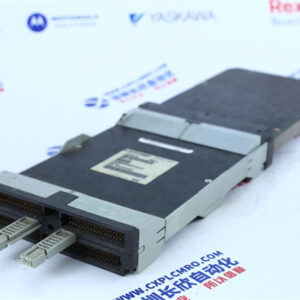
RS485 Modbus RTU is on the ABB 1SF536268D1007 silkscreen by default — baud, parity, slave address all keypad-settable. For plants on Profinet, EtherCAT, BACnet or Ethernet/IP, the ABB 1SF536268D1007 carries an Anybus daughter-card slot; pop in the ABB-validated Anybus tiny module and the PSTX (and thus the ABB 1SF536268D1007) talks native fieldbus without a protocol gateway. That keeps the MCC panel clean — no extra RTU→Profinet bridge, no extra DIN space.
EEPROM parameter retention across swap:
One of the quietest but highest-value features of the ABB 1SF536268D1007: the motor-nameplate data (rated current, FLA, ramp-up/down times, torque-profile selection, protection thresholds) lives in non-volatile memory on the board (or mated EEPROM daughter depending on PSTX sub-revision). When a faulty ABB 1SF536268D1007 is pulled and a fresh one seated, the replacement typically inherits the original parameter set — the tech does not spend 20 minutes re-entering 30+ fields on the PSTX keypad. On a three-shift water-pump station where the PSTX feeds a 500 kW raw-water intake pump, that “plug-and-go” behavior turns a 2-hour outage into a 10-minute swap.
Conformal coating and EMI-hardened layout:
The ABB 1SF536268D1007 PCB carries ABB’s standard PSTX conformal coat — clear acrylic/lacquer that blocks conductive dust, humidity creep, and mild H₂S/Cl₂ from wastewater or mining atmospheres. Combined with the automotive-grade MCU and HV optocouplers, the board survives cubicles where three 200 kW VFDs switch 4 kHz PWM ten inches away. For plants that lost earlier-generation PSS boards to creepage after five years in a swampy pump house, the ABB 1SF536268D1007 is the corrected design.
Diagnostic LED and local HMI:
The ABB 1SF536268D1007 routes to the PSTX detachable keypad (IP66 when separated from the cubicle), so the same board that runs torque control also drives the 15-language graphical LCD. Per-channel LEDs on the board edge (visible through the PSTX vent) show power, fault, run, and comm status — a panel walkthrough tells the electrician “board alive, comm dropped” vs “board dead, SCR healthy” before a multimeter comes out.