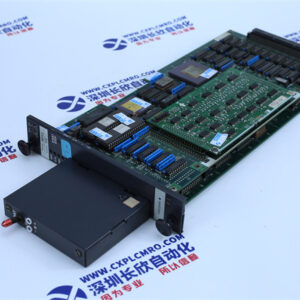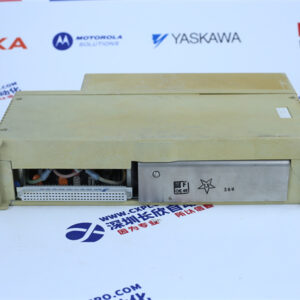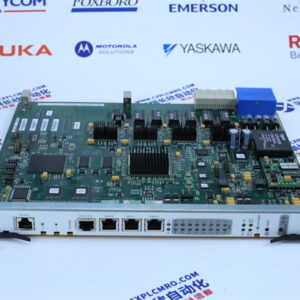
Technical Specifications
| Parameter Name | Parameter Value |
|---|---|
| Product Model | 1C31181G02 |
| Manufacturer | Westinghouse Electric (legacy); supported under Emerson Ovation legacy program |
| Product Type | Remote I/O Module (Digital, 16 DI + 16 DO) |
| Compatible System | Westinghouse WDPF DCS (also Ovation legacy RIO drops) |
| Input Channels | 16 (typical) |
| Output Channels | 16 (typical) |
| Signal Type | Dry contact / 24 V DC digital |
| Electrical Isolation | Optical isolation, 1500 V AC channel-to-channel |
| Response Time | ≤ 2 ms (input), ≤ 1 ms (output) |
| Communication Interface | WDPF dedicated fieldbus (high-speed serial) |
| Operating Temperature | 0 °C to +60 °C |
| Storage Temperature | -40 °C to +85 °C |
| Mounting Method | DIN rail / standard WDPF I/O rack slot |
| Protection Rating | IP20 (cabinet-mounted) |
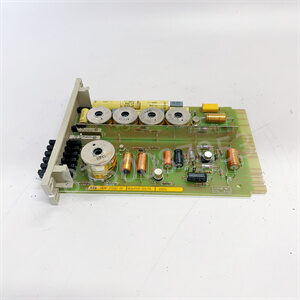
| Dimensions (typical) | 12.1 × 5.1 × 16.6 cm |
| Weight (typical) | 0.35 kg |
Main Features and Advantages
Opto-isolated channel architecture:
Every input and output on the Westinghouse 1C31181G02 is galvanically separated via optocoupler, rated 1500 V AC channel-to-channel. In a power-plant context — where the RIO panel might sit next to a 4160 V motor starter with its own protective relay earth, while the DCS cabinet earth is 300 m away — ground-potential differences of tens of volts are routine. The Westinghouse 1C31181G02 absorbs that without channel crosstalk or backplane corruption. For maintenance electricians, this also means meggering a field cable or accidentally lifting a shield doesn’t take out the whole RIO rack.
WDPF fieldbus integration without translation:
The Westinghouse 1C31181G02 speaks native WDPF serial protocol — no gateways, no protocol converters, no GSD files to wrestle. It plugs into the WDPF RIO drop, auto-enumerates against the controller database, and the 32 points appear in the WDPF point list with the same tag structure as local-base I/O. For retrofit projects where a new pump house is 400 m from the main DCS cabin, running a WDPF fieldbus pair + a Westinghouse 1C31181G02 at the far end is cheaper and cleaner than pulling 32 individual multicore homeruns back to the main rack.
Redundancy-ready at the RIO station level:
While the Westinghouse 1C31181G02 itself is a single module, WDPF RIO stations are typically designed as pairs — two modules on the same fieldbus drop, each cabled to the same field devices through redundant fusing or diode-OR on the output side. If one Westinghouse 1C31181G02 develops an opto leak or a fieldbus transceiver fault, the WDPF controller sees the dropout and shifts to the mate without the process seeing a glitch. This is the design pattern behind “unit can’t trip on a single I/O card” in NERC/PRA-minded plants.
Industrial-grade environmental envelope:
0–60 °C operating, -40–85 °C storage, IP20 in-cabinet — the Westinghouse 1C31181G02 is not meant for washdown or outdoor direct-mount, but it is rated for the interior of a turbine-deck local panel where ambient climbs to 50 °C during summer steam blows. The DIN-rail / rack-slot form factor means spares swap without tools beyond a screwdriver for the terminal blocks; the WDPF rack’s guide rails seat the Westinghouse 1C31181G02 and the backplane edge-connector mates automatically — no ribbon cables to misplug.
Response time matched to process, not motion:
≤2 ms in, ≤1 ms out is fast enough for burner-management flame-scan voting, motor aux-feedback latching, and valve-limit interlocks, but the Westinghouse 1C31181G02 is deliberately not a SERCOS or EtherCAT node — it lives in the process-I/O tier where 10 ms jitter wouldn’t matter but galvanic isolation and redundancy do. That tier separation is why WDPF survived so long in power: the RIO layer (the Westinghouse 1C31181G02 and siblings) does process I/O; the base rack does the control-law scanning; the HMIs do the visualization. Each layer has its own failure domain.
Legacy continuity under Emerson Ovation:
Many plants that migrated WDPF → Ovation kept the RIO drops (rewiring a 300-point pump-house RIO to Ovation local I/O is a capital project; keeping the Westinghouse 1C31181G02 racks and bridging via Ovation’s WDPF-compatibility path is the pragmatic path). That is why the same 1C31181G02 appears in Emerson-labeled spare catalogs — the silicon is Westinghouse-era, the support channel is Emerson Ovation legacy. For spare-parts buyers, this means the SKU hasn’t been orphaned; for plant engineers, it means the Westinghouse 1C31181G02 still has a procurement path without a forced rip-and-replace.