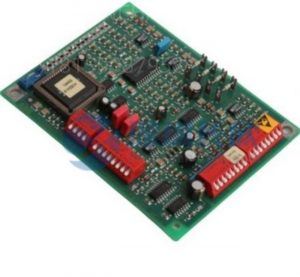
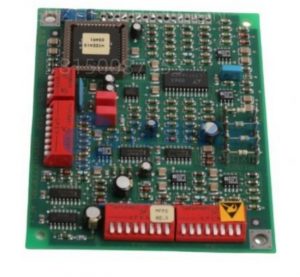
ABB UAC389 CPU Module – Ideal for Power, Oil & Gas, and Water Treatment Automation Systems
In the high-stakes world of critical infrastructure, control system reliability isn’t just a performance metric—it’s a prerequisite for safety, environmental compliance, and operational continuity. The ABB UAC389 CPU module, a core component of the AC 800F controller platform within ABB’s System 800xA architecture, has earned its reputation as a rugged, deterministic, and scalable processing engine tailored precisely for the demanding environments of power generation, oil & gas processing, and municipal water treatment. Unlike general-purpose PLCs, the UAC389 is engineered from the ground up for continuous, mission-critical process automation—supporting complex regulatory logic, integrated safety functions, and seamless communication across legacy and modern field networks. For engineers tasked with modernizing aging plants or deploying new facilities in remote or hazardous locations, the UAC389 offers a proven balance of performance, resilience, and lifecycle support that few industrial controllers can match.
Purpose-Built Architecture for Continuous Process Control
The ABB UAC389 distinguishes itself through its integration into the AC 800F controller family, a platform designed specifically for large-scale, distributed process applications. Powered by a 32-bit RISC processor running at 133 MHz, it delivers deterministic scan cycles down to 1 millisecond, enabling precise coordination of boiler-turbine-generator sets, compressor anti-surge systems, or multi-stage filtration sequences in water plants.
One of its defining strengths is native support for FOUNDATION Fieldbus H1 and PROFIBUS PA, allowing direct connection to intelligent field devices without external protocol gateways. This reduces signal conversion latency and simplifies system topology—critical in applications like offshore platforms where every junction box adds cost and failure risk. Additionally, the UAC389 features dual Ethernet ports for IEC 61850 MMS (in power applications), Modbus TCP, and high-speed data exchange with engineering stations, historians, and operator consoles within the System 800xA environment.
Memory capacity is another key asset: with 8 MB of program memory and 4 MB of data memory, the UAC389 comfortably handles large control strategies involving hundreds of analog loops, sequence controls, and interlocks—common in refinery fractionation units or combined-cycle power blocks.
Built-In Redundancy and Diagnostics for Uninterrupted Operation
For industries where unplanned downtime carries severe financial or safety consequences, the UAC389 supports full hardware redundancy in a hot-standby configuration. Two CPU modules synchronize application state, I/O images, and communication sessions via a dedicated fiber-optic or copper sync link. In the event of a failure—whether due to power anomaly, component degradation, or software fault—the standby unit assumes control in less than 10 milliseconds, ensuring zero disruption to field devices or ongoing processes.
This capability proved vital at a natural gas processing facility in the Middle East, where a lightning strike caused a momentary power dip. While non-redundant auxiliary systems rebooted, the UAC389-based compressor control system maintained anti-surge valve positioning and gas flow regulation without interruption. “It wasn’t just about avoiding a trip—it was about preventing a potential overpressure scenario,” noted the plant’s automation manager.
Beyond redundancy, the UAC389 embeds comprehensive self-diagnostics:
Watchdog timers for task overrun detection
Memory parity checks to prevent silent data corruption
Real-time monitoring of backplane communication health
Front-panel LEDs indicating RUN, STOP, I/O FAULT, and REDUNDANCY STATUS
All diagnostic events are logged and exposed natively in System 800xA, enabling predictive maintenance and rapid troubleshooting.
Real-World Deployments Across Critical Sectors
Municipal Water Treatment Plant – Scandinavia
A major European city upgraded its aging SCADA system to an ABB System 800xA platform centered on UAC389 controllers. The CPUs now manage chemical dosing (coagulant, chlorine), filter backwash sequences, and pump station coordination across 12 remote sites. Thanks to the UAC389’s robust serial communication capabilities, legacy ultrasonic flow meters and pH analyzers were integrated via Modbus RTU without replacement. Over three years, the system achieved 99.99% availability, with zero water quality incidents tied to control failures. “The UAC389 gave us future-proofing without forcing a full rip-and-replace,” said the utility’s chief engineer.
Combined Heat and Power (CHP) Plant – Germany
In a district heating facility, precise steam pressure control is essential to meet both electrical and thermal demands. The UAC389 executes cascade PID loops for boiler drum level and turbine extraction pressure while communicating with the grid operator via IEC 60870-5-104. During winter peak loads, the system dynamically adjusts setpoints based on real-time pricing signals—all within a 5 ms control cycle. “It handles complexity without compromise,” remarked the site’s control specialist. “Even during rapid load changes, the steam header stays stable.”
Expert Recommendations for Optimal Integration
“Don’t treat the UAC389 like a standard PLC. Its strength lies in structured programming and deep System 800xA integration. Leverage libraries, version control, and online change download—they’re game changers in live plants.”
— Senior DCS Consultant, Global Engineering Firm
Seasoned practitioners advise the following best practices:
Use Control Builder F: ABB’s certified engineering tool ensures compliance with IEC 61131-3 and simplifies redundancy setup.
Isolate safety logic: While the UAC389 supports basic safety interlocks, reserve SIL 2/3 functions for dedicated safety controllers (e.g., AC 800M with PM865K01) to maintain clear validation boundaries.
Implement proper grounding: Bond the AC 800F chassis to a single-point ground grid—especially near VFDs or high-voltage switchgear—to prevent noise-induced communication faults.
Monitor CPU load: Keep sustained utilization below 70% to accommodate future logic expansions and maintain deterministic behavior.
Long-Term Support in an Evolving Automation Landscape
Though the AC 800F platform is a mature technology, ABB continues to provide firmware updates, cybersecurity patches, and spare parts support—critical for industries with asset lifespans exceeding 25 years. Many utilities and municipalities choose the UAC389 not for cutting-edge novelty, but for its proven field history, certification pedigree (including IEC 61508 up to SIL 2), and seamless coexistence with newer AC 800M systems in hybrid architectures.
This longevity is more than convenience; it’s strategic. A water authority in North America recently expanded its UAC389-based network to include new UV disinfection skids—simply by adding I/O modules and reusing existing engineering templates. “We didn’t need a new control philosophy,” explained the project lead. “Just more of what already worked.”
Conclusion: Reliability Engineered for the Real World
The ABB UAC389 CPU module may not boast the highest clock speed or largest memory footprint in today’s market—but in the unforgiving environments of power plants, refineries, and waterworks, raw specs matter less than consistent, predictable performance under stress. By combining deterministic control, native fieldbus integration, hardware redundancy, and deep diagnostics within a unified engineering ecosystem, the UAC389 delivers what critical infrastructure demands most: unwavering reliability.
For engineers balancing innovation with operational risk, the UAC389 remains a trusted cornerstone—not because it’s new, but because it works, day after day, year after year, where failure is simply not an option.