
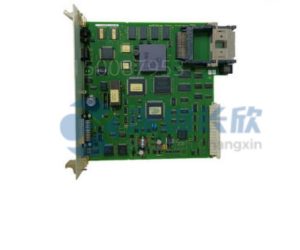
 Expert Guide: Integrating the ABB 216VC62A/P1000 HESG324442R112 into Your Control System
In modern industrial automation, seamless integration of high-performance I/O modules is essential for achieving both operational reliability and engineering efficiency. Among ABB’s extensive portfolio for the AC 800M control platform, the 216VC62A/P1000 (HESG324442R112) stands out as a versatile and robust analog output module—specifically engineered for demanding applications in power generation, petrochemical processing, and heavy industry. Designed to deliver precise 4–20 mA or 0–20 mA signals with galvanic isolation and diagnostic intelligence, this module bridges the gap between digital control logic and critical field actuators such as control valves, VFD speed references, and damper positioners. Yet its true value emerges not just from its specifications, but from how effectively it can be integrated into a cohesive, maintainable, and future-ready control architecture. This expert guide explores best practices, real-world deployment insights, and common pitfalls to avoid when implementing the ABB 216VC62A/P1000 HESG324442R112 in your next project.
Understanding the Module: Capabilities Beyond Basic Output
The 216VC62A/P1000 is an 8-channel analog output module rated for use in ABB’s AC 800M series controllers. Each channel supports configurable current ranges (typically 4–20 mA or 0–20 mA) with 16-bit resolution, enabling fine-grained control of final elements—critical in applications like boiler feedwater regulation or reactor temperature modulation where ±0.1% accuracy matters.
What distinguishes this module from commodity I/O is its built-in diagnostics and fault tolerance:
Per-channel open-wire detection: Immediately flags broken signal loops—a common issue in long cable runs to remote valve positioners.
Overrange/underrange monitoring: Alerts operators if output exceeds configured limits, often indicating actuator binding or calibration drift.
Galvanic isolation (500 VDC) between channels and backplane, preventing ground loops and protecting the controller from field-side surges.
Hot-swap capability: Modules can be replaced during live operation without shutting down the entire rack—minimizing downtime in continuous processes.
Moreover, all diagnostic data is natively exposed within ABB’s System 800xA environment, allowing alarms and quality tags (e.g., “BAD,” “UNCERTAIN”) to propagate directly to HMI screens and historians—no custom scripting required.
Planning Your Integration: From Slot Allocation to Signal Integrity
Successful integration begins long before the module is powered on. Engineers must consider physical, electrical, and software factors:
1. Backplane and Redundancy Compatibility
The 216VC62A/P1000 fits into standard AC 800M I/O bases (e.g., TB840A) and supports both single and redundant controller configurations. In redundant systems, ensure both primary and backup CPUs are configured identically—mismatched I/O databases are a frequent cause of sync failures.
2. Power Budgeting
Each module draws approximately 1.2 A from the +5 V backplane supply. Verify that your power supply unit (e.g., SA811) has sufficient headroom, especially in densely populated racks. Overloading can cause intermittent resets—a subtle but costly failure mode.
3. Cable Routing and Shielding
For optimal signal integrity:
Use twisted-pair, shielded cables (e.g., Belden 8761) for all analog outputs.
Ground the shield only at the controller end to avoid ground loops.
Keep output cables away from high-voltage AC lines, VFDs, or motor starters—EMI can induce noise that mimics real process changes.
“We once traced erratic valve positioning to a shared conduit with a 480V motor feeder. After re-routing the 216VC62A cabling, the problem vanished.”
— Senior Instrument Engineer, LNG Terminal Operator
Real-World Application: Precision Control in a Combined-Cycle Plant
At a 1.200 MW natural gas-fired facility in Texas, engineers faced challenges stabilizing combustion during rapid load ramps. The existing analog output modules lacked sufficient resolution and diagnostics, causing fuel valve overshoot and flame instability.
They deployed 216VC62A/P1000 modules to drive the main gas control valves, leveraging:
16-bit resolution for smoother setpoint transitions
Open-wire detection to catch failing positioner feedback loops early
System 800xA integration to log output deviations alongside turbine speed and exhaust temperature
Within weeks, combustion-related trips dropped by 80%. “The module didn’t just send a signal—it told us when the loop was healthy,” said the controls lead. “That visibility changed how we troubleshoot.”
Configuration Best Practices in Control Builder M
When configuring the 216VC62A/P1000 in ABB’s Control Builder M engineering tool, follow these expert-recommended steps:
Use structured variable naming: Tag outputs as AO_FCV101_Setpoint rather than AO_01—this improves readability and simplifies future modifications.
Enable diagnostic alarms: Activate “Channel Fault” and “Range Violation” alarms in the I/O object properties; route them to appropriate operator workstations.
Set realistic output limits: Configure min/max values slightly beyond normal operating range (e.g., 3.8–20.5 mA) to catch sensor drift without triggering false alarms.
Validate during commissioning: Use a precision calibrator (e.g., Fluke 754) to verify each channel at 0%, 50%, and 100%—document results for compliance audits.
Common Pitfalls—and How to Avoid Them
Even experienced teams encounter integration challenges. Here are frequent issues and solutions:
Future-Proofing Your Investment
While the 216VC62A/P1000 is a mature product, ABB continues to support it within the AC 800M ecosystem—including compatibility with newer CPU modules like the PM866 and integration into hybrid architectures using OPC UA. For plants planning digital upgrades, this module provides a stable analog foundation while higher-layer systems evolve.
Additionally, its diagnostic data can feed predictive maintenance models. By correlating output deviation trends with valve stem friction or actuator wear, teams can move from reactive repairs to condition-based servicing—extending asset life and reducing unplanned outages.
Conclusion: More Than an I/O Module—A Diagnostic Partner
Integrating the ABB 216VC62A/P1000 HESG324442R112 is not merely about wiring channels and downloading logic. It’s about embedding intelligence at the edge of your control system—where digital decisions meet physical reality. When deployed with attention to signal integrity, configuration discipline, and diagnostic utilization, this module becomes more than a signal source; it becomes a vigilant partner in operational excellence.
For engineers tasked with modernizing legacy plants or building new high-integrity facilities, the 216VC62A/P1000 offers a proven path to precision, resilience, and transparency—one milliamp at a time.