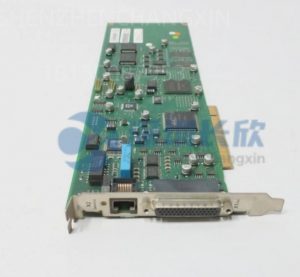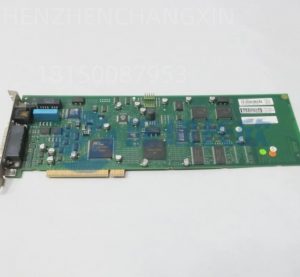
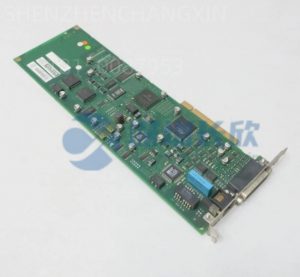
ABB DSQC532 3HAC12158-1 Plug-and-Play Digital Input Module – Hot-Swappable in ABB IRC5 Control Cabinets
In modern robotic workcells—whether in automotive body shops, battery module assembly lines, or high-speed palletizing systems—downtime is not just costly; it’s catastrophic. A single failed digital input signal from a safety gate, part presence sensor, or end-of-arm tooling can halt an entire production line. The ABB DSQC532 3HAC12158-1 digital input module addresses this critical vulnerability head-on. Designed specifically for the IRC5 and OmniCore robot controllers, this 16-channel, 24VDC digital input module delivers true plug-and-play simplicity, robust industrial-grade performance, and, most importantly, hot-swappable capability that allows replacement without powering down the controller—keeping robots running while maintenance happens in the background.
It doesn’t move axes or calculate trajectories, but the DSQC532 ensures the robot knows when it’s safe to move—and that knowledge is the bedrock of reliable automation.
Why Hot-Swappability Matters in High-Availability Robotic Systems
Traditional I/O modules in many legacy systems require a full controller shutdown for replacement—a process that can take 15 to 30 minutes when factoring in reboot, reinitialization, and safety checks. In a Tier-1 automotive plant running three shifts, that’s easily $10.000+ in lost output per incident. The ABB DSQC532 3HAC12158-1. however, is engineered for live replacement. Thanks to its integrated power sequencing and signal buffering circuitry, technicians can pull and replace the module while the IRC5 controller remains fully operational. The system automatically detects the new unit, reloads its configuration from non-volatile memory, and resumes I/O scanning—all within seconds.
This capability transforms maintenance from a disruptive event into a seamless operation. As one automation manager at a European EV battery gigafactory put it: “Before the DSQC532. a burnt-out input card meant stopping the line. Now, we swap it during normal operation—operators don’t even notice.”
Technical Architecture: Simplicity Meets Industrial Toughness
The DSQC532 3HAC12158-1 is far more than a basic signal conditioner. It embodies ABB’s philosophy of “engineered reliability” through several key design features:
16 isolated digital inputs (sink/source configurable via wiring), rated for 24VDC nominal (18–30V operational range)
Optocoupler isolation (≥1500 Vrms) between field circuits and internal logic, preventing ground loops and noise coupling
Built-in surge suppression compliant with IEC 61000-4-5 (Level 3), protecting against inductive kickback from solenoids or relay coils
Front-panel diagnostic LEDs for all 16 channels—green indicates active high signal, off means low or disconnected
Mechanical keying on the connector prevents mis-mating with output modules like the DSQC533
IP20-rated enclosure, suitable for installation inside standard IRC5 control cabinets
Unlike generic third-party I/O, the DSQC532 is natively recognized by RobotStudio and the IRC5 OS. No drivers, no DIP switches, no address conflicts—just insert, wire, and configure via the intuitive I/O mapping interface.
Real-World Impact: From Automotive to Electronics Manufacturing
Case Study: Automotive Door Assembly Line
A North American OEM deployed 24 IRB 6700 robots for door sub-assembly, each equipped with multiple DSQC532 modules handling safety interlocks, clamp sensors, and vision trigger signals. During a routine shift, a weld spatter-induced short damaged one input channel. Instead of initiating a full line stop, the technician replaced the DSQC532 3HAC12158-1 in under 90 seconds while robots were in cycle. Total production loss: zero. Over one year, hot-swap capability prevented an estimated 42 hours of unplanned downtime.
Case Study: Consumer Electronics Packaging
In a high-mix packaging facility in Southeast Asia, rapid product changeovers demand flexible I/O. The engineering team uses DSQC532 modules to connect photoelectric sensors, barcode readers, and reject gates. Because the modules are hot-swappable, they can reconfigure I/O assignments between batches without interrupting upstream conveyors. “The DSQC532 lets us treat I/O like software—dynamic, adaptable, and always available,” noted the lead controls engineer.
User Feedback and Expert Recommendations
“We’ve run the same DSQC532 modules for six years in a foundry environment—dust, humidity, thermal cycling—and not one has failed. When we did need to replace one due to a forklift incident, hot-swap saved our shift target.”
— Senior Maintenance Technician, Heavy Machinery Plant
Expert Tips for Optimal Use:
Always use shielded, twisted-pair cable for long runs (>10 m), grounding the shield at the cabinet end only
Enable “Input Filtering” in RobotStudio for noisy environments (adjustable 0–20 ms debounce)
Label field wiring clearly—while the module is plug-and-play, miswiring remains the #1 cause of false signals
Store spare DSQC532 3HAC12158-1 units in ESD-safe containers; though rugged, the PCB is sensitive to static discharge during handling
Combine with DSQC533 digital output modules for symmetrical I/O expansion in compact cells
Integration Within the ABB Robotics Ecosystem
The DSQC532 shines brightest as part of a cohesive architecture. It integrates seamlessly with:
IRC5 and OmniCore controllers: Native support in firmware versions 6.x and later
RobotStudio: Drag-and-drop I/O mapping, real-time signal monitoring, and diagnostic logging
ABB SafeMove2: Safety-related inputs (e.g., light curtains, E-stops) can be routed through DSQC532 for non-safety logic, while safety functions use dedicated safety modules
Fieldbus extensions (e.g., Profinet, EtherNet/IP): The DSQC532 handles local hardwired signals, while remote I/O manages distributed devices—optimizing cost and performance
This modularity allows system integrators to scale I/O precisely to application needs—no over-engineering, no under-provisioning.
Installation and Maintenance Best Practices
Installing the DSQC532 3HAC12158-1 is straightforward: slide it into any available slot on the IRC5 I/O backplane until it clicks, then connect the 37-pin Hirose connector. For hot-swap replacement:
Confirm the module status LED is not indicating a critical fault (red = do not remove)
Grasp the handle firmly and pull straight out—no tools required
Insert the new module until fully seated
Verify channel LEDs match expected states; confirm in RobotStudio that all signals are active
Routine maintenance involves visual inspection of LEDs and periodic tightening of terminal screws (if using terminal blocks). ABB recommends replacing modules every 8–10 years in continuous-duty applications, though many installations exceed this with no issues.
Conclusion
The ABB DSQC532 3HAC12158-1 may appear unassuming—a slim metal card nestled among servo drives and power supplies—but its impact on operational continuity is profound. By combining industrial-grade signal integrity, intuitive diagnostics, and genuine hot-swappable functionality, it eliminates one of the last remaining single points of failure in robotic workcells. In an era where uptime equals revenue, the DSQC532 isn’t just an I/O module; it’s an insurance policy written in silicon and steel. For engineers building the next generation of resilient, high-availability automation, it remains a quiet yet indispensable cornerstone of the ABB robotics platform.