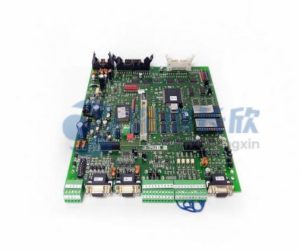
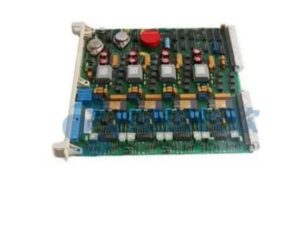
ABB TPPB-02 Multi-Protocol Controller: Seamless Integration for Process & Manufacturing
In today’s industrial landscape—where legacy assets coexist with modern IIoT architectures and operational technology (OT) converges with information technology (IT)—the ability to bridge communication gaps is no longer optional. The ABB TPPB-02 Multi-Protocol Controller emerges as a strategic enabler in this complex ecosystem, offering robust, real-time protocol translation between disparate automation systems without compromising data integrity or control determinism. Designed for seamless deployment in both process industries (such as oil & gas, chemicals, and power) and discrete manufacturing (including automotive and food & beverage), the TPPB-02 acts as a universal “language interpreter” for industrial networks, ensuring that valuable data flows freely while maintaining the timing precision required for closed-loop control.
Bridging Protocol Islands Without Compromising Performance
At its core, the TPPB-02 is not merely a gateway—it is a high-performance, deterministic controller with built-in multi-protocol support. Unlike passive protocol converters that simply map registers, the TPPB-02 executes logic, buffers data intelligently, and synchronizes I/O updates across networks with microsecond-level accuracy. This distinction is critical in applications where delayed or inconsistent data can disrupt batch sequences, destabilize PID loops, or trigger false alarms.
Key capabilities include:
Native support for major industrial protocols: Modbus RTU/TCP, PROFIBUS DP, Foundation Fieldbus H1. DeviceNet, and proprietary ABB protocols like AC 800M’s ModuleBus.
Real-time data exchange with configurable scan rates: Independent polling cycles per network segment prevent bottlenecks and ensure time-critical signals (e.g., emergency stops) are prioritized.
Integrated IEC 61131-3 logic engine: Enables local decision-making—such as signal validation, range checking, or fail-safe substitution—without relying on external PLCs.
Dual Ethernet ports with switch functionality: Supports daisy-chained topologies and VLAN segmentation for secure OT/IT convergence.
Hardware-accelerated data buffering: Prevents packet loss during network congestion or temporary outages, with automatic resynchronization upon recovery.
Comprehensive diagnostics: Per-channel status, communication error counters, and protocol-specific health metrics accessible via web interface or System 800xA.
This architecture allows the TPPB-02 to function equally well as a field-level integrator (e.g., connecting legacy motor control centers to a modern DCS) or as a plant-wide data harmonizer (e.g., aggregating machine data from multiple OEM lines into a central historian).
Real-World Impact: From Retrofit Projects to Greenfield Flexibility
Case Study 1: Petrochemical Refinery – Legacy DCS Modernization
During a phased migration from a 1990s-era DCS to ABB’s System 800xA, the refinery needed to retain hundreds of existing PROFIBUS instruments while integrating new Modbus TCP analyzers and wireless temperature sensors. Deploying TPPB-02 units at the boundary of each unit allowed engineers to maintain control continuity without rewiring field devices. “We avoided $2.3 million in cabling costs and cut commissioning time by six weeks,” said the project lead. “More importantly, operators saw a unified view—no more ‘island’ HMIs.”
Case Study 2: Automotive Stamping Plant – Multi-Vendor Press Line Integration
The plant operated presses from three different manufacturers, each using a distinct control protocol (DeviceNet, PROFINET, and serial Modbus). The TPPB-02 aggregated real-time press status, cycle counts, and fault codes into a single OPC UA server, feeding both the MES and predictive maintenance platform. “Downtime due to communication mismatches dropped to zero,” noted the production manager. “Now, if Press B faults, the line coordinator sees it alongside Press A and C—same screen, same format.”
Case Study 3: Municipal Water Treatment Facility – SCADA Expansion
A mid-sized utility expanded its SCADA system to include remote pump stations equipped with older RTUs speaking Modbus RTU over radio links. The TPPB-02 translated these signals into Modbus TCP for integration with the central ABB 800xA SCADA, while also performing local logic to activate backup pumps if communication was lost for more than 30 seconds. “It gave us both connectivity and resilience,” explained the SCADA engineer.
Expert Insights: Best Practices for Deployment
“Protocol translation is easy—reliable translation under load is hard,” cautions an ABB-certified system integrator with 15 years of experience. He offers three recommendations:
Map data semantically, not just syntactically: Ensure that a “temperature” tag from a legacy system carries the same engineering units, alarm limits, and description in the target system.
Use the TPPB-02’s local logic for signal conditioning: Instead of sending raw counts from an old flow meter, scale and filter them locally to reduce network traffic and improve data quality upstream.
Implement heartbeat monitoring: Configure periodic “alive” signals between the TPPB-02 and connected systems to detect silent communication failures.
Additionally, always isolate protocol conversion zones with firewalls or managed switches to prevent broadcast storms from propagating across networks.
Future-Ready Through Openness and Lifecycle Support
The TPPB-02 is designed with longevity in mind. ABB provides ongoing firmware updates to support emerging standards (such as OPC UA PubSub) and maintains long-term spare parts availability—critical for infrastructure with 20+ year lifespans. Its open architecture also facilitates gradual migration to cloud-based analytics; for example, historians can pull normalized data directly via Modbus TCP without custom drivers.
Moreover, because the TPPB-02 operates at the edge—close to the physical process—it minimizes latency in hybrid cloud-edge deployments, aligning with current trends in distributed control and edge computing.
Conclusion: The Silent Orchestrator of Industrial Interoperability
In an era defined by fragmentation—of vendors, protocols, generations of equipment, and operational silos—the ABB TPPB-02 Multi-Protocol Controller serves as a unifying force. It does not seek to replace existing systems but to empower them, enabling legacy assets to contribute meaningfully to digital transformation initiatives. By combining deterministic performance, intelligent data handling, and deep protocol expertise, the TPPB-02 ensures that integration is not a compromise, but a catalyst for greater visibility, agility, and control. For engineers navigating the complexities of modern industrial ecosystems, it is less a product and more a promise: that no device should be left behind, and no data should remain trapped in isolation.