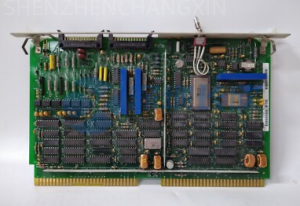
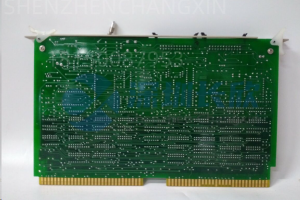
HITACHI LPU100A – Robust Logic Solver for Turbine Control, Boiler Systems & Refineries
In the high-stakes world of continuous process industries—where a single logic failure can trigger cascading shutdowns, safety incidents, or environmental releases—the reliability of the underlying control logic engine is paramount. The Hitachi LPU100A Logic Processing Unit stands as a purpose-built solution engineered specifically for mission-critical applications in power generation, oil refining, and industrial boiler systems. Unlike general-purpose PLCs, the LPU100A functions as a dedicated, high-integrity logic solver within Hitachi’s broader turbine and plant control architecture, delivering deterministic execution, hardware-level redundancy, and seamless integration with legacy and modern control layers. For engineers responsible for safeguarding multi-billion-dollar assets operating under extreme thermal, mechanical, and regulatory pressures, the LPU100A represents not just hardware—but a foundational layer of operational trust.
Architecture Designed for Determinism and Fail-Safe Operation
The LPU100A is not a conventional programmable logic controller; it is a specialized logic solver optimized for hard real-time execution of safety and sequencing logic in turbine protection (ETS), boiler furnace safeguard systems (FSSS), and emergency shutdown (ESD) applications. Its architecture reflects decades of field experience in environments where response latency must be measured in milliseconds—not scan cycles.
Key engineering attributes include:
Deterministic scan times consistently below 10 ms, regardless of program complexity, ensuring timely trip activation during overspeed, flame loss, or pressure excursions.
Triple Modular Redundancy (TMR) support in critical configurations, where three independent processing lanes vote on outputs to eliminate single-point failures.
Hardware-implemented fail-safe defaults: All outputs default to safe states (e.g., valve closure, fuel cutoff) upon power loss, communication fault, or internal diagnostic error.
Robust I/O interfacing with opto-isolated digital inputs/outputs rated for 24–125 VDC, compatible with industry-standard relay contacts, proximity switches, and solenoid drivers.
Integrated self-diagnostics covering memory integrity, watchdog timers, power supply health, and I/O channel status—reported continuously to higher-level HMIs or asset management systems.
Compliance with IEC 61508 SIL 3 and IEEE standards for turbine control, making it suitable for certified safety instrumented functions (SIFs).
Critically, the LPU100A executes logic independently of supervisory networks, ensuring that even if the operator interface or data historian fails, protective actions remain unaffected—a principle known as separation of control and monitoring.
Seamless Integration into Power & Process Control Ecosystems
While capable of standalone operation, the LPU100A is most powerful when integrated into Hitachi’s holistic plant control strategy. It typically interfaces with:
Turbine Control Units (TCUs) for coordinated speed, load, and extraction control;
Distributed Control Systems (DCS) like Hitachi’s H-DS or third-party platforms via Modbus TCP or PROFIBUS;
Operator workstations for alarm annunciation, sequence logging, and manual override (with strict access control).
All logic programs are developed using IEC 61131-3-compliant tools (typically ladder logic or function block diagrams), enabling clear documentation and auditability—essential for regulatory compliance in nuclear or fossil-fuel plants. Furthermore, every trip event is logged with millisecond-accurate timestamps, supporting root-cause analysis and regulatory reporting.
“During a grid collapse last winter, our steam turbine hit 112% overspeed,” recalls a control systems engineer at a Japanese combined-cycle plant. “The LPU100A triggered the trip solenoid in 8 ms—well within the 15 ms window specified by ASME PTC 22. Without that deterministic response, we would have faced catastrophic rotor failure.”
Real-World Deployments: Proven Resilience Across Demanding Sectors
Case Study 1: LNG Receiving Terminal – Emergency Depressurization System
At a coastal terminal handling cryogenic liquids, the LPU100A manages the ESD logic for vapor recovery and flare activation. During a simulated pipeline rupture test, the unit processed 47 simultaneous input changes (including fire detection, valve position, and pressure transmitters) and activated all required shutdown valves within 12 ms. “Regulators were impressed by the system’s repeatability across 50 test cycles,” noted the site safety manager.
Case Study 2: Industrial Cogeneration Plant – Boiler FSSS Retrofit
An aging coal-fired boiler was retrofitted with a new FSSS based on the LPU100A. The logic solver now monitors flame scanners, fuel valve positions, and draft fan status, enforcing strict permissives before ignition. Since commissioning, nuisance trips dropped by 90%, while safety compliance improved. “The hardware-level diagnostics caught a failing flame relay before it caused a misfire,” shared the plant’s instrumentation lead.
Case Study 3: Petrochemical Refinery – Crude Unit Heater Protection
In a high-temperature crude preheater, the LPU100A enforces tube-wall temperature limits and flow interlocks. Its immunity to electrical noise from nearby rectifiers ensured stable operation where previous PLC-based systems suffered intermittent faults. “We’ve run two turnarounds without a single logic-related incident,” confirmed the refinery automation supervisor.
Expert Recommendations for Deployment and Maintenance
“Logic solvers like the LPU100A demand disciplined engineering practices,” advises a senior Hitachi field application specialist. He offers three best practices:
Segregate safety logic from basic process control: Keep ESD and BPCS functions on physically separate hardware to meet IEC 61511 independence requirements.
Perform periodic proof tests with full input simulation: Don’t just check outputs—verify the entire signal path from field device to final element.
Document all logic changes with version-controlled narratives: Regulatory audits often require traceability from hazard study (HAZOP) to implemented logic.
Additionally, ensure firmware and configuration backups are stored offline and tested annually through full-system dry runs.