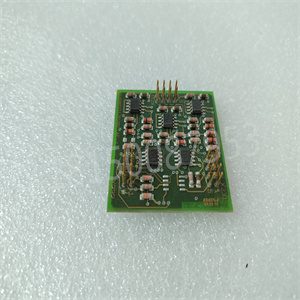
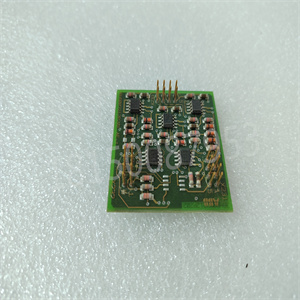
Application Scenarios
In a large steel mill’s continuous casting operation, maintaining precise synchronization between the mold oscillation system and withdrawal rolls was critical for product quality. The existing control system suffered from signal latency and intermittent input failures from proximity sensors monitoring mold position, leading to surface defects in the cast slabs. The plant’s automation team upgraded to an ABB AC 800M DCS and integrated several ABB XVC768116 3BHB007211R116 modules as the primary digital input interface. These modules reliably captured high-frequency pulse signals from incremental encoders and digital status from limit switches with consistent ≤1ms response time. The maintenance supervisor reported, “After installing the XVC768116 modules, we eliminated the signal dropouts that caused synchronization errors. The built-in diagnostic LEDs let us immediately identify any sensor wiring issues, reducing troubleshooting time by 70%.” This directly addressed the core pain points of signal reliability and maintenance efficiency in a high-vibration, electrically noisy industrial environment.
Technical Principles and Innovative Values
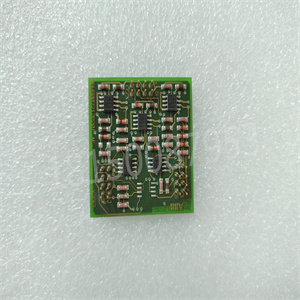
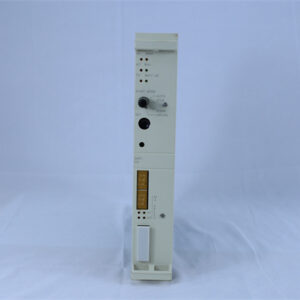
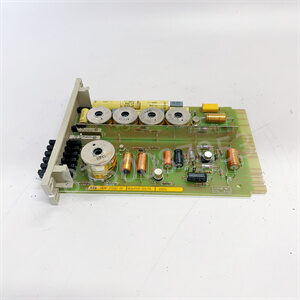
The ABB XVC768116 3BHB007211R116 combines robust hardware design with intelligent signal processing capabilities for reliable industrial automation.
Innovation Point 1: Advanced Signal Conditioning Architecture. Unlike basic input modules, the XVC768116 incorporates sophisticated filtering and conditioning circuits that can handle both standard digital signals and high-frequency pulse inputs (up to 50 kHz range). This dual capability allows a single module type to interface with diverse field devices—from simple push buttons to high-speed encoders—reducing system complexity and spare parts inventory .
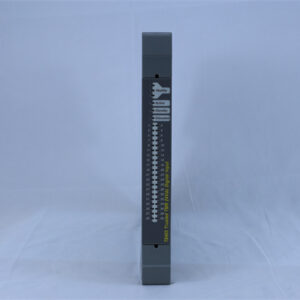
Innovation Point 2: Enhanced Diagnostic Intelligence with Visual Feedback. Each channel features dedicated status LEDs that provide immediate visual indication of signal state, communication health, and fault conditions. This real-time diagnostic capability enables maintenance personnel to quickly identify issues like open circuits, short circuits, or sensor failures without connecting test equipment, dramatically reducing mean time to repair (MTTR) in critical processes .
Innovation Point 3: Modular Hot-Swap Design for Maximum Uptime. The module is engineered for hot-swappable replacement in compatible ABB system racks. This allows a failed XVC768116 module to be replaced without shutting down the entire control system, following proper safety procedures. This feature is particularly valuable in continuous process industries like petrochemicals or power generation where system availability directly impacts production and revenue .
Application Cases and Industry Value
A major pharmaceutical company was experiencing quality control issues in its tablet compression line. The precision weighing system required extremely accurate timing signals from multiple high-resolution encoders to synchronize filling, compression, and ejection cycles. The existing input modules couldn’t reliably capture the high-frequency encoder pulses in the electrically noisy environment near large motor drives.
The company implemented an ABB control system upgrade with ABB XVC768116 3BHB007211R116 modules dedicated to encoder input processing. The modules’ robust EMI shielding and advanced signal conditioning eliminated the noise-induced errors. More importantly, their consistent sub-millisecond response time ensured precise synchronization between the weighing system and mechanical components. Over six months, this improved synchronization reduced tablet weight variation by 40% and decreased rejection rates by 25%. The production manager stated, “The XVC768116 modules provided the signal integrity we desperately needed. The reduction in product waste alone paid for the upgrade within four months, and the improved consistency has enhanced our quality certification standing.” This case demonstrates how reliable signal acquisition directly translates to product quality and operational efficiency in precision manufacturing.
Related Product Combination Solutions
A complete ABB automation solution built around the XVC768116 3BHB007211R116 typically integrates with these complementary components:
ABB AC 800M Controller (e.g., PM866K01): The high-performance process controller that executes control logic based on inputs from the XVC768116 module.
ABB CI615 3BHT30024R1: A communication interface module that facilitates data exchange between the XVC768116 and higher-level control networks.
ABB DI620 3BHT30002R1: A complementary digital input module for standard 24VDC signals, working alongside the XVC768116 for mixed signal applications.
ABB DO620 3BHT30009R1: A digital output module that executes control commands generated based on inputs processed by the XVC768116.
ABB AI620 3BHT30005R1: An analog input module for continuous process variables, complementing the digital capabilities of the XVC768116.
ABB UFC762AE101 3BHE006412R0101: A gate drive unit for power converters, often controlled based on status signals monitored by the XVC768116.
ABB XVC767AE01 3BHB005498R0101: An interface and signal processing board from the same product family, providing expanded I/O capabilities.
ABB System 800xA: The comprehensive automation platform that provides engineering, visualization, and asset management for systems incorporating the XVC768116.
Installation, Maintenance, and Full-Cycle Support
Installation of the ABB XVC768116 3BHB007211R116 follows standard practices for ABB modular control systems. The module slides into a designated slot in the system rack, connecting to the backplane for power and data communication. Field wiring is terminated on the front-facing connectors, with clear labeling for each channel. Configuration is typically performed using ABB’s engineering tools (such as Control Builder for AC 800M), where the module is identified, its parameters (filter times, debounce settings, etc.) are configured, and its address within the control system is assigned.