
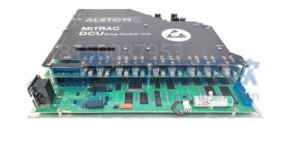
 ALSTOM MVAX31S1DE0754 – Certified for Turbine Trip & Safety Interlock Applications
In the high-stakes environment of power generation and heavy process industries, the line between normal operation and a catastrophic incident can be defined by the reliability of a single safety system. Turbine overspeed, bearing failure, or a process parameter exceeding safe limits demands an immediate and fail-safe response. Generic programmable logic controllers (PLCs), while capable for basic control, often lack the rigorous design and independent certification required for such safety-critical functions. The ALSTOM MVAX31S1DE0754 module addresses this gap head-on. Engineered from the ground up as a certified safety controller within the proven ALSTOM MVAX31 series, it provides a dedicated, high-integrity solution for implementing Turbine Trip Systems (TTS) and Safety Instrumented Systems (SIS). This article explores its certified architecture, delves into its application in critical protection scenarios, and examines why it is the preferred choice for engineers tasked with safeguarding multi-million dollar assets and ensuring plant safety.
1. Beyond Standard Control: The Architecture of a Certified Safety Module
1.1 Foundation in the MVAX31 Series Platform
The MVAX31S1DE0754 is not an isolated device but a specialized variant of the robust ALSTOM MVAX31 platform, renowned for its high I/O capacity, durability, and processing power in demanding industrial settings. It inherits core strengths such as a ruggedized design capable of withstanding extreme temperatures and high vibration levels common in power plant turbine halls and petrochemical facilities. This inherent toughness ensures physical reliability, which is the first prerequisite for any safety component.
1.2 Core Safety Principles and Certification
What distinguishes the “S1DE0754” variant is its adherence to functional safety standards. It is designed and likely certified to meet stringent international standards such as IEC 61508 (Functional Safety of Electrical/Electronic/Programmable Electronic Safety-related Systems) for specific Safety Integrity Levels (SIL 2 or SIL 3). This certification involves:
Fault Tolerance and Diagnostics: The module incorporates advanced self-diagnostics that continuously monitor its hardware (CPU, memory, communication paths) for latent faults. A key feature is its fault-tolerant architecture, which may include redundant internal circuits or voting mechanisms to ensure a single point of failure does not prevent the safe shutdown function.
Predictable Failure Metrics: Certified modules come with quantified failure rate data (e.g., Probability of Failure on Demand – PFD), allowing safety engineers to perform precise calculations to achieve the target SIL for their safety instrumented function (SIF).
Safe State and Fail-Safe Design: In the event of a detected internal fault or loss of power, the module is designed to drive its outputs to a predefined safe state (typically de-energized to trip the turbine). This “fail-safe” principle is fundamental.
Dedicated Safety Logic Solver: It functions as a dedicated safety logic solver, often physically and logically separated from the basic process control system (BPCS). This separation prevents common-cause failures where a fault in the control system could compromise the safety system.
1.3 High-Performance I/O for Critical Signals
For turbine trip applications, input/output speed and reliability are non-negotiable. The module provides:
High-Speed Digital Inputs: To capture critical signals from vibration monitors (API 670 compliant), overspeed detectors, axial position sensors, and emergency stop buttons with minimal latency.
Reliable Digital Outputs: Configured as de-energize-to-trip outputs, directly interfacing with turbine stop valves, fuel shut-off valves, or breaker trip coils. These outputs are often equipped with short-circuit and wire-break monitoring.
Analog Input Monitoring: While the final trip decision is typically digital, analog inputs can be used to monitor parameters like bearing temperature or exhaust pressure, feeding into voting logic before generating a digital trip signal.
2. Application in Turbine Trip and Safety Interlock Systems
2.1 Gas & Steam Turbine Protection (Turbine Trip System)
A Turbine Trip System is the last line of defense against mechanical destruction. The MVAX31S1DE0754 is ideally suited to implement such a system.
Overspeed Protection: It processes signals from multiple magnetic pickups or optical speed sensors. Using a multi-channel, voting logic (e.g., 2-out-of-3), it confirms a genuine overspeed condition before issuing a trip command, rejecting spurious sensor signals.
Vibration and Axial Position Monitoring: It interfaces with vibration transmitters, executing trip logic based on excessive vibration or detrimental rotor displacement.
Lube Oil and Hydraulic Pressure: Monitors critical auxiliary system pressures. Loss of oil pressure triggers an immediate trip to prevent bearing wipe-out.
Manual E-Stop Integration: Provides secure and monitored inputs for operator-initiated emergency shutdowns.
Case Study – Combined-Cycle Plant Trip System Upgrade: A 700 MW combined-cycle plant was undergoing a control system modernization. The existing hardwired relay-based turbine trip panel was obsolete and difficult to troubleshoot. The engineering team replaced it with a system centered on the ALSTOM MVAX31S1DE0754 module. The new system maintained the required 2-out-of-3 voting for overspeed protection but added comprehensive diagnostic visibility. During commissioning, the module’s diagnostics flagged a marginally out-of-spec response time on one vibration input channel, which was traced to a faulty terminal block connection—an issue that would have remained hidden in the old relay system. The plant’s Lead Safety Engineer noted, “The migration to the certified ALSTOM module not only met our SIL 2 target but transformed our trip system from a ‘black box’ into a transparent, diagnosable asset. The event sequence recording capability is invaluable for post-trip analysis.”
2.2 Process Safety Interlocks in Petrochemical and Compression
Beyond turbines, the module secures other high-energy processes.
Compressor Stations: Protects centrifugal and reciprocating compressors from surge, high discharge temperature, and low suction pressure.
Fired Heaters and Boilers: Implements burner management system (BMS) safety interlocks, such as purge sequence verification and flame failure detection.
Reactor Safety: Manages critical interlocks for exothermic chemical reactors, triggering quench systems or emergency cooling based on temperature and pressure readings.
2.3 Integration and Best Practices
Integration of a certified safety module requires careful planning:
Independent Architecture: It should be installed in a separate chassis or cabinet from the BPCS, with independent power supplies.
Software and Configuration: Configuration is done using a dedicated, password-protected safety tool, not the standard engineering workstation. All logic changes require formal management-of-change (MOC) procedures.
Testing and Validation: The entire safety loop, from sensor to final element, must be regularly tested according to a calculated proof-test interval to maintain the SIL rating. The module aids this with built-in forced value and test pulse functions.
3. The Value of Certification: Operational and Regulatory Perspective
3.1 Meeting Regulatory and Insurance Requirements
Many jurisdictions and industry standards (e.g., NFPA, API, ISO) mandate the use of safety-instrumented systems for identified hazards. Using a certified component like the MVAX31S1DE0754 simplifies compliance demonstrations during audits by regulatory bodies (e.g., OSHA, EPA) and can favorably influence plant insurance premiums by demonstrating a commitment to best-practice risk reduction.
3.2 Reducing Lifecycle Cost and Risk
While the initial cost may be higher than a non-certified controller, the lifecycle benefits are substantial:
Reduced Engineering Uncertainty: Certified modules eliminate the need for extensive in-house reliability calculations and validation, saving engineering time and reducing project risk.
Lower Cost of Ownership: Enhanced diagnostics predict failures, enabling planned maintenance and avoiding unplanned outages. Clear documentation and vendor support for certified products streamline troubleshooting.
Avoidance of Catastrophic Loss: The primary value is the prevention of an incident that could result in tens of millions in equipment damage, environmental fines, and reputational harm.
Expert Insight: “In today’s operational and regulatory climate, ‘good enough’ is not enough for safety systems,” states Michael Thorne, a Functional Safety Consultant with over 25 years of experience. “Specifying a certified hardware platform like the ALSTOM MVAX31S1DE0754 does more than just check a compliance box. It embeds a culture of quantified safety into the plant’s DNA. It provides operations and management with a clear, defensible answer to the question: ‘How do we know our trip system will work when it absolutely has to?’ The investment shifts from being a capital expense to a fundamental risk mitigation strategy.”
4. Conclusion: The Certified Cornerstone of Modern Industrial Safety
The ALSTOM MVAX31S1DE0754 represents a critical evolution in industrial safety technology. It moves beyond the era of complex, opaque relay panels or repurposed standard controllers by offering a purpose-built, independently certified solution for the most demanding protection applications. By combining the proven ruggedness and processing power of the MVAX31 series with the rigorous design principles of functional safety standards, it delivers a level of trust and performance that is essential for protecting turbines, compressors, and critical process units.
For asset owners, engineers, and safety managers, choosing such a module is a strategic decision. It is an investment in operational resilience, regulatory compliance, and ultimately, in the sustainable future of the facility. In the relentless pursuit of operational excellence, the ALSTOM MVAX31S1DE0754 stands as a certified guardian, ensuring that when a process parameter crosses the safety threshold, the response is not just fast, but guaranteed.