
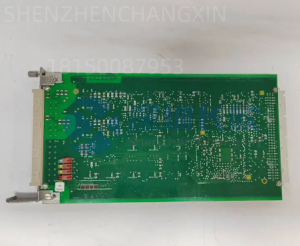
In the realm of industrial safety and combustion monitoring, the ALSTOM 730475-D Flame Detector Card stands as a pivotal innovation. Designed for high-precision flame detection in gas turbines and industrial heating systems, this device integrates advanced optical sensing with robust data processing capabilities. Its significance lies not only in enhancing operational safety but also in optimizing energy efficiency, making it a cornerstone for modern industrial automation. This article delves into the technical intricacies, real-world applications, and industry impact of the ALSTOM 730475-D, providing a holistic view for engineers and safety professionals.
Technical Specifications and Design
The ALSTOM 730475-D Flame Detector Card is engineered to meet the stringent demands of industrial environments. It features a compact, rugged design that ensures durability in high-temperature and high-vibration settings, such as those found in gas turbine enclosures. The card’s core component is an optical flame sensor that utilizes infrared and ultraviolet detection principles to identify flame presence with high accuracy. This dual-wavelength approach minimizes false alarms, a common challenge in combustion monitoring systems.
Key technical attributes include:
Spectral Range: The sensor covers a broad spectrum, enabling detection of various flame types, including hydrocarbon and hydrogen flames.
Response Time: Engineered for rapid response, the card can trigger alarms within seconds of flame deviation, crucial for preventing catastrophic failures.
Signal Processing: Advanced algorithms on the card analyze sensor data in real-time, providing stable and reliable output even under fluctuating conditions.
Communication Interface: It supports standard industrial protocols, facilitating seamless integration with control systems like PLCs and DCS.
The design philosophy behind the ALSTOM 730475-D emphasizes modularity and scalability. Users can easily configure the card for different scenarios, whether in a single-turbine setup or a large-scale industrial plant. This flexibility is achieved through user-friendly software interfaces and customizable detection thresholds.
Real-World Applications and Case Studies
To appreciate the ALSTOM 730475-D’s impact, consider its deployment in a gas-fired power plant. In one instance, the card was integrated into the combustion system of a 500 MW gas turbine. During operation, the detector identified a minor flame instability caused by a clogged fuel nozzle. The system promptly triggered an alarm, allowing maintenance crews to intervene before the issue escalated. This intervention not only prevented potential downtime but also reduced emissions by ensuring efficient combustion.
Another application is in industrial heating furnaces, where precise temperature control is vital. A manufacturing facility using the ALSTOM 730475-D reported significant improvements in product quality. The card’s ability to monitor flame uniformity helped maintain consistent heat distribution, reducing defects in metalworking processes. Users noted that the device’s reliability translated into lower maintenance costs and higher throughput.
In both cases, the ALSTOM 730475-D demonstrated its versatility. It adapts to diverse industrial contexts, from power generation to manufacturing, by providing a unified solution for flame monitoring. Experts highlight that such devices are indispensable in modern industry, where safety and efficiency go hand in hand.
Industry Impact and User Feedback
The introduction of the ALSTOM 730475-D has reshaped industry standards for flame detection. Its high accuracy and low false-alarm rates address a critical pain point in industrial safety systems. Traditional detectors often struggled with environmental干扰, such as dust or moisture, leading to unreliable readings. The ALSTOM 730475-D’s advanced optical design mitigates these issues, offering a more stable solution.
User reviews from professional forums and industry reports underscore its practical benefits. Operators appreciate the card’s ease of installation and minimal maintenance requirements. For example, one user commented on its “plug-and-play” functionality, which reduced setup time significantly. Additionally, the device’s compatibility with existing control systems enhances its appeal for retrofitting projects.
Experts advise that while the ALSTOM 730475-D excels in detection, its effectiveness depends on proper calibration and integration. Regular maintenance and system updates are essential to ensure long-term performance. Industry best practices recommend combining this detector with other safety measures, such as gas leak detectors, to create a comprehensive safety net.
Conclusion
The ALSTOM 730475-D Flame Detector Card represents a significant advancement in industrial safety technology. By leveraging optical sensing and intelligent data processing, it delivers precise, reliable flame detection across a wide range of applications. Its role in preventing accidents and optimizing operations makes it a valuable asset for any industrial facility. As technology evolves, devices like the ALSTOM 730475-D will continue to drive innovation in safety systems, ensuring a safer and more efficient future.