
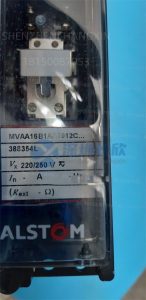
 High-Density ALSTOM MVAA16B1AA1012C-388354L0 Analog Input Card: The Data Acquisition Backbone for Modern Combined-Cycle Plants
The relentless drive for operational excellence in the power generation sector hinges on one fundamental principle: informed decision-making based on accurate, real-time data. Nowhere is this more critical than in a combined-cycle power plant, where the synergistic operation of gas and steam turbines demands an intricate ballet of thermal and mechanical parameters. The ALSTOM MVAA16B1AA1012C-388354L0 high-density analog input card emerges as a pivotal enabler of this intelligence. Designed specifically for integration into ALSTOM/GE distributed control systems (DCS) like the well-regarded ALSPA series, this module serves as the primary interface between thousands of field sensors and the plant’s central nervous system. By converting critical analog signals—temperature, pressure, flow, vibration—into precise digital data, it provides the foundational information required for efficient control, predictive maintenance, and compliance reporting. This article explores the technical architecture of this card, its pivotal role in enhancing combined-cycle plant performance, and the practical benefits it delivers to operators and engineers.
1. Technical Deep Dive: Precision, Density, and Resilience in Design
1.1 High-Density Architecture and Signal Conditioning
The “high-density” designation of the MVAA16B1AA1012C card is its most immediate advantage. Typically configured with 16 analog input channels in a single-slot module, it dramatically reduces the footprint required for large-scale data acquisition within a control cabinet. This density is crucial in modern plants where rack space is at a premium, and the number of monitored points continues to grow with increasing automation.
Each channel is engineered for versatility and precision. The card supports a range of standard industrial analog inputs, most commonly 4-20 mA current loops and 0-10 V DC voltage signals, which are the lifeblood of process instrumentation. High-quality, multi-stage signal conditioning circuits are integral to each channel. These circuits perform essential functions such as filtering to eliminate high-frequency noise inherent in industrial environments, isolation to protect the sensitive DCS backplane from ground loops and transients, and amplification to ensure the weak signals from distant sensors are accurately captured. Advanced analog-to-digital converters (ADCs) with high resolution (typically 16-bit or higher) and low integral non-linearity ensure that the digitized data faithfully represents the physical process variable, enabling precise control decisions.
1.2 Accuracy, Stability, and Diagnostics
For a combined-cycle plant, measurement accuracy directly translates to efficiency and safety. A slight miscalibration in fuel flow or turbine inlet temperature measurement can cost millions in lost efficiency or risk equipment damage. The MVAA16B1AA1012C card is built to deliver exceptional long-term accuracy and stability, often specified with an overall error band well below ±0.1% of full scale. This performance is achieved through the use of precision components, temperature-compensated circuits, and robust calibration procedures.
Beyond basic measurement, the card incorporates intelligent diagnostic features. It can continuously monitor each channel for fault conditions such as wire break (open circuit), short circuit, or signal out of range. These diagnostics are reported to the DCS engineering station, allowing maintenance teams to receive immediate alerts. This proactive capability shifts maintenance from a reactive, “run-to-failure” model to a predictive one, where issues can be addressed during planned outages before they cause an unplanned trip.
1.3 Robust Industrial Construction and Environmental Suitability
Power plant environments are challenging, characterized by electrical noise, wide temperature fluctuations, and vibration. The MVAA16B1AA1012C card is housed in a rugged metal enclosure designed to meet stringent industrial standards for electromagnetic compatibility (EMC), effectively rejecting interference from variable frequency drives and switching equipment. Its operating temperature range is specified to withstand the heat inside a control room cabinet, ensuring reliable performance year-round. The card’s connectors are designed for secure mating and are often keyed to prevent incorrect installation, a simple but vital feature for minimizing human error during maintenance.
2. Application in Combined-Cycle Plants: From Sensing to Optimization
A combined-cycle plant’ efficiency relies on meticulously capturing waste heat from the gas turbine to generate additional power in the steam cycle. The ALSTOM high-density analog input card is deployed across this entire thermal chain.
2.1 Gas Turbine Island Monitoring and Control
The gas turbine is the primary driver. Here, the input card channels are critical for:
Performance Monitoring: Measuring compressor inlet temperature and pressure, turbine exhaust temperature (a key performance parameter), and fuel gas pressure/flow to calculate heat rate and efficiency in real-time.
Protective Control: Monitoring bearing temperatures, casing vibrations, and flame detection signals. These inputs feed directly into the turbine’s protection system, ensuring a safe shutdown if predefined limits are exceeded.
Emissions Compliance: Interfacing with Continuous Emissions Monitoring Systems (CEMS) to record levels of NOx, CO, and O2. providing essential data for regulatory reporting and combustion tuning.
Case Study – Performance Recovery: A 500 MW combined-cycle plant in the Middle East was experiencing a gradual, unexplained decline in output. Analysis pointed to possible sensor drift. Engineers used the historical trend data from the ALSTOM analog input cards to compare readings from redundant temperature sensors on the gas turbine exhaust. They identified a consistent offset in one set of sensors. After recalibrating the affected transmitters and verifying the card’s own calibration (which was found to be stable), the control system’s temperature setpoints were corrected. This simple data-driven intervention restored the plant to its design output, recovering approximately 5 MW of generating capacity.
2.2 Heat Recovery Steam Generator (HRSG) and Steam Cycle
In the HRSG and steam turbine island, precise measurement is equally vital:
Drum Level and Steam Pressure: Critical for boiler safety and efficiency. High-density cards monitor multiple drum level transmitters (for redundancy) and steam pressure at various stages.
Feedwater Flow and Temperature: Essential for calculating heat transfer efficiency and optimizing the feedwater heater train operation.
Condenser Vacuum: A major factor in steam turbine efficiency. Accurate pressure measurement here is crucial for identifying air ingress or cooling water issues.
2.3 Balance of Plant and Auxiliary Systems
The card’s high channel count makes it ideal for consolidating measurements from widely distributed auxiliary systems: cooling water pump pressures, hydrogen purity in the generator, transformer oil temperatures, and plant air system pressures. Centralizing this data acquisition simplifies wiring and provides a unified view of plant health.
User Perspective: A Senior Control Systems Engineer at a utility operating multiple CCPPs stated, “The density of the ALSTOM MVAA16B1 cards allowed us to standardize our I/O architecture. We reduced the number of spare card types we need to stock by over 30%. More importantly, the diagnostic alerts integrated into our DCS alarm management system have helped us catch several incipient sensor failures during weekly checks, preventing potential false trips.”
3. System Integration, Best Practices, and Expert Insights
3.1 Integration with ALSTOM/GE DCS Ecosystem
The MVAA16B1AA1012C card is designed for seamless integration with ALSTOM/GE control systems. Its configuration—including channel range, filter settings, and alarm limits—is performed through the familiar DCS engineering software. The digitized process values are then available to control loops, historical data archives, and operator graphics with minimal latency. This native compatibility ensures reliability and reduces engineering time during both initial commissioning and future modifications.
3.2 Design and Maintenance Best Practices
To maximize the value and lifespan of these cards, experts recommend:
Proper Signal Conditioning: Always use shielded, twisted-pair cables for analog signals and ensure proper grounding at a single point to minimize noise.
Strategic Spare Management: Given the criticality of the functions they serve, maintaining a calibrated spare card on-site is a prudent investment to minimize MTTR (Mean Time to Repair).
Leverage Diagnostic Data: Integrate the card’s channel diagnostics into the plant’s computerized maintenance management system (CMMS) to automatically generate work orders for faulty sensors.
Regular Calibration Verification: While the cards themselves are highly stable, incorporate checks against a portable calibrator during scheduled outages to validate the entire measurement loop’s accuracy.
Expert Advice: Dr. Anya Sharma, a consultant specializing in thermal power plant instrumentation, emphasizes, “The technological value of a high-density, intelligent I/O card like the ALSTOM MVAA16B1 is fully realized only when it is part of a holistic data strategy. Plants should use the rich, high-fidelity data it provides not just for control, but also as input for advanced analytics platforms. Correlating turbine exhaust temperature trends with fuel composition changes or ambient conditions can unlock the next level of performance optimization and predictive asset health insights.”
4. Conclusion: A Foundational Component for the Digital Power Plant
The ALSTOM MVAA16B1AA1012C-388354L0 high-density analog input card is far more than a simple signal converter. It is a foundational component that digitizes the physical reality of a combined-cycle plant with precision and reliability. By offering high channel density, exceptional accuracy, and built-in intelligence, it addresses the core challenges of modern power generation: acquiring more data from more points, ensuring its trustworthiness, and providing the insights needed to operate safely, efficiently, and in compliance with ever-tightening regulations.
As the energy transition accelerates and plants are called upon to be more flexible and efficient, the role of robust, data-rich infrastructure becomes paramount. Cards like the MVAA16B1 form the reliable sensory layer upon which the digital twin, AI-driven optimization, and the smart, adaptive power plant of the future will be built. For engineers tasked with designing, maintaining, or upgrading a combined-cycle control system, specifying such proven, high-performance I/O technology is a strategic decision that pays dividends in reliability, efficiency, and operational insight for decades.