
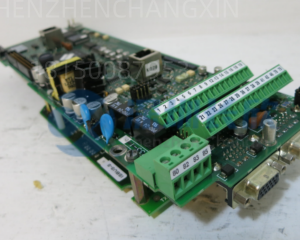
 GE RV33-1: Redundant-Compatible I/O Module for GE Distributed Control Systems (DCS)
Introduction: The Imperative of I/O Redundancy in Modern DCS
In the high-stakes environment of continuous process industries—such as oil & gas refining, chemical production, and power generation—any unplanned shutdown can result in millions of dollars in lost revenue and pose significant safety risks. While controller and network redundancy have become standard, the Input/Output (I/O) layer, where the control system interfaces directly with the physical world, remains a potential single point of failure. The GE RV33-1 module addresses this vulnerability head-on. Designed as a redundant-compatible I/O module for GE’s Distributed Control Systems, it ensures that critical sensor readings and actuator commands are never lost, even in the event of a primary module failure. This module is not merely an accessory but a fundamental pillar of a truly fault-tolerant control architecture, enabling seamless switchover between primary and secondary modules without disrupting the control loop or triggering a process upset. Its development is a direct response to the industry’s escalating demand for five-nines (99.999%) availability and robust safety instrumented systems (SIS).
Technical Deep Dive: Architecture and Redundancy Mechanisms
1. Dual-Module Redundant Architecture
The core innovation of the RV33-1 lies in its paired operational design. Two identical RV33-1 modules are installed in a specially configured I/O rack, forming a primary-secondary pair. Both modules are simultaneously connected to the same field wiring via a termination assembly, but only the primary module actively communicates with the DCS controller over the backplane. The secondary module operates in a hot-standby mode, continuously monitoring the health of the primary module and the field signals. Key health parameters include module power status, internal diagnostics, and communication heartbeat. This parallel monitoring ensures that the secondary module possesses an up-to-date data image, ready to assume control instantaneously.
2. Seamless Fault Detection and Switchover
The switchover process is automatic and bumpless, a critical feature for process stability. The modules employ a dedicated, high-integrity peer-to-peer communication link (often leveraging proprietary or time-sensitive networking protocols) to exchange status and synchronization data. If the primary module detects an internal fault (e.g., a processor error, memory fault) or if the secondary module loses communication with the primary, a switchover is initiated. The transition is managed within milliseconds, ensuring that the controller continues to receive valid process data and issue commands without interruption. This mechanism is analogous to the deterministic state synchronization seen in controller-level redundancy schemes, but implemented at the I/O level for granular fault containment.
3. Advanced Diagnostics and Maintenance Features
Beyond basic redundancy, the RV33-1 is equipped with comprehensive diagnostic capabilities. Each module performs continuous self-diagnostics on its analog-to-digital converters, digital circuits, and communication interfaces. Field-side diagnostics can include wire-break detection for analog inputs (e.g., 4-20 mA loops) and short-circuit detection for digital outputs. Status information for both the primary and secondary modules is readily available to the DCS engineering workstation, providing operators with a clear view of the redundancy pair’s health. This facilitates predictive maintenance; for example, an alert can be generated if a module’s internal temperature trends upward, allowing for scheduled replacement during a plant turnaround before an actual failure occurs.
Real-World Applications: Ensuring Continuity in Critical Processes
1. Oil & Gas: Offshore Platform Safety and Control
On a North Sea offshore production platform, GE RV33-1 modules are deployed to manage critical safety and process functions. They interface with sensors measuring wellhead pressure, pipeline flow, and flame detectors in gas compression modules. In one documented incident, a primary module in a pressure safety loop failed due to a sudden electrical surge. The RV33-1 redundancy pair executed a flawless switchover. The control room operators observed only a minor, non-critical alarm indicating a module fault, while the pressure control loop remained fully operational, preventing a potential emergency shutdown (ESD) that could have halted production for days. The platform’s lead instrumentation engineer commented, “The RV33-1’s transparent failover is invaluable. It gave us the confidence to schedule the replacement during the next maintenance window without rushing or compromising safety. The redundancy worked exactly as designed, turning a potential crisis into a routine maintenance task.”
2. Chemical Processing: Protecting Batch Reactor Integrity
In a batch chemical plant producing specialty polymers, precise temperature and pressure control during exothermic reactions is paramount. RV33-1 modules are used for the redundant measurement of reactor temperature (via RTDs) and control of cooling valve actuators. During a particularly sensitive batch, the primary module processing a critical temperature input developed a fault. The instantaneous switch to the secondary module ensured the control algorithm continued to receive accurate temperature data, allowing it to correctly modulate the cooling valves and maintain the reaction within its safe operating envelope. This prevented a runaway reaction, safeguarding both the product batch worth hundreds of thousands of dollars and the physical integrity of the reactor vessel.
3. Power Generation: Enhancing Turbine Control Availability
A combined-cycle gas turbine (CCGT) power plant utilizes RV33-1 modules in its GE DCS to handle I/O for turbine speed control, exhaust temperature monitoring, and auxiliary system sequencing. The high vibration and electromagnetic interference environment in a turbine hall makes electronic components susceptible to faults. The plant’s implementation of redundant I/O for these key loops has significantly reduced the statistical probability of a turbine trip caused by a single I/O channel failure. This directly contributes to higher grid reliability and plant availability, a key performance indicator for power generators.
Expert Insights: The Strategic Value of I/O Redundancy
1. Beyond Controller Redundancy: Defense in Depth
Dr. Alistair Greig, a consultant specializing in industrial control system resilience, emphasizes the layered approach: “Many plants invest in controller and server redundancy, which is essential, but they often overlook the I/O layer. A redundant controller is useless if it can’t reliably read a sensor or operate a valve. The GE RV33-1 implements defense-in-depth at the most granular level. It protects against component-level failures that higher-level redundancy cannot address, such as a specific channel failure or a module power supply issue. This is a strategic investment in overall system mean time between failures (MTBF).”
2. Enabling Advanced Process Automation and Safety
Industry analysts point to the role of such technology in enabling more advanced automation. “As we move towards more autonomous operations and tighter integration with Safety Instrumented Systems (SIS), the integrity of the basic process data is non-negotiable,” says Maria Chen, a senior analyst at ARC Advisory Group. “Redundant I/O modules like the RV33-1 provide the high-fidelity, fault-tolerant signal path required for advanced control algorithms and for sharing data with independent safety controllers without introducing a single point of failure. It’s a foundational element for modern, integrated control and safety architectures.”
3. Total Cost of Ownership (TCO) Perspective
While the initial capital expenditure for redundant I/O is higher than for simplex modules, the operational savings are substantial. A study by a major petrochemical company found that the cost of a single, unplanned shutdown event caused by a non-redundant I/O failure far exceeded the incremental cost of implementing redundancy across all critical loops. The RV33-1. by preventing such events, offers a compelling return on investment (ROI) through increased production uptime, reduced emergency maintenance costs, and avoidance of product quality incidents.
Conclusion: The Uninterrupted Link in the Control Chain
The GE RV33-1 Redundant-Compatible I/O Module transcends its role as a simple interface device. It is a strategic enabler of operational resilience, safety, and business continuity in process industries. By providing a bulletproof link between the digital control world and physical process equipment, it ensures that the sophisticated logic and algorithms running in the DCS have a dependable means of perception and action. In an era where process complexity and economic pressures continue to rise, investing in robust, fault-tolerant infrastructure at every layer is not optional—it is imperative. The GE RV33-1 stands as a proven solution, solidifying the weakest link in the control chain and empowering industries to operate with greater confidence, efficiency, and safety.