Application Scenarios
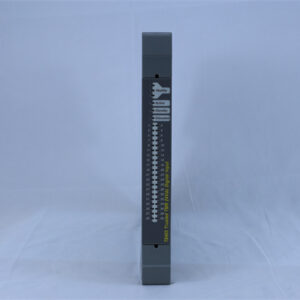
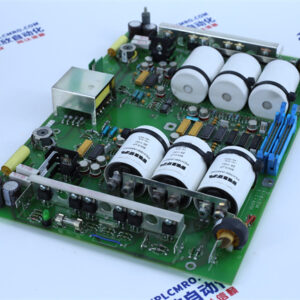
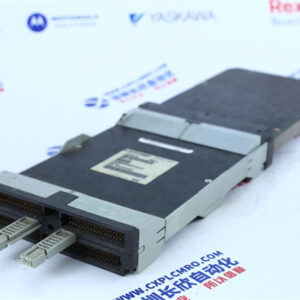
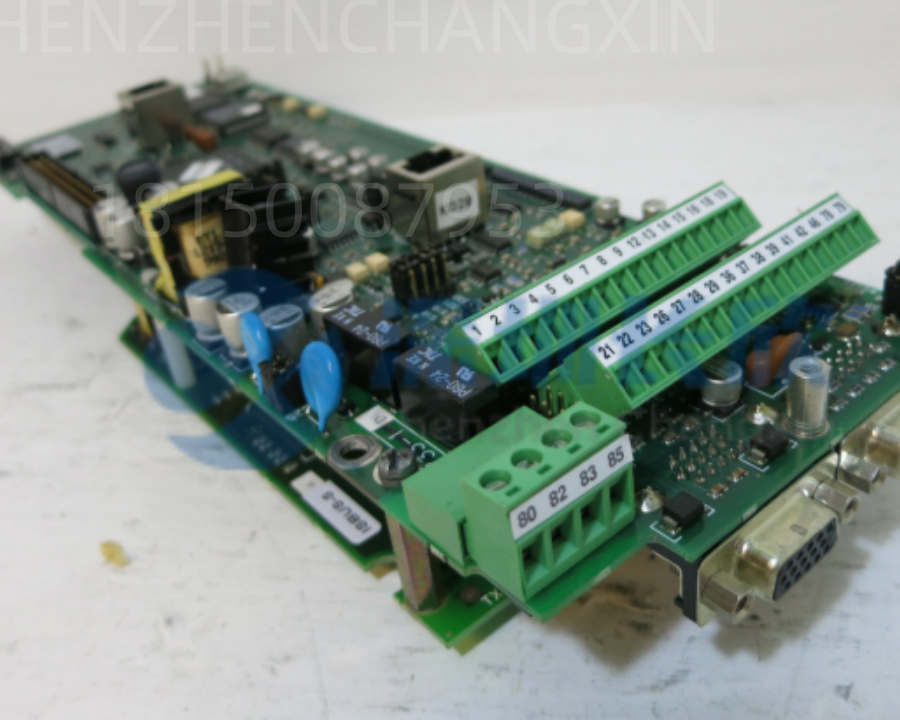
At a combined-cycle power plant in the southeastern United States, operators faced recurring failures in auxiliary fuel valve control during turbine startups. The legacy output cards—prone to contact welding after years of cycling—caused unsafe fuel accumulation. After replacing them with new GE RV33-1 modules, the plant restored reliable valve sequencing. Each of the GE RV33-1’s 32 channels independently switched 125VDC signals to critical solenoids, with built-in arc suppression extending relay life. Maintenance staff appreciated the front-panel LEDs that instantly showed which outputs were active—cutting troubleshooting time from hours to minutes. This real-world deployment demonstrates how the GE RV33-1 isn’t just a spare part—it’s a safeguard for operational integrity in high-stakes energy infrastructure.
Parameter
表格
Technical Principles and Innovative Values
Innovation Point 1: True Electromechanical Relays for High-Voltage DC Switching
Unlike solid-state outputs that struggle with inductive loads or DC arcing, the GE RV33-1 uses gold-flashed, bifurcated electromechanical relays specifically rated for 125VDC—a standard control voltage in North American power plants. This ensures clean switching of solenoid valves and avoids the “leakage current” issues common with SSRs.
Innovation Point 2: Per-Channel Visual Diagnostics
Each of the 32 outputs on the GE RV33-1 features a dedicated front-panel LED. During commissioning or fault tracing, technicians can instantly verify command execution without multimeters or oscilloscopes—critical during emergency outages.
Innovation Point 3: Fail-Safe Mechanical Design
The relays in the GE RV33-1 are spring-loaded to default to de-energized state on power loss, aligning with turbine safety protocols. Contact materials resist welding under frequent cycling, a known failure mode in older GE output cards like the DS200 series.
Innovation Point 4: Seamless Integration with Mark VI Architecture
The GE RV33-1 plugs directly into standard GE I/O carriers and is auto-detected by the controller. No jumpers, DIP switches, or configuration files are needed—ensuring rapid replacement during unplanned outages.
Application Cases and Industry Value
In a Middle Eastern peaker plant running GE 9E turbines, summer heat caused repeated thermal shutdowns due to failed lube oil pump control signals. Investigation revealed degraded solid-state outputs in legacy modules. After upgrading all critical stations to GE RV33-1. the site achieved 18 months of uninterrupted operation—even at ambient temperatures exceeding 50°C. The electromechanical relays handled the inrush current of pump contactors without degradation, and the conformal coating protected against sand-laden air. Plant engineers called the GE RV33-1 “the last line of defense between software commands and physical action.”
Similarly, in a U.S. Navy shipboard power system using Mark VIe, the GE RV33-1 was selected for its MIL-spec ruggedness and immunity to electromagnetic interference (EMI) from radar systems. Its isolated contacts prevented ground loops that previously triggered false alarms—enhancing mission readiness.
Related Product Combination Solutions
GE RV32-1: 16-channel version of the same relay module, for lower-density applications
GE IV33-1: 32-channel digital input module, often installed alongside GE RV33-1 in I/O clusters
GE TC33-1: Thermocouple input card, part of the same I/O family for temperature monitoring
GE IS200AVIFH1A: Mark VIe communication module that routes commands to GE RV33-1 outputs
GE DS200CCTG1A: Mark VI main controller card that interfaces with the I/O chassis containing GE RV33-1
GE TB33-1: Terminal base adapter that connects field wiring to the GE RV33-1 via screw terminals
ABB CI854: PROFIBUS I/O module—sometimes used in hybrid retrofits where GE RV33-1 handles local high-power switching
Rockwell 1756-OW16I: Allen-Bradley isolated output module—functional alternative in non-GE systems
Installation, Maintenance, and Full-Cycle Support
Installing the GE RV33-1 requires powering down the I/O chassis, removing the old module (if present), and inserting the new unit into the designated slot until it clicks into place. No calibration or software download is needed—the Mark VI/VIe system recognizes it automatically. Field wiring connects via the companion terminal base (e.g., TB33-1), typically using 14–22 AWG stranded wire with ferrules.
Maintenance is minimal but highly visual: during routine rounds, operators can confirm output status by checking the LEDs. If a relay fails to operate, the module can be hot-swapped in most Mark VIe configurations—minimizing turbine downtime. The GE RV33-1 contains no batteries, fans, or consumables, ensuring long service life even in high-vibration environments.
We rigorously test every GE RV33-1 for contact resistance, isolation integrity, and LED functionality before shipment. Units undergo 72-hour burn-in at elevated temperature to screen for infant mortality. Our engineering team provides GSD file support, wiring diagrams, and compatibility verification for both Mark VI and VIe platforms.