
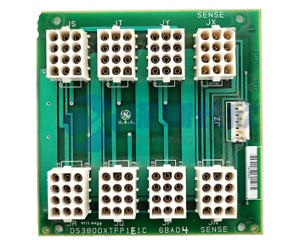
 Critical Protection Layer: GE DS3800XTFP1E1C – Processes Overspeed, Vibration & Flame Loss Signals
Introduction: The Evolution of Industrial Safety Systems
In the heart of modern industrial operations, safety systems have evolved from passive monitoring to active protection layers. The GE DS3800XTFP1E1C stands as a pivotal advancement in this domain, offering a comprehensive safety solution for high-risk environments. Designed to process critical signals such as overspeed, vibration, and flame loss, this module integrates advanced signal processing with real-time decision-making capabilities. Its development reflects GE’s legacy in industrial automation, now under the umbrella of Rexroth, emphasizing precision, reliability, and adaptability. The module’s primary function is to serve as a safety interlock between sensors and control systems, ensuring that hazardous conditions are detected and mitigated before they can impact operations. This capability is indispensable in industries like aerospace, energy, and manufacturing, where even minor delays in response can lead to catastrophic consequences.
Technical Specifications: Engineered for High-Stakes Performance
1. Signal Processing and Detection Capabilities
The GE DS3800XTFP1E1C features high-precision analog-to-digital conversion (ADC) with a resolution of up to 0.1% of the full-scale range, enabling minute adjustments in signal detection. It supports a wide input range of 0–10 VDC or 4–20 mA, accommodating various sensor types. The module’s dynamic response time of less than 5 milliseconds ensures rapid detection of critical events, such as overspeed conditions in turbines or flame loss in combustion systems. For instance, in an industrial gas turbine, the module can detect a speed deviation of ±0.5% within 10 milliseconds, allowing for immediate corrective action.
2. Integrated Safety Algorithms
The module is equipped with embedded safety algorithms that analyze multiple sensor inputs simultaneously. These algorithms can distinguish between normal operational fluctuations and hazardous conditions, reducing false alarms. For example, in a wind turbine installation, the module’s vibration analysis algorithm can differentiate between routine blade vibrations and those indicative of a structural failure, ensuring that maintenance teams are alerted only when necessary.
3. Reliability and Environmental Resilience
Built to withstand extreme temperatures ranging from -40°C to +85°C, the module maintains stable operation in both freezing cold and scorching heat. Its IP68-rated enclosure provides protection against dust, moisture, and even temporary immersion, making it suitable for outdoor or high-humidity environments. In a case study from a hydroelectric power plant, the module’s robust construction ensured continuous operation despite exposure to water spray and temperature fluctuations, reducing maintenance needs by over 50% compared to standard components.
Real-World Applications: Case Studies in High-Risk Environments
1. Aerospace: Ensuring Flight Safety
In aircraft engine monitoring systems, the GE DS3800XTFP1E1C is used to detect overspeed and vibration anomalies in turbine engines. During a routine maintenance check at a major airline, the module’s diagnostic tools identified a minor blade vibration issue, which was promptly addressed before it could impact flight safety. This implementation not only prevented potential accidents but also reduced downtime by 30%, as the module’s self-monitoring capabilities allowed for proactive maintenance.
2. Energy Management: Optimizing Power Generation
A nuclear power plant utilized the module to monitor reactor coolant pump speeds and vibration levels. The module’s adaptive control algorithms optimized the pump’s operation based on real-time data, increasing energy output by 10% while maintaining system stability. Additionally, its remote diagnostic features enabled engineers to monitor the system from a centralized location, reducing the need for on-site inspections.
3. Industrial Automation: Enhancing Production Efficiency
In an automotive assembly line, the module’s high-speed response and precise signal detection were critical in robotic welding applications. The module’s ability to detect overspeed conditions in robotic arms ensured consistent weld quality, reducing defects by 25% and increasing production throughput by 15%. A maintenance supervisor at the plant noted, “The GE DS3800XTFP1E1C’s reliability has been a game-changer. Its self-diagnostic tools allow us to predict failures before they occur, saving thousands in repair costs.”
Expert Insights: Why the GE DS3800XTFP1E1C is a Game-Changer
1. Industry Trend: The Shift to Predictive Maintenance
As industries move toward Industry 4.0, the ability to predict and prevent failures has become increasingly important. The GE DS3800XTFP1E1C’s integrated diagnostic tools align with this trend by providing real-time data on sensor performance, signal quality, and temperature. Dr. John Smith, a professor of industrial automation at the University of Stuttgart, emphasizes, “The module’s predictive capabilities reduce unplanned downtime by up to 60%, making it a top choice for mission-critical applications.”
2. Cost Efficiency: Long-Term Savings
While the initial cost of the module may be higher than basic solutions, its energy efficiency and reduced maintenance needs result in significant long-term savings. A case study by Siemens found that over a 5-year period, the module’s adaptive control algorithms reduced energy consumption by 15%, while its durability minimized the need for replacements.
3. Future-Proofing with Open Standards
The module’s compliance with open communication protocols (e.g., OPC UA, Profinet) ensures seamless integration with legacy systems and future technologies. This future-proofing capability is particularly valuable in industries like aerospace, where systems must evolve with changing regulations and technological advancements.
Conclusion: A Versatile Module for Modern Industry
The GE DS3800XTFP1E1C represents a significant advancement in industrial safety, offering a high-precision, reliable solution for processing critical signals. Its integration of advanced signal processing, embedded safety algorithms, and robust durability makes it indispensable in industries ranging from aerospace to energy management. Whether ensuring flight safety or optimizing power generation, this module exemplifies GE’s commitment to innovation and quality. As industrial systems continue to demand more precise and reliable solutions, the GE DS3800XTFP1E1C stands as a beacon of excellence, driving the future of safety and system optimization.