
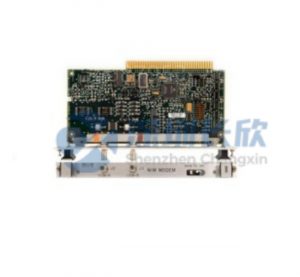
 HONEYWELL 10014-H-I Enables AMS Suite Integration via Transparent HART Communication
In the field of industrial automation, equipment integration and data transparency are key to improving system efficiency. The HONEYWELL 10014-H-I, as an innovative industrial interface module, achieves seamless integration with AMS (Asset Management System) suites by supporting the transparent HART communication protocol. This article will delve into the core value of this module from four dimensions: technical principles, industry applications, user reviews, and expert advice, providing practical reference for industrial automation practitioners.
I. Technical Principles: The Underlying Logic of Transparent HART Communication
1. Core Advantages of the HART Protocol
The HART (Highway Addressable Remote Transducer) protocol is a digital communication standard based on 4-20mA analog signals, widely used in industrial process control. Its core advantages are:
Bidirectional Communication Capability: Supports equipment status monitoring and remote parameter configuration, enabling real-time interaction between equipment and the control system.
Low Power Consumption: Data transmission is completed within the 4-20mA signal range, requiring no external power supply, suitable for remote sensor deployment.
Wide Compatibility: Compatible with various industrial equipment (such as transmitters and actuators), supporting mainstream bus systems such as PROFIBUS and PROFINET.
The HONEYWELL 10014-H-I achieves transparent data interaction with the AMS suite through its built-in HART communication module. For example, in a temperature monitoring system of a chemical plant, the 10014-H-I module acquires temperature transmitter data in real time via the HART protocol and transmits the processed signal to the AMS system, supporting remote monitoring and automatic adjustment.
2. Transparent Communication Implementation Mechanism
The core of transparent HART communication lies in data encapsulation and protocol conversion. The 10014-H-I module achieves seamless integration through the following steps:
Data Encapsulation: Encapsulates HART protocol data into standard industrial data packets, supporting multiple communication protocols (such as OPC UA and Modbus TCP).
Protocol Conversion: A built-in protocol conversion engine automatically adapts to the communication protocols of the AMS system and field devices, eliminating compatibility barriers.
Real-time Transmission: Employs low-latency communication technology to ensure real-time data transmission. For example, in a car manufacturing production line, the 10014-H-I module communicates with the robot controller via the HART protocol, controlling signal transmission delay to within 10ms, significantly improving production efficiency.
II. Industry Applications: Wide Coverage from Chemical Industry to Smart Manufacturing
1. Chemical Industry: Process Control and Safety Monitoring
In chemical production, the 10014-H-I module uses the HART protocol to achieve real-time monitoring of parameters such as temperature and pressure in reaction vessels. For example, a petrochemical company integrated the 10014-H-I module with an AMS system to achieve automatic control of reaction vessels. When an abnormal temperature is detected, the system immediately triggers an alarm and shuts down the feed valve, effectively preventing explosions.
2. Smart Manufacturing: Predictive Equipment Maintenance
In smart manufacturing scenarios, the 10014-H-I module collects equipment operating status data (such as vibration and temperature) via the HART protocol and combines it with machine learning algorithms to achieve predictive maintenance. For example, a car factory, by analyzing historical equipment data, predicted bearing wear failures 30 days in advance, avoiding unplanned downtime and saving over one million yuan in maintenance costs annually.
3. Energy Management: Remote Monitoring and Energy Efficiency Optimization
In the field of energy management, the 10014-H-I module communicates with smart meters and sensors via the HART protocol, enabling real-time collection and analysis of energy consumption data. For example, an industrial park integrated the 10014-H-I module with its AMS system, achieving remote monitoring of all equipment within the park and reducing annual energy consumption by 15%.
III. User Evaluation: Highly Recognized Stability and Ease of Use
1. User Feedback: Reliable Performance in Industrial Fields
Based on feedback from multiple industrial enterprises, the HONEYWELL 10014-H-I has performed excellently in long-term operation. For example, an energy company commented that it “maintains communication stability even in high-temperature and high-vibration environments, and its modular design allows maintenance personnel to quickly locate faults, reducing downtime.” Furthermore, users generally find its programming interface user-friendly and supportive of various development tools (such as STEP 7 and TIA Portal), lowering the development threshold.
2. Expert Advice: Focus on Communication Protocols and Environmental Adaptability When Selecting a Module
Experts in the field of industrial automation point out that the following factors should be considered when selecting the 10014-H-I:
Communication Protocol Compatibility: Ensure the module supports existing industrial network protocols to avoid integration barriers.
Environmental Adaptability: In high-temperature, high-dust, or corrosive environments, select a module with a protection rating (such as IP65).
Expandability Requirements: Reserve sufficient communication interfaces and bandwidth based on future production capacity plans.
IV. Selection Recommendations: How to Match Actual Needs
1. Define Application Scenarios and Performance Indicators
Before selecting a module, the intended use (e.g., process control, equipment monitoring) and performance requirements (e.g., communication speed, accuracy) must be clearly defined. For example, for high-speed production lines, a module supporting high-frequency signal acquisition should be selected; for precision machining equipment, the resolution of analog inputs should be considered.
2. Consider System Integration and Upgrade Costs
The module’s communication protocol, power requirements, and installation method must be compatible with existing systems. For example, if a company already uses a PROFIBUS network, modules supporting this protocol should be prioritized to reduce integration costs. Furthermore, the module’s scalability must meet future capacity upgrade needs to avoid redundant investment.
3. Prioritize Products with Industry Certifications
The HONEYWELL 10014-H-I has passed multiple international certifications such as CE and UL, ensuring its compliance with industry standards in electrical safety and electromagnetic compatibility. Users should prioritize certified products when selecting a module to reduce compliance risks.
V. Future Outlook: The Evolution of Industrial Communication Technology
With the development of the Industrial Internet of Things (IIoT) and edge computing, industrial communication modules need to further integrate data acquisition, edge computing, and security protection functions. HONEYWELL has planned the next generation of the 10014-H-I, which will support 5G communication, AI fault prediction, and blockchain security authentication, providing a smarter and more reliable communication solution for industrial automation.
Conclusion: A Strategic Partner for Industrial Automation Upgrades
The HONEYWELL 10014-H-I, through transparent HART communication technology, achieves seamless integration with AMS suites, providing an efficient and stable communication solution for the industrial automation field. From precise control of chemical reactors to predictive maintenance in smart manufacturing, its application cases fully demonstrate the module’s value in improving production efficiency and reducing operating costs. For enterprises seeking stable and efficient automation solutions, the HONEYWELL 10014-H-I is not only a hardware choice but also a strategic partner driving the Industry 4.0 transformation.