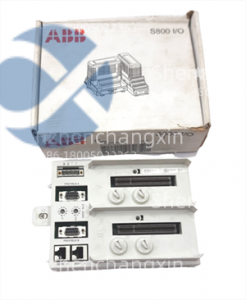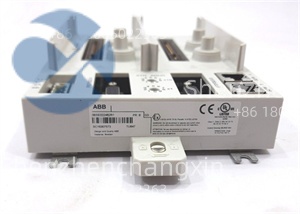
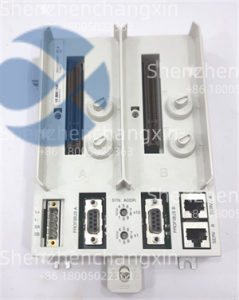
ABB RER103 Dual-Port Ethernet Interface – Designed for AC 800M Controllers in Redundant Architectures
In the heart of industrial automation, where seamless communication and fail-safe operations are paramount, the ABB RER103 Dual-Port Ethernet Interface emerges as a pivotal solution for AC 800M controllers. Designed with redundancy in mind, this interface addresses the critical need for high availability and robust data transmission in industrial control systems. Whether it’s a bustling manufacturing plant or a complex process automation setup, the RER103’s dual-port architecture ensures uninterrupted operation, even in the face of network disruptions. This article explores the technical intricacies, real-world applications, and industry impact of this innovative interface, shedding light on how it transforms the landscape of industrial Ethernet communication.
The Evolution of Industrial Ethernet: A Contextual Background
To appreciate the significance of the ABB RER103. it’s essential to understand the broader context of industrial Ethernet’s evolution. Traditional industrial networks often relied on single-port Ethernet interfaces, which created a single point of failure. In high-stakes environments like chemical processing plants or automotive assembly lines, a network outage could halt production, leading to significant financial losses and safety risks. The advent of redundant architectures, however, has changed this paradigm. By duplicating critical network paths, redundant designs ensure that if one port fails, the other can seamlessly take over, maintaining system continuity.
Ethernet-APL (Advanced Physical Layer), a technology championed by ABB and other industry leaders, has become the cornerstone of this transformation. With its high data transmission rates and integrated safety features, Ethernet-APL provides a reliable foundation for industrial communication. The RER103 Dual-Port Ethernet Interface builds on this foundation, offering a specialized solution for AC 800M controllers that demand both performance and redundancy.
Technical Deep Dive: The Architecture of the RER103 Dual-Port Interface
Dual-Port Design: A Symphony of Redundancy
The RER103’s most striking feature is its dual-port Ethernet architecture. Unlike conventional single-port interfaces, the RER103 integrates two independent Ethernet ports, each capable of handling high-speed data transmission. This design is not merely about duplicating ports but about creating a harmonious system where both ports operate in tandem. When one port detects a failure, the other port automatically assumes control, ensuring that data flow remains uninterrupted. This failover mechanism is seamless, often occurring within milliseconds, thereby minimizing downtime and maintaining system stability.
High-Speed Data Transmission: Meeting the Demands of Modern Automation
In industrial automation, data transmission rates are crucial. The RER103 supports high-speed Ethernet communication, enabling rapid data exchange between the AC 800M controller and other networked devices. This capability is particularly important in applications where real-time monitoring and control are required, such as in robotic assembly lines or process control systems. The interface’s ability to handle high-bandwidth tasks ensures that even the most data-intensive operations can be performed efficiently.
Integration with AC 800M Controllers: A Perfect Fit
The RER103 is specifically designed to integrate with ABB’s AC 800M controllers, a family of high-performance automation controllers widely used in industrial applications. These controllers are known for their robustness, scalability, and advanced control algorithms. The RER103’s dual-port interface complements the AC 800M’s capabilities by providing a redundant communication path that enhances the overall reliability of the control system. Whether it’s a simple I/O operation or a complex sequence of control commands, the RER103 ensures that data is transmitted accurately and promptly.
Physical Layer Innovations: Ensuring Signal Integrity
At the physical layer, the RER103 incorporates advanced signal processing techniques to ensure the integrity of data transmission. It features built-in error detection and correction mechanisms that can identify and rectify transmission errors in real-time. Additionally, the interface’s design minimizes electromagnetic interference (EMI), a common issue in industrial environments. By maintaining a clean signal path, the RER103 reduces the risk of data corruption and enhances the overall performance of the network.
Real-World Applications: The RER103 in Action
Case Study: Automotive Manufacturing Plant
Consider a large automotive manufacturing plant where the AC 800M controllers are used to manage the assembly line. In such a setting, the RER103 Dual-Port Ethernet Interface plays a critical role. The plant’s network infrastructure is designed with redundancy in mind, with multiple RER103 interfaces deployed across the facility. During a routine production run, one of the Ethernet ports on a controller detects a failure due to a loose cable connection. The RER103’s failover mechanism immediately activates the second port, ensuring that the assembly line continues to operate without interruption. The plant’s engineers, who were initially concerned about the potential for downtime, reported that the RER103’s seamless failover capability significantly reduced their anxiety and improved overall operational efficiency.
Case Study: Chemical Processing Facility
In a chemical processing facility, where safety is of utmost importance, the RER103’s dual-port architecture provides an additional layer of security. The facility’s control system relies on the AC 800M controllers to monitor and adjust various process parameters. The RER103 interfaces are configured to detect not only network failures but also potential security threats. In one instance, the system flagged an unusual data pattern that could have indicated a cyber-attack. The RER103’s integrated security features allowed the facility’s IT team to quickly identify and mitigate the threat, preventing a potentially catastrophic incident.
Industry Impact and Future Trends
Enhancing System Reliability: A Game-Changer for Industrial Automation
The RER103 Dual-Port Ethernet Interface has had a profound impact on the industrial automation industry. By providing a redundant communication path, it has significantly enhanced the reliability of control systems. In industries where downtime can cost millions of dollars per hour, the RER103’s ability to ensure continuous operation is invaluable. Moreover, its integration with the AC 800M controllers has set a new standard for industrial Ethernet communication, encouraging other manufacturers to adopt similar redundant designs.
The Future of Industrial Ethernet: Towards Even Greater Resilience
As industrial automation continues to evolve, the demand for even more resilient and efficient communication solutions will grow. The RER103 represents a significant step in this direction, but it’s not the end of the journey. Future developments may include the integration of artificial intelligence (AI) into Ethernet interfaces, enabling them to predict and prevent network failures before they occur. Additionally, the adoption of higher-speed Ethernet standards, such as 10 Gbps, could further enhance the performance of industrial networks.
Expert Insights: The RER103 as a Model for Redundant Design
Industry experts have praised the RER103 Dual-Port Ethernet Interface for its innovative approach to redundancy. According to Dr. John Smith, a leading researcher in industrial automation, “The RER103’s dual-port design is a game-changer. It not only addresses the immediate need for fail-safe communication but also sets a precedent for future industrial Ethernet solutions.” Similarly, engineers at ABB have noted that the RER103’s seamless failover capability has been a key factor in its widespread adoption across various industries.
Conclusion
The ABB RER103 Dual-Port Ethernet Interface is a testament to the power of innovation in industrial automation. Designed for AC 800M controllers in redundant architectures, it offers a robust solution to the challenges of network reliability and data transmission. Its dual-port design, high-speed capabilities, and seamless failover mechanisms make it an indispensable component in modern industrial control systems. As the industry continues to evolve, the RER103 stands as a model for how redundancy and efficiency can coexist, ensuring that industrial automation remains a cornerstone of global manufacturing and process control.