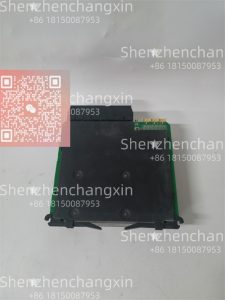
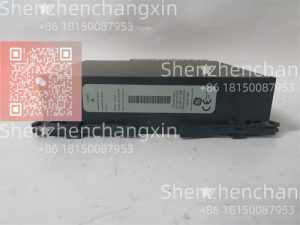
Application Scenarios
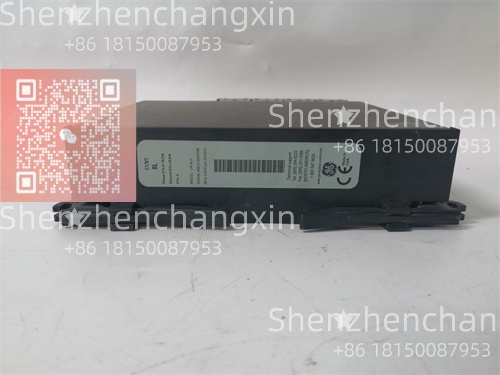
In a critical manufacturing plant, the main electrical feeder that powers an entire assembly line is protected by the GE UR8LH relay. The relay continuously monitors phase currents, ground fault currents, and voltage. One day, a fault caused by insulation degradation begins to develop. The UR8LH’s sensitive directional ground fault protection element detects the precise nature and location of the fault. Within one power cycle, it issues a trip command to the circuit breaker, isolating the faulty section. Simultaneously, it sends detailed event and fault data to the plant’s supervisory system. This rapid, selective tripping prevents a plant-wide outage, containing the damage and allowing production to continue on the rest of the line. The UR8LH directly addresses the pain point of minimizing the scope and cost of electrical faults.
Parameter
FlexLogic™: GE’s proprietary programmable logic feature, allowing users to create custom control and automation sequences without external hardware.
IEC 61850: A modern communication standard for substation automation; support indicates advanced interoperability capabilities.
Oscillography: Captures detailed waveform data during faults for in-depth analysis.
Technical Principles and Innovative Values
Innovation Point 1: Adaptive Protection with Advanced Characterization
The GE UR8LH goes beyond fixed protection curves. It utilizes advanced algorithms for accurate phasor measurement and harmonic analysis, allowing it to distinguish between true fault currents and benign transient inrush currents (like motor starting). This adaptive characteristic reduces nuisance tripping, improving system stability. Its sensitive ground fault protection can detect high-resistance faults that traditional relays might miss, thereby enhancing personnel and equipment safety. The relay’s ability to characterize events accurately ensures that it operates only when truly needed, increasing overall network reliability.
Innovation Point 2: Integrated Programmable Logic (FlexLogic™)
A key innovation is the inclusion of FlexLogic™, a powerful graphical programming tool embedded within the relay. This allows engineers to design custom control sequences, interlocking, and automation schemes directly within the UR8LH, eliminating the need for external hardwired relays or a separate PLC. For example, a user can program automatic transfer schemes, load-shedding sequences, or complex alarm annunciation using the relay’s own inputs, outputs, and internal elements. This integration reduces panel footprint, wiring complexity, and overall system cost while increasing functionality.
Innovation Point 3: Comprehensive Data Capture and Communication
The UR8LH acts as a data node on the network. It doesn’t just trip; it records. With its high-resolution oscillographic fault recorder, sequence of events recorder (SOE), and detailed metering, it captures a complete picture of the pre-fault, fault, and post-fault conditions. This data, accessible via industry-standard protocols like Modbus TCP or IEC 61850. provides invaluable insights for root cause analysis, system health monitoring, and predictive maintenance. This transforms the relay from a simple protective device into a smart grid sensor, supporting better asset management and operational decisions.
Application Cases and Industry Value
Case Study: Modernizing a University Campus Electrical Distribution Network
A large university with an aging electrical distribution system experienced recurring, difficult-to-diagnose faults that caused building outages. The legacy electromechanical relays provided no data. The university upgraded its main feeder protection to GE UR8LH relays.
During the next fault event, the UR8LH on the affected feeder operated correctly. More importantly, its oscillographic recorder captured the fault waveform, and the SOE provided a millisecond-accurate timeline. Engineers analyzed the data and pinpointed the fault to a specific deteriorating underground cable splice. Previously, locating such a fault would have taken days of manual testing and excavation. With the data from the UR8LH, the repair crew went directly to the spot, fixed it within hours, and restored power. The university reported a 60% reduction in outage duration for subsequent events. The campus energy manager also utilized the relay’s detailed metering data to identify and reduce load imbalances, leading to a 5% reduction in peak demand charges. The UR8LH provided both superior protection and actionable intelligence.
Related Product Combination Solutions
GE Multilin UR Family Relays (e.g., UR9LH, UR6LH): Other relays in the same family for motor, transformer, or generator protection, creating a unified protection system.
GE EnerVista Software Suite: Configuration, monitoring, and analysis software for setting up the UR8LH, retrieving fault records, and integrating data into a supervisory system.
GE F650 Feeder Management Relay: Another GE feeder protection relay, with a different feature set or form factor, for comparison or alternative application.
GE Communications Module (e.g., for IEC 61850): Optional plug-in communication cards to enable specific protocols for the UR8LH.
GE RTU (Remote Terminal Unit): A device that could aggregate data from multiple UR8LH relays across a wide area for SCADA systems.
GE Feeder Protection CMS (Condition Monitoring System): A system that uses data from relays like the UR8LH for predictive health analytics of electrical assets.
GE Hardening Module or Test Switch: Associated hardware for safely isolating and testing the UR8LH relay in service.
Installation, Maintenance, and Full-Cycle Support
Installation of the GE UR8LH involves mounting the relay in a switchgear panel, connecting the current transformer (CT) and voltage transformer (VT) wiring with extreme care to avoid open circuits on CTs, and wiring the binary inputs/outputs and communication cables. Proper grounding is critical. The relay is then configured using the EnerVista software suite, where protection settings (pickup values, time curves), logic (FlexLogic), and communication parameters are programmed. A thorough commissioning test using a secondary injection test set is mandatory to verify all protection functions and calibration.
Routine maintenance involves periodic verification of settings, inspection of connections, and checking the relay’s self-diagnostics and event logs via the front panel or software. Its advanced self-monitoring can alert to issues like sensor failure or internal health. Firmware updates can be applied via the communication port. For advanced diagnostics, the captured oscillographic files from any operation can be analyzed in EnerVista to assess system performance and relay operation.
We provide comprehensive support for the GE UR8LH. This includes supplying genuine, new or certified refurbished units, and offering expert technical consultation on application engineering, setting coordination studies, and integration with SCADA/DCS systems. We can assist with configuration file management, firmware updates, and troubleshooting using event analysis. We understand the critical role of protection systems and are committed to providing the products and expertise needed to ensure the reliability and safety of your electrical network throughout its lifecycle.
Contact us for detailed technical datasheets, application guidance, and to source the GE UR8LH relay for your protection needs.